

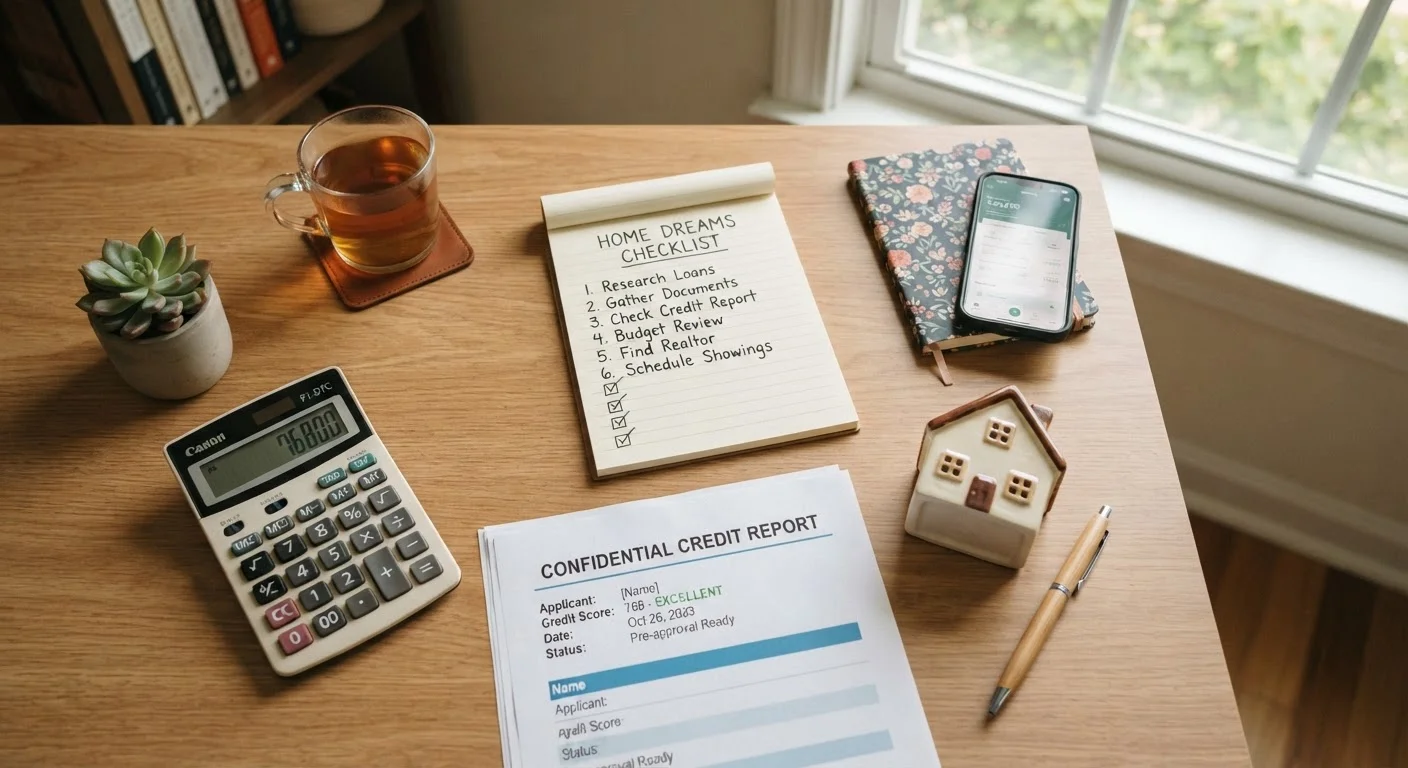
Why Financial Readiness Comes Before the Home Search
It's tempting to start scrolling listings the moment the idea of buying a home takes hold. But skipping the financial groundwork is one of the most common - and costly - mistakes first-time buyers make. Walking into the market without a clear picture of your credit, savings, and debt load can lead to disappointment, wasted time with sellers, or locking into a mortgage that strains your budget for years.
This checklist is designed to help you conduct an honest audit of your financial position before you ever schedule a showing. Work through each section methodically. If gaps appear, that's useful information - it tells you exactly where to focus your energy in the months ahead.
For a broader overview of what the home-buying journey looks like from start to finish, see the First-Time Homebuyer's Roadmap - a plain-language guide covering every stage from budgeting to closing.
Credit Health
Income and Employment Stability
Savings and Down Payment
Debt-to-Income Ratio
Pre-Approval Preparation
Tools That Will Help You Work Through This Checklist
You don't need specialized software to complete this audit, but a few resources make the process significantly more accurate and efficient.
AnnualCreditReport.com
The federally authorized source for requesting free credit reports from all three major bureaus.
DTI Calculator (spreadsheet or online tool)
Helps you calculate your front-end and back-end debt-to-income ratios using your actual income and debt figures.
Mortgage Pre-Approval Application
Submitted to lenders to receive a formal assessment of how much you may borrow and at what rate.
State Housing Finance Agency Website
Lists down payment assistance programs, grants, and first-time buyer incentives available in your state.
What Comes After Financial Readiness
Once you've worked through this checklist and addressed any gaps, you'll be in a much stronger position to engage with lenders, agents, and sellers. Pre-approval is typically the natural next step - it converts your financial self-assessment into a lender's formal evaluation and gives you a concrete price range to work within.
Pre-Approval Is Not a Guarantee
A mortgage pre-approval letter tells you what a lender is willing to offer based on your financial information at a point in time - it is not a final loan commitment. Changes to your credit, income, employment, or the property's appraisal value between pre-approval and closing can affect your final loan terms or approval status. Avoid any major financial changes (new debt, job changes, large purchases) between pre-approval and closing.
Keep in mind that buying a home also means taking on ongoing financial responsibilities that don't exist as a renter. Property taxes, homeowner's insurance, HOA fees (where applicable), and maintenance costs all factor into true affordability. The home maintenance hub is a useful resource to start thinking about the upkeep costs you'll manage as an owner.
If you're still weighing whether buying makes sense for your situation right now, it's worth reviewing the Renting Basics hub to understand what staying in a rental a bit longer might look like in comparison. Timing matters, and there's no universal right answer.
Once you've closed and settled in, the Your First Year of Homeownership checklist will help you stay on top of tax filings, insurance reviews, and maintenance records from day one.
Don't Overextend Based on Pre-Approval Amount
Lenders approve you for the maximum amount they're willing to lend - not necessarily the amount that fits your lifestyle and financial goals. Use your own budget analysis to determine a comfortable monthly payment, and consider homes priced below your pre-approval ceiling. Just because you qualify for a certain amount doesn't mean you should borrow it.