
Why Ownership Structure Matters
When you purchase real estate, the deed doesn't just record your name - it encodes a specific legal framework that governs what you can do with the property, who inherits it, and how it may be sold or transferred. Two buyers acquiring similar homes on the same street can hold radically different bundles of rights depending on how title is structured.
Understanding these structures is foundational to sound estate planning and confident real estate decisions. For a broader look at what property rights actually entail over time, see our comprehensive ownership guide. And if you're sorting through common misconceptions, this breakdown of ownership myths is worth reviewing alongside the definitions below.
| Most common U.S. residential ownership type | Fee Simple Absolute |
| Probate avoided by | Joint Tenancy, Life Estate, Tenancy by the Entirety |
| States recognizing Tenancy by the Entirety | Approximately 25 states plus D.C. |
| Life estate - can life tenant sell alone? | No - remainderman's consent required |
| Title change typically requires | New deed, recording, possible transfer tax review |
| Tenancy in Common - equal shares required? | No - shares can be any agreed proportion |
The Major Ownership Structures Explained
Each of the following structures has distinct legal implications. Consulting a licensed real estate attorney before structuring or changing title is strongly recommended.
Fee Simple
The most complete form of property ownership, granting the holder full rights to use, sell, lease, or bequeath the property without condition (unless fee simple defeasible restrictions apply).
Life Estate
An ownership interest that lasts only for the lifetime of a designated person (the life tenant). Upon death, ownership passes to the remainderman named in the original deed.
Remainderman
The person designated to receive full ownership of a property after a life tenant dies. The remainderman holds a future interest in the property during the life tenant's lifetime.
Right of Survivorship
A feature of joint tenancy (and tenancy by the entirety) where a deceased owner's share automatically transfers to the surviving co-owner(s), bypassing the probate process.
Tenancy in Common
A co-ownership arrangement where each party holds a separate, transferable share of the property. Shares can be unequal, and each owner's interest passes through their estate at death.
Tenancy by the Entirety
A form of co-ownership exclusive to married couples (or domestic partners in some states), treating them as one legal entity with mutual consent required for any transfer or encumbrance.
Probate
The court-supervised legal process of validating a deceased person's will and distributing their estate. Certain ownership structures (joint tenancy, life estate) allow property to pass outside this process.
Deed
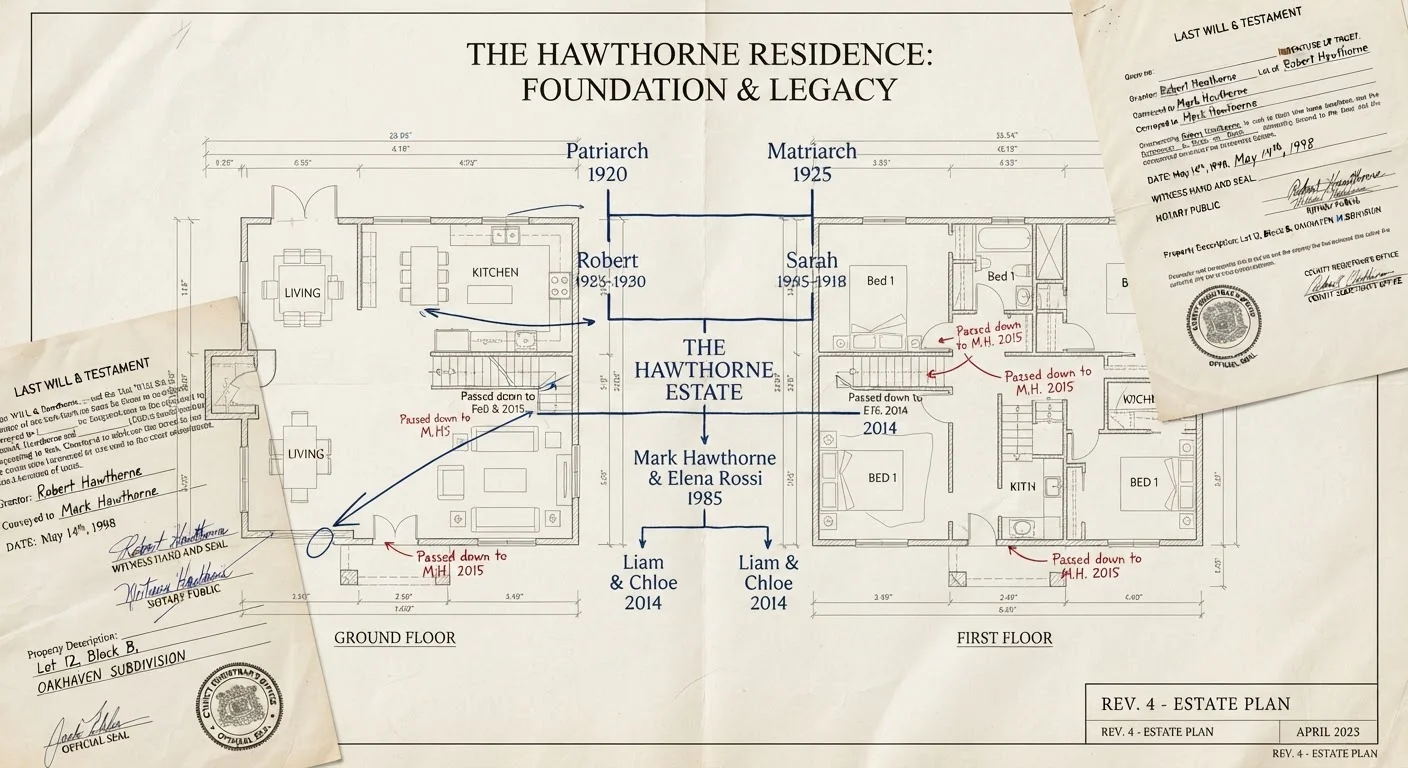
The legal document that conveys ownership of real property from one party to another. The deed specifies the type of ownership interest being transferred.
Fee Simple Absolute
The most complete form of private ownership. The owner holds full, unconditional title with the right to use, lease, mortgage, or sell the property. Heirs inherit automatically. Most residential purchases in the United States convey fee simple absolute ownership.
Fee Simple Defeasible
Similar to fee simple, but the title can revert to a prior owner if a specified condition is violated - for example, a deed that stipulates the land must only be used for residential purposes. Buyers should review deed language carefully, since hidden conditions can cloud title for decades.
Life Estate
A life estate splits ownership across time. The life tenant holds the right to use and occupy the property for the duration of their lifetime; upon death, ownership passes automatically - without probate - to the remainderman named in the deed. Life estates are commonly used in estate planning to transfer property while allowing a parent or spouse to remain in the home. However, neither party can unilaterally sell or mortgage the full property without the other's cooperation.
Joint Tenancy with Right of Survivorship (JTWROS)
Two or more owners hold equal, undivided shares. When one owner dies, their share passes automatically to the surviving co-owners, bypassing probate. All owners must acquire their interests simultaneously and hold equal shares for joint tenancy to exist - requirements that vary slightly by state.
Tenancy in Common
Co-owners each hold a distinct, divisible share that can be unequal (e.g., 60%/40%). Each owner may sell or bequeath their share independently. There is no right of survivorship - a deceased owner's share passes through their estate, not automatically to co-owners. This flexibility also means any owner can petition a court to force a partition sale if a dispute arises.
Tenancy by the Entirety
Available only to married couples (and in some states, domestic partners), this structure treats the couple as a single legal entity. Neither spouse can transfer or encumber the property without the other's consent, providing meaningful creditor protection in states that recognize it. Divorce typically converts it to tenancy in common.
Note that third-party claims - such as easements or liens - can affect any of these structures. See our guide to encumbrances for details on how those interests interact with title.
Choosing and Changing Your Ownership Structure
Ownership structures are not permanent. A married couple who purchased as joint tenants may wish to restructure into a trust for estate planning purposes. An unmarried co-buyer situation may start as tenancy in common and later change. Changing title typically requires executing and recording a new deed, and may trigger transfer taxes or affect financing - review implications with both a real estate attorney and a tax adviser.
If you're weighing the financial angles of full ownership versus a leveraged position, understanding the trade-offs between paying off a mortgage and carrying debt can inform how you structure ownership over time.
Title Structure and Estate Planning Work Together
How you hold title directly affects whether your property passes through probate, how quickly heirs can access it, and what estate taxes may apply. Many families work with an estate planning attorney to align deed structure with the rest of their plan - including wills and trusts. Changing title after the fact is possible but may carry tax and legal consequences worth understanding in advance.
This article provides general educational information about property ownership structures and is not legal advice. Laws governing title, survivorship, and estate planning vary by state. Always consult a licensed real estate attorney for guidance specific to your situation.