
Reading and Signing Your Lease
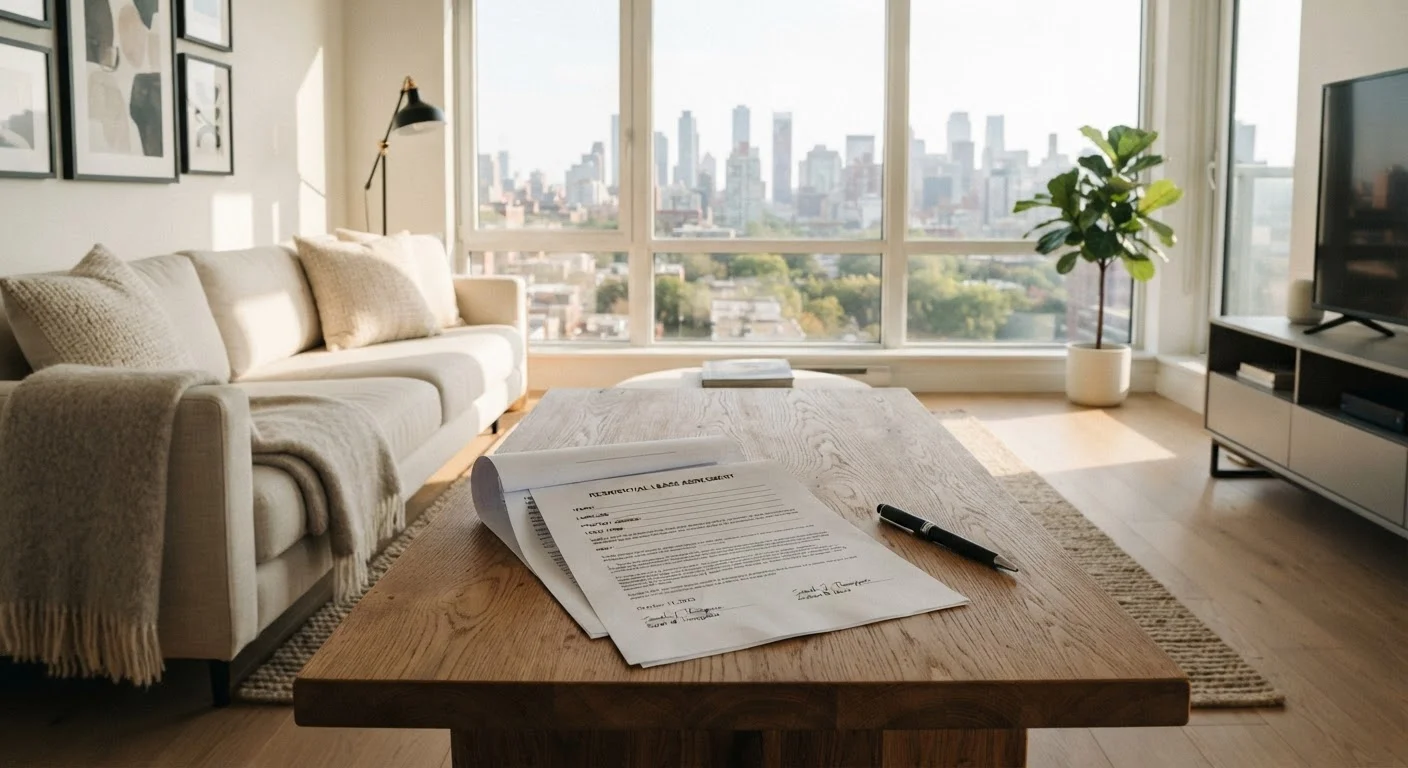
A lease is a legally binding contract, and every clause carries real consequences. Before you sign, read the entire document - not just the rent amount and move-in date. Pay attention to clauses covering rent increases, subletting permissions, pet policies, maintenance responsibilities, and early termination fees.
Look for language that seems unusually broad or vague, such as clauses allowing the landlord to enter without notice or to modify terms unilaterally. Some provisions may be unenforceable under your state's law, but they can still create confusion or pressure if a dispute arises.
If you encounter unfamiliar terms, our plain-language lease glossary breaks down the legal language most commonly buried in standard agreements. And if you're renting for the first time, this end-to-end guide for first-time renters walks through the entire process from search to move-in.
Before signing, ask the landlord how maintenance requests are submitted and what the typical response time is - then get that process documented in the lease or in writing.
Knowing the maintenance process upfront prevents ambiguity and gives you a documented standard to reference if repairs are delayed or ignored.
If your landlord provides an itemized move-out deduction list, respond in writing within the same window allowed for disputes in your state - don't let the deadline pass silently.
Many states treat failure to dispute deductions promptly as implicit acceptance, weakening your position in any subsequent small claims action.
Always request any verbal promises - a parking space, a paint job, appliance repairs - be written into the lease or documented in a signed addendum before you hand over a deposit.
Your Core Rights as a Tenant
Tenant rights are established at the federal, state, and local level - and they cannot be waived by a lease clause. The most foundational is the implied warranty of habitability, which requires landlords to maintain rental units in a livable condition. This covers functioning heat, plumbing, structural safety, and freedom from significant pest infestations.
You also have the right to quiet enjoyment - meaning your landlord cannot interfere with your reasonable use of the property. Most states require landlords to give advance written notice (commonly 24-48 hours) before entering your unit, except in genuine emergencies.
Fair housing law prohibits landlords from discriminating based on race, color, national origin, religion, sex, familial status, or disability under the federal Fair Housing Act. Many states and cities extend protection to additional categories, such as source of income or sexual orientation.
~52%
Renters unaware of their habitability rights
Consumer surveys consistently show roughly half of renters are not familiar with the implied warranty of habitability, according to housing policy research.
14-30 days
Typical security deposit return window
Most U.S. states require landlords to return security deposits within this range after a tenancy ends, though exact deadlines vary by jurisdiction.
Many renters unknowingly give up protections they're legally entitled to. Our article on tenant rights most renters don't know they have outlines key protections that exist regardless of what your lease says.
Security Deposits: Rules and Protections
Security deposits are among the most frequent sources of landlord-tenant conflict. Every state has its own rules governing how much a landlord can collect, how funds must be held, and how quickly they must be returned after move-out.
In most states, landlords must return your deposit - along with an itemized list of any deductions - within 14 to 30 days of your tenancy ending. Deductions are generally only permitted for unpaid rent or damages that exceed normal wear and tear. Faded paint, minor scuffs, and worn carpet from ordinary use typically do not qualify as deductible damage.
Document Your Unit on Move-In Day
Photograph and video every room, wall, appliance, and fixture before unpacking a single box. Send copies to your landlord in writing and retain your own backup copies in a location separate from your phone. This documentation is your primary defense against improper security deposit deductions and can be decisive in small claims court.
Your strongest protection is a thorough move-in inspection. Photograph and document the condition of every room, appliance, and fixture on the day you take possession. Share copies with your landlord in writing and keep your own records. This documentation becomes critical evidence if deductions are disputed later.
Handling Disputes with Your Landlord
When a problem arises - an unaddressed repair, a disputed charge, or a threatened eviction - your first step should always be written communication. Send a clear, factual letter or email describing the issue and the resolution you're requesting. Written records establish a timeline and demonstrate good faith if the matter escalates.
If direct communication stalls, most cities and counties offer tenant mediation services at little or no cost. Mediation can resolve many disputes without court involvement and typically produces outcomes faster than litigation.
For more serious matters - illegal lockouts, retaliation for reporting habitability issues, or wrongful eviction - contact your local tenant rights organization or a housing attorney. Many legal aid organizations provide free or low-cost consultations specifically for renters.
Before assuming your situation is hopeless, review the common misconceptions that keep renters from advocating for themselves: renting myths that cost tenants money and rights.
Moving Out and Getting Your Deposit Back
A clean move-out starts weeks before your last day. Review your lease for required notice periods - most require 30 days' written notice, though some extend to 60 days, particularly for longer-term leases. Missing this deadline can cost you an additional month's rent.
Restore the unit as close to its original condition as reasonably possible: patch nail holes, clean appliances, and address any damage you caused during your tenancy. Request a move-out walkthrough with your landlord before you return the keys, and take detailed photos of every room on your final day.
If your landlord withholds your deposit improperly or misses the state's return deadline, most states allow you to sue in small claims court - often for double or triple the withheld amount as a penalty. Keep every piece of documentation: your lease, move-in photos, written communications, and receipts for any repairs you paid for yourself.
This article is for general informational purposes only and does not constitute legal advice. Tenant rights and landlord-tenant laws vary significantly by state and locality. Consult a qualified attorney or your local tenant rights organization for guidance specific to your situation.