

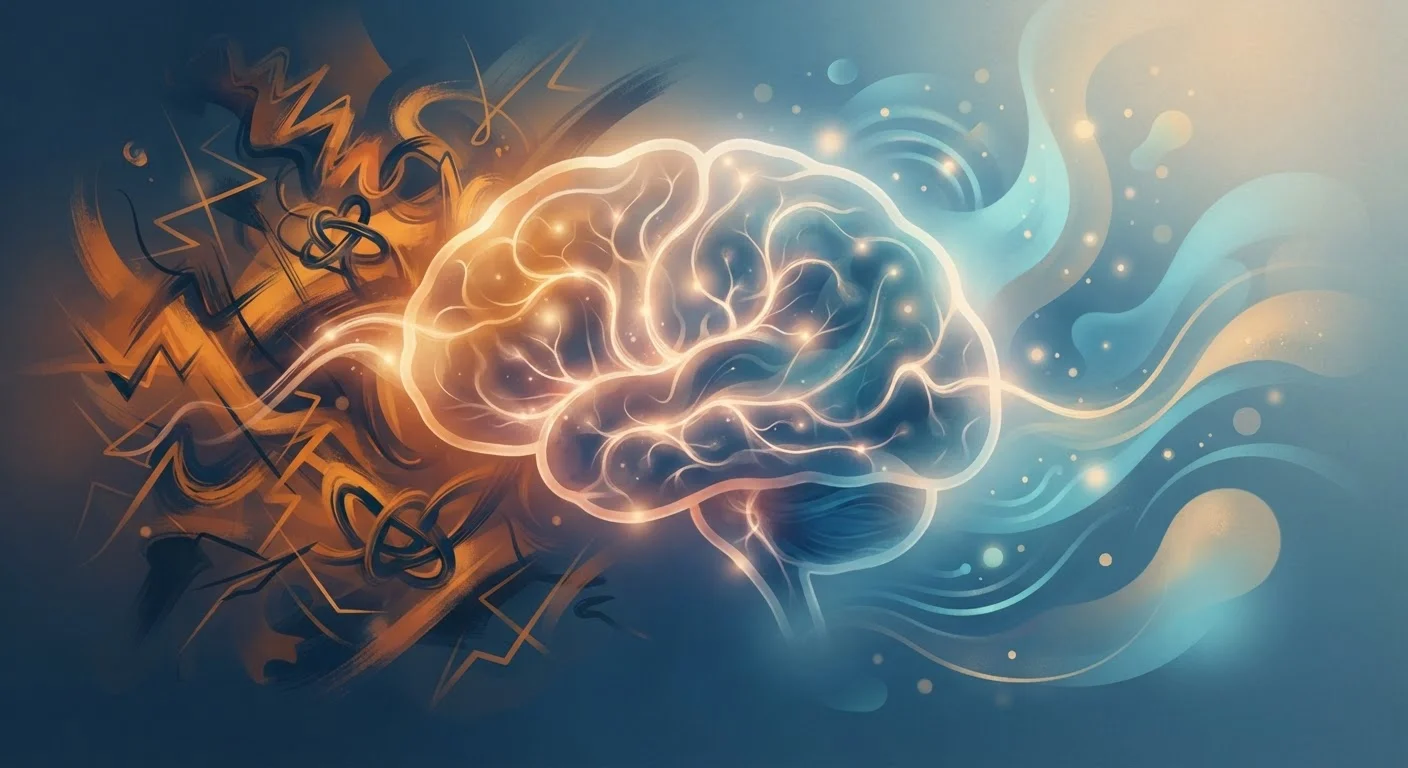
What Happens in the Brain When You Feel Stressed
Stress begins not in the body, but in the brain - specifically in a small, almond-shaped region called the amygdala, which acts as the brain's threat-detection center. When you perceive something as dangerous or overwhelming, the amygdala sends an alarm signal to the hypothalamus, which then activates the body's stress response system.
The hypothalamus communicates with the rest of the body through the autonomic nervous system, triggering what's commonly called the "fight-or-flight" response. Within seconds, the adrenal glands release adrenaline (epinephrine), causing your heart rate to increase, muscles to tense, and breathing to quicken - all designed to help you respond to a perceived threat.
Shortly after, if the brain continues to register the stressor as a threat, a second hormonal wave is activated through the HPA axis, resulting in the release of cortisol. Cortisol keeps the body on alert and temporarily suppresses non-essential functions like digestion and immune activity, redirecting energy toward immediate survival needs.
“Stress is not what happens to us. It's our response to what happens - and response is something we can choose.”
— Maureen Killoran, Author and wellness educator
What Triggers the Stress Response
Stressors - the stimuli that activate the stress response - are not limited to physical dangers. The human brain responds to perceived threats just as strongly as real ones. This means a difficult conversation, a looming work deadline, or financial uncertainty can activate the same biological machinery as a physical threat.
Common categories of stressors include:
- Acute stressors: Short-term, identifiable events like a job interview, a medical appointment, or an argument.
- Chronic stressors: Ongoing pressures such as long-term illness, relationship conflict, or financial strain. These are explored in more depth in our article on why chronic stress doesn't always feel like stress.
- Internal stressors: Thoughts, worries, or self-imposed expectations that generate a stress response without any external trigger.
Individual responses to the same stressor can vary considerably, shaped by genetics, past experiences, coping skills, and social support.
Noticing Your Personal Stress Signals
Because stress triggers vary by individual, it helps to pay attention to your own early warning signs - whether that's muscle tension, irritability, or difficulty concentrating. Recognizing these signals early gives you more opportunity to respond intentionally. Journaling or simply pausing to check in with yourself during busy periods can build this awareness over time.
Why Some Stress Is Normal - and Even Useful
Stress has a complicated reputation, but short-term stress - known as acute stress - is not inherently harmful. Researchers have long recognized a concept called eustress (positive stress), which describes the kind of manageable pressure that can sharpen attention, increase motivation, and enhance performance.
Think of the focused alertness you might feel before giving a presentation or competing in a sport. That heightened state is your stress system working as intended, mobilizing resources to help you perform. Some research suggests that brief stress can also temporarily strengthen immune responses, though this effect diminishes when stress becomes chronic.
The critical factor is recovery. A healthy stress response activates, serves its purpose, and then subsides - allowing the body to return to a baseline state. Problems tend to arise when the stress response remains activated for extended periods without adequate recovery. For a deeper look at how stress, sleep, and emotional health interact, see our complete picture on stress and sleep.
77%
Americans reporting physical stress symptoms
According to American Psychological Association survey data, a large majority of Americans report experiencing physical symptoms they associate with stress.
~20 min
Time for cortisol to peak after a stressor
Research on the HPA axis indicates cortisol typically reaches its peak concentration in the blood roughly 15-20 minutes after the onset of an acute stressor.
3 in 10
Adults reporting high stress levels
National health surveys consistently find that roughly a third of U.S. adults rate their average stress level as high enough to be a health concern.
The Mind-Body Connection in Stress
The stress response does not stay neatly confined to the brain. Sustained activation affects multiple body systems - cardiovascular, immune, digestive, and musculoskeletal - which is why stress is often associated with physical complaints like headaches, muscle tension, or stomach upset.
Regular physical activity is one of the most well-researched lifestyle factors that can support the body's ability to recover from stress. Exercise appears to reduce baseline cortisol levels over time and supports mood-regulating neurotransmitter activity. Our article on physical activity and mental health explains these mechanisms in more detail.
It's also worth noting that stress is not purely a human experience. Research shows that animals experience similar physiological stress responses, and chronic stress in pets can manifest as physical health problems - a reminder of how deeply the mind-body stress system is conserved across species.
This article is for general informational and educational purposes only and is not a substitute for professional medical advice, diagnosis, or treatment. If you have concerns about your mental or physical health, please consult a qualified healthcare provider.