

Why Fiber Keeps Coming Up in Nutrition Research
Few nutrients generate as consistent a body of evidence as dietary fiber. Across decades of population studies and clinical trials, higher fiber intake has been associated with a lower risk of several chronic conditions - including type 2 diabetes, cardiovascular disease, and colorectal cancer. Yet national dietary surveys repeatedly show that Americans fall well short of recommended intake levels.
Understanding what fiber actually does - and why it matters beyond simple digestion - is a practical starting point for making more informed food choices. As explored in eating patterns that research consistently supports, fiber is one of the defining features shared across dietary approaches with the strongest long-term evidence behind them.
~15g
Average daily fiber intake for U.S. adults
National dietary surveys consistently show Americans consume roughly 15 grams of fiber per day - about half the general recommended intake.
95%
Americans falling short of fiber recommendations
Research published in the American Journal of Lifestyle Medicine estimated that approximately 95% of U.S. adults do not meet recommended daily fiber intake levels.
10-15%
Reduction in LDL cholesterol linked to soluble fiber
Clinical evidence suggests that consistent intake of soluble fiber, such as oat beta-glucan, can contribute to meaningful reductions in LDL ('bad') cholesterol levels.
What Fiber Does Inside the Body
Fiber's effects are not limited to keeping digestion regular. Soluble fiber - found in oats, beans, apples, and barley - dissolves in water to form a viscous gel in the gut. This slows gastric emptying, which moderates the rate at which glucose enters the bloodstream. It also binds bile acids in the intestines, a process that can contribute to lower LDL cholesterol over time.
Insoluble fiber, abundant in wheat bran, vegetables, and whole grains, does not dissolve. It adds bulk to stool and accelerates intestinal transit, reducing the time waste - including potential carcinogens - spends in contact with the colon wall.
Perhaps most significantly, certain fibers act as prebiotics - meaning they serve as food for beneficial bacteria living in the large intestine. A diverse, well-fed gut microbiome is increasingly linked to immune function, inflammation regulation, and even mental wellbeing, though this area of science is still developing. For a broader look at how nutrients like fiber interact with hydration and digestion, see how water fits into a balanced diet.
“Dietary fiber is one of the most underappreciated nutrients in the American diet. Its benefits extend well beyond bowel regularity - fiber is central to metabolic health, cardiovascular protection, and the ecosystem of microbes that live in our gut.”
— David Katz, MD, Preventive medicine physician and nutrition researcher
The Richest Food Sources of Fiber
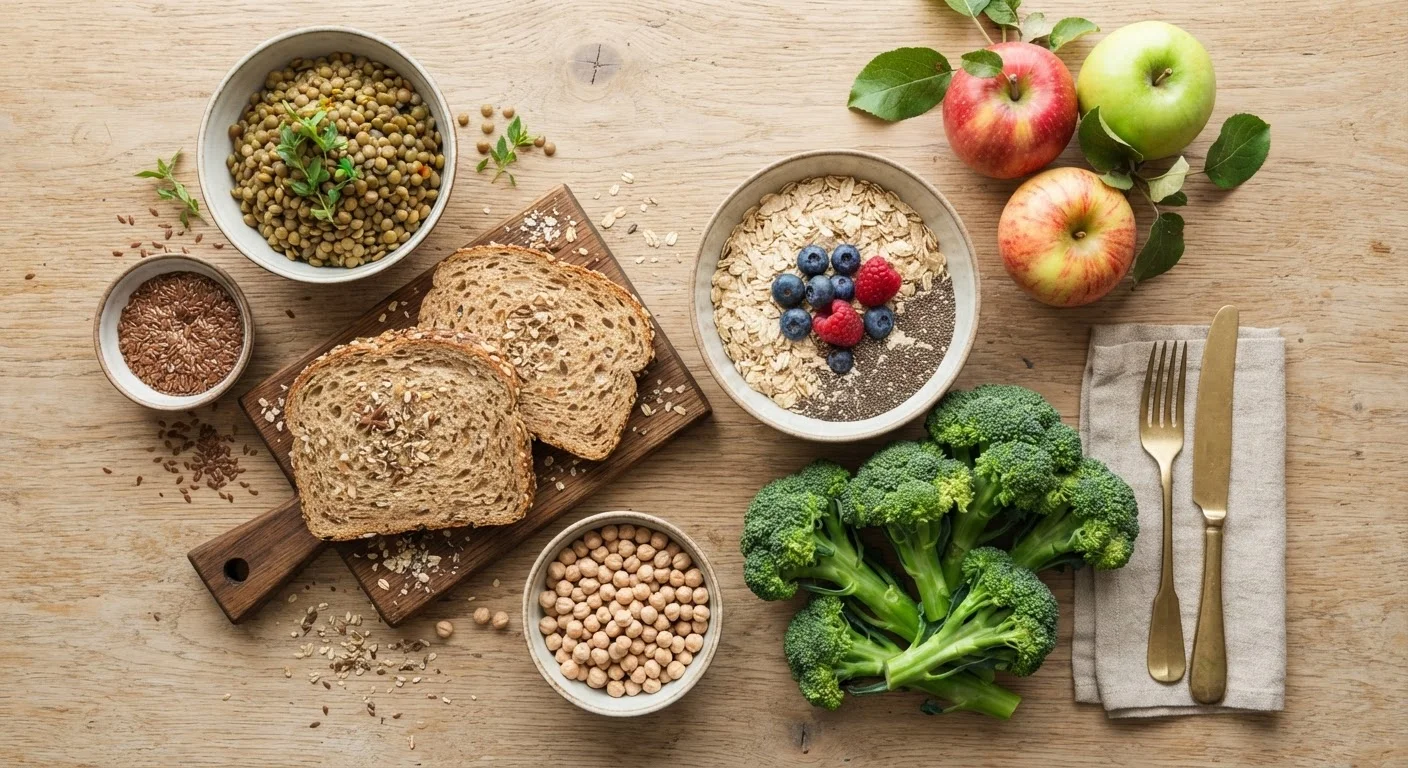
Fiber is exclusive to plant foods. Animal products - meat, dairy, eggs, fish - contain none. The most concentrated sources in the American food supply include:
- Legumes: Lentils, black beans, chickpeas, and split peas offer 12-16 grams of fiber per cooked cup, making them among the most fiber-dense foods available.
- Whole grains: Oats, barley, bulgur, and whole wheat bread provide both soluble and insoluble fiber. Refined grains (white rice, white bread) have had most of their fiber removed during processing.
- Vegetables: Broccoli, Brussels sprouts, carrots, and artichokes are particularly high. Most vegetables contribute meaningful fiber when eaten with skins intact where appropriate.
- Fruits: Pears, apples (with skin), raspberries, and avocados are standout sources. Fruit juices, by contrast, typically contain little to no fiber.
- Nuts and seeds: Chia seeds, flaxseeds, and almonds add fiber efficiently in small portions.
Fiber is also discussed in the context of broader nutritional gaps in nutrients commonly deficient in American diets, where it ranks among the most prevalent shortfalls.
A person swaps their morning white toast for a bowl of oatmeal topped with raspberries and a tablespoon of chia seeds.
A home cook replaces half the ground beef in a chili recipe with a can of black beans.
A commuter reads a food label on a packaged granola bar marketed as 'healthy' and notices it contains only 1 gram of fiber per serving.
Someone with chronically low fiber intake abruptly doubles their vegetable and legume consumption over a single weekend.
Practical Ways to Close the Gap
Dramatically overhauling a diet overnight rarely sticks - and with fiber, a rapid increase can cause uncomfortable bloating or gas. A gradual approach works better for most people. Adding one higher-fiber food per meal, swapping refined grains for whole grain versions, or including beans in dishes several times a week are all sustainable entry points.
Fluid intake matters alongside fiber. Insoluble fiber absorbs water as it moves through the intestines, so adequate hydration supports its function and reduces the risk of constipation - particularly important when intake rises quickly.
It's also worth scrutinizing nutrition labels. A food labeled "multigrain" or "made with whole wheat" is not necessarily high in fiber; the label's fiber gram count is the reliable figure. Products with at least 3 grams per serving are generally considered a good source, and 5 grams or more qualifies as an excellent source under standard food labeling definitions.
If you have a digestive condition or specific health concern, consult a registered dietitian or physician before making significant dietary changes. General guidance on separating evidence from common misconceptions can also be found in nutrition myths that refuse to die.
This article is for general informational and educational purposes only and is not a substitute for professional medical or nutritional advice. Consult a qualified healthcare provider for personalized guidance.