

What the Glycemic Index Actually Measures
The glycemic index (GI) is a numerical scale - typically 0 to 100 - that ranks carbohydrate-containing foods by how quickly they raise blood glucose levels compared to pure glucose, which is assigned a score of 100. Foods scoring 55 or below are considered low GI, 56-69 medium, and 70 or above high GI.
To generate a GI score, researchers feed a standardized amount of a food containing 50 grams of available carbohydrates to a group of healthy volunteers and measure blood glucose over two hours. The result is averaged and compared to the glucose benchmark. This makes GI a genuinely useful scientific tool - particularly in clinical nutrition research - for understanding carbohydrate quality rather than just quantity.
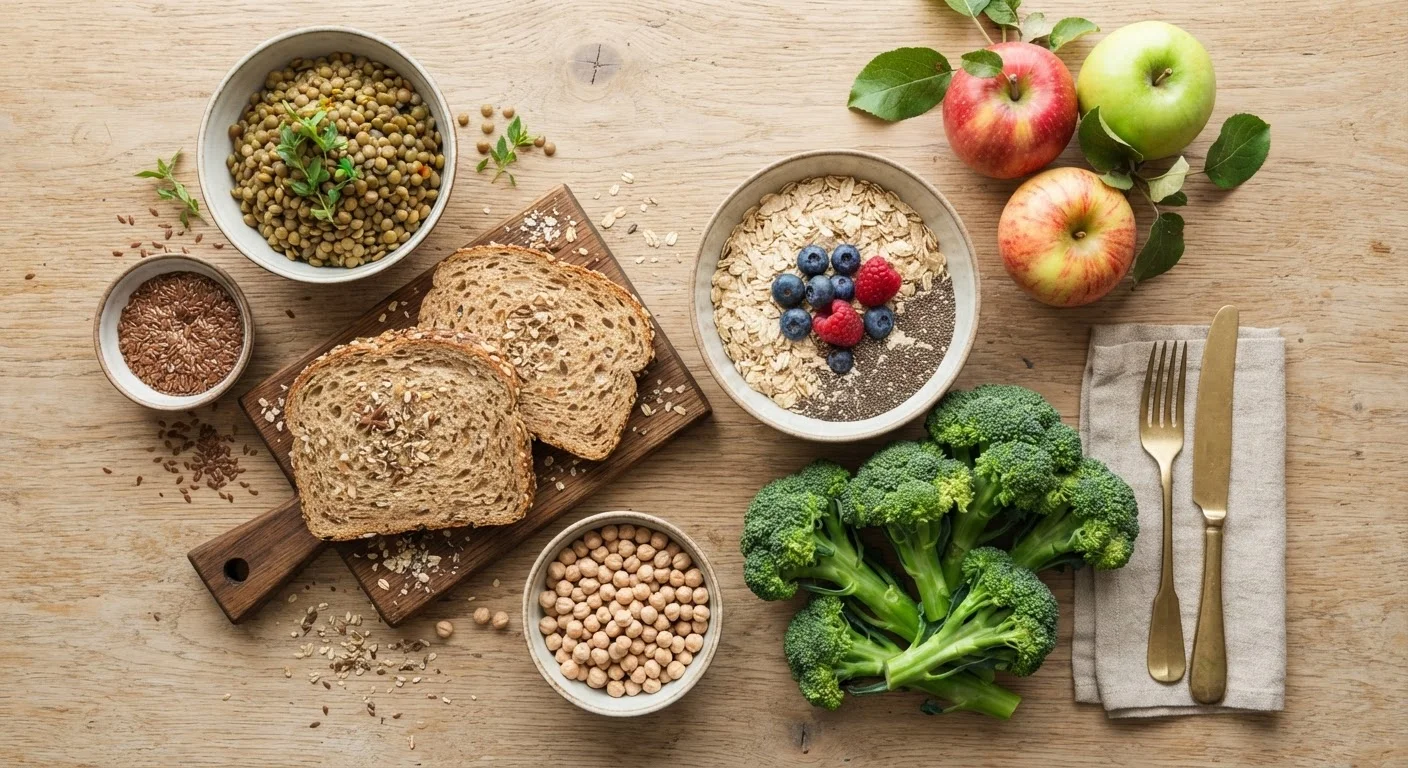
Foods like rolled oats, lentils, and most non-starchy vegetables tend to score low, while white bread, short-grain rice, and certain breakfast cereals score high. These rankings can help orient people toward foods that produce a more gradual blood sugar response, which is particularly relevant for people managing diabetes or prediabetes.
GI Was Developed for Clinical Research
The glycemic index was originally introduced by Dr. David Jenkins and colleagues in the early 1980s as a tool for guiding diabetes dietary management - not as a consumer-facing food-rating system. Its translation into popular nutrition advice has benefits but also introduced some oversimplifications. Understanding its research origins helps put its usefulness and limits in perspective.
Where the Glycemic Index Helps
Despite its limitations, GI research has meaningfully shaped nutritional science and public health guidance over the past four decades.
Provides a measurable way to compare carbohydrate quality
GI offers a research-backed metric that goes beyond simply counting carbohydrates, helping distinguish between foods that spike blood sugar rapidly and those that produce a slower, steadier response.
Supported by substantial peer-reviewed research
Decades of clinical studies have examined GI's relationship to blood sugar control, satiety, and chronic disease risk, giving it a stronger evidence base than many popular nutrition frameworks.
Can support blood sugar management in diabetes
Several health organizations, including the American Diabetes Association, recognize low-GI dietary patterns as one approach that may help improve glycemic control when incorporated into a broader eating plan.
Encourages whole food choices over ultra-processed options
In practice, low-GI foods tend to align with dietary recommendations - legumes, non-starchy vegetables, and whole grains - naturally steering eaters toward more nutrient-dense options.
For people learning to navigate carbohydrate choices, GI provides an accessible framework. Rather than avoiding all carbohydrates, it encourages distinguishing between types - a more nuanced and sustainable approach supported by dietary guidelines from organizations including the American Diabetes Association.
Where the Glycemic Index Falls Short
GI's weaknesses are significant enough that many nutrition researchers caution against relying on it as a primary dietary tool.
Ignores portion size entirely
A food's GI score is measured using a fixed 50-gram carbohydrate portion, which often doesn't reflect how much of that food someone actually eats, making the score potentially misleading for real-world meals.
Scores change with cooking and ripeness
A ripe banana has a noticeably higher GI than an underripe one, and pasta cooked al dente scores lower than pasta cooked until soft - variables that a single published GI number cannot capture.
Food combinations dramatically alter blood sugar response
Eating fat, protein, or fiber alongside a high-GI food significantly slows glucose absorption, meaning GI scores measured in isolation often don't predict what happens in a mixed meal.
Individual metabolic variation is substantial
Research, including a notable study published in Cell in 2015, found that people's blood sugar responses to identical foods varied widely, suggesting that population-level GI scores may not reflect personal experience.
Some nutritious foods carry misleadingly high GI scores
Watermelon, carrots, and certain whole-grain breads score relatively high on the GI scale despite offering genuine nutritional value, potentially discouraging consumption of healthy foods.
Perhaps the most practical issue is that GI scores are measured in isolation - a single food, standardized portion, fasted state. Real meals are none of those things. When fat, protein, and fiber are eaten alongside a high-GI food, the overall blood sugar response is typically blunted. A baked potato eaten alone scores very high; the same potato eaten with chicken, broccoli, and olive oil tells a very different metabolic story.
Glycemic Load: A More Practical Companion
Glycemic load (GL) was developed specifically to address GI's portion-size blind spot. GL is calculated by multiplying a food's GI score by the grams of carbohydrate in an actual serving, then dividing by 100. This single adjustment produces a far more realistic picture of blood sugar impact.
72
Watermelon's GI score (out of 100)
Despite a high GI, a standard serving of watermelon has a glycemic load of approximately 4, considered low, because the serving contains few total carbohydrates.
~10x
Variation in individual blood sugar response
A large study published in the journal Cell (Zeevi et al., 2015) found that different people's blood glucose responses to identical foods could vary dramatically, even among healthy adults.
Watermelon illustrates the gap well. Its GI is high (around 72), which sounds alarming. But a typical serving contains relatively few carbohydrates, giving it a low glycemic load - meaning it raises blood sugar only modestly in practice. Using GI alone, watermelon might be unnecessarily avoided.
GL is not perfect either - it still doesn't account for individual variation - but pairing GL with GI gives a more complete and actionable picture than either metric alone.
Putting GI in Its Proper Context
The most evidence-supported approach to carbohydrate quality isn't memorizing GI scores - it's building an overall dietary pattern rich in whole foods, adequate fiber, and varied nutrient sources. GI can inform that pattern without dictating it.
Individual factors that GI doesn't capture - gut microbiome composition, insulin sensitivity, stress, sleep, and physical activity level - all influence how a person responds to any given food. Two people can eat the same meal and show meaningfully different blood glucose curves.
For most healthy adults, focusing on minimally processed carbohydrates, generous vegetable intake, and balanced meals will naturally favor lower-GI foods without requiring a scoring system. For those with specific blood sugar concerns, a registered dietitian can help translate GI and GL into a personalized, practical eating plan.
This article is for general informational and educational purposes only and is not a substitute for professional medical or dietary advice. Speak with a qualified healthcare provider or registered dietitian before making significant changes to your diet, especially if you have a chronic health condition such as diabetes.