
The Evolutionary Roots of the Spin
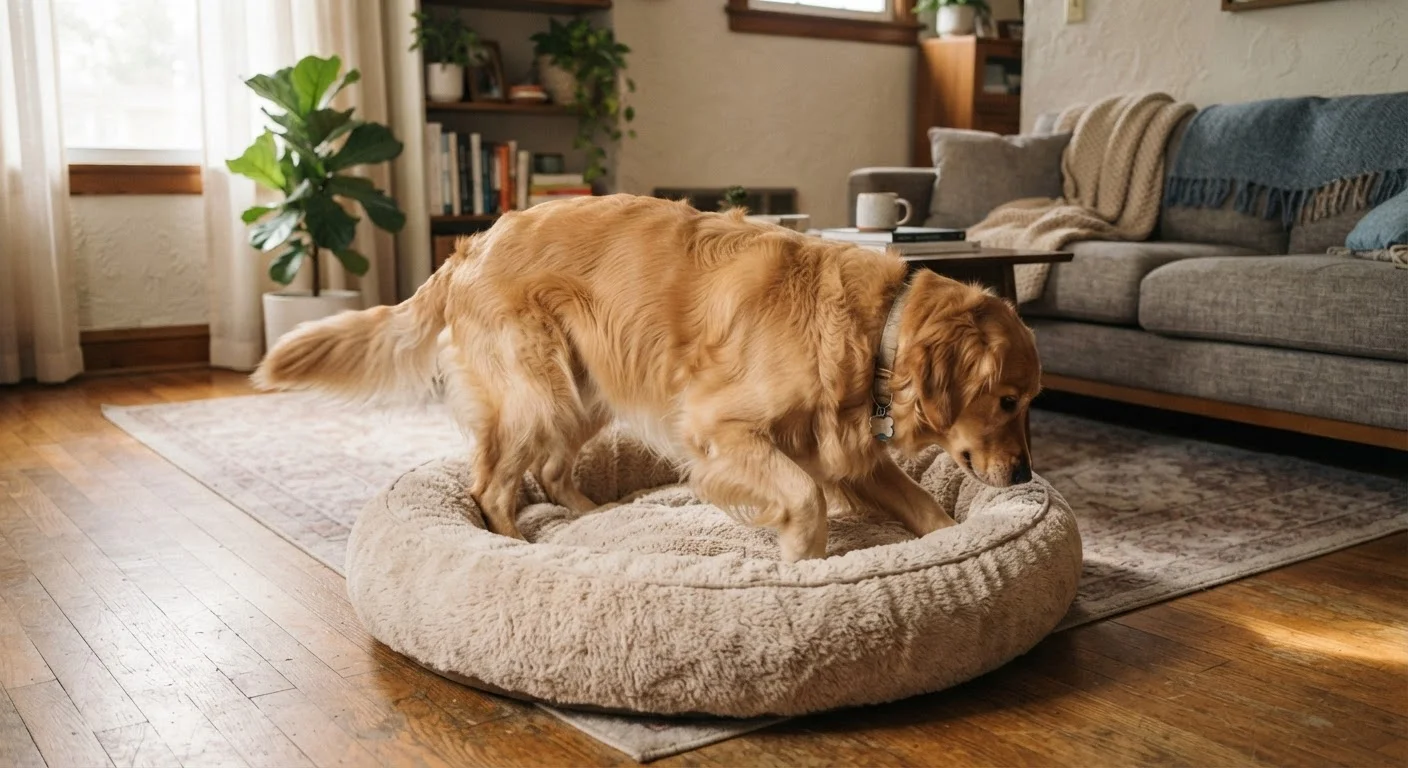
Long before dogs had memory-foam beds and climate-controlled bedrooms, their wild ancestors slept outdoors in grasslands, forests, and scrublands. Circling was a practical survival tool. By turning repeatedly in place, wild canines would flatten tall grass, expose hidden insects or snakes, and create a shallow, body-shaped resting hollow that offered insulation from the cold ground.
This behavior was so reliably useful that it became hardwired through generations of natural selection. Today's domesticated dogs retain the instinct even when sleeping on a plush cushion - the trigger is internal, not environmental. Your dog doesn't consciously decide to circle; the nervous system initiates the routine automatically as part of transitioning into rest.
A Shared Trait Across Canids
Pre-sleep circling is not unique to domestic dogs. Wolves, foxes, and other wild members of the Canidae family display the same behavior in the field. This cross-species consistency is strong evidence that circling is a deep-rooted evolutionary adaptation rather than a quirk of domestication.
Temperature Regulation and Self-Protection
Two other survival pressures helped cement this behavior: thermoregulation and predator awareness. In the wild, sleeping position relative to wind direction can mean the difference between staying warm and losing dangerous amounts of body heat overnight. Circling allowed canines to orient their bodies so that their nose - which dogs often tuck toward their tail when curled up - was sheltered from prevailing breezes.
The circling motion also gave wild dogs a final visual sweep of their surroundings before committing to the vulnerable state of sleep. Each rotation is, in effect, a quick security check - confirming no predators are approaching from any angle. Even in a perfectly safe home environment, that ancient protocol still runs its course.
~15,000
Years dogs have been domesticated
Archaeological and genetic research broadly estimates dog domestication at roughly 15,000 years ago, yet many pre-domestication instincts - like circling - remain intact.
3-4
Average circles before lying down
Behavioral observations of domestic dogs suggest most complete between one and five rotations before settling, with three to four being a commonly reported average.
When Circling Becomes a Health Signal
While occasional circling is completely normal, certain changes in the behavior deserve attention. Dogs experiencing arthritis or hip dysplasia may circle repeatedly because finding a pain-free position is genuinely difficult. If your dog circles far more than usual, vocalizes during the process, or repeatedly stands back up after lying down, these are signals that physical discomfort may be involved.
In senior dogs, increased or disoriented circling - especially when paired with confusion or changes in sleep patterns - can sometimes be associated with canine cognitive dysfunction, a condition comparable to dementia in humans. Any notable shift in this behavior, particularly in older pets, is worth raising with your veterinarian promptly.
Provide a Supportive, Appropriately Sized Bed
Because dogs instinctively circle to shape their sleep surface, giving them a bed large enough to complete a full turn comfortably can reduce restless pre-sleep behavior. Orthopedic or memory-foam beds may also help older dogs settle more easily by reducing joint pressure.
This article is for general informational purposes only and does not constitute veterinary medical advice. Always consult a licensed veterinarian for concerns about your pet's health or behavior.