
Water as a Nutrient, Not Just a Beverage
Most people think of nutrition as the food on their plate - proteins, carbohydrates, fats, and the vitamins and minerals tucked inside them. Water rarely gets the same attention, yet it qualifies as an essential nutrient by every meaningful definition: the body cannot make enough of it on its own, and without adequate intake, normal function breaks down rapidly.
Water makes up roughly 50-70% of total body weight in adults, with the proportion varying by age, sex, and body composition. It acts as a solvent, a transport medium, a temperature regulator, and a participant in chemical reactions throughout the body. Understanding hydration as part of nutrition - rather than separate from it - changes how we think about daily eating habits.
For a broader foundation on how all nutrients work together, see our complete nutrition overview.
~20%
Daily water intake from solid food
The U.S. National Academies of Sciences estimates that roughly 20% of total daily water intake in American adults comes from food rather than beverages.
50-70%
Water as a share of adult body weight
According to established physiology references, water constitutes approximately 50-70% of total body weight in adults, varying by age and body composition.
1-2%
Body fluid loss linked to performance decline
Research published in sports and exercise physiology literature suggests that fluid losses of just 1-2% of body weight can measurably impair cognitive and physical performance.
What Water Actually Does in the Body
Water's roles are both structural and functional. In digestion, it helps break down food through hydrolysis and keeps the intestinal lining moist so nutrients can pass efficiently into the bloodstream. Saliva - mostly water - begins carbohydrate digestion in the mouth. Further down, water dissolves minerals and water-soluble vitamins, making them available for absorption.
Beyond digestion, water is the primary vehicle for delivering nutrients to cells and removing metabolic waste via urine, sweat, and respiration. It also regulates body temperature through perspiration and lubricates joints and cushions organs. When any of these processes are compromised by insufficient fluid, the downstream effects touch virtually every system in the body.
Water-soluble vitamins and minerals - including B vitamins and vitamin C - depend on adequate hydration to be absorbed and utilized effectively.
Make Hydration a Mealtime Habit
Pairing a glass of water with each meal and snack is one of the simplest ways to build consistent fluid intake without tracking ounces. It also supports digestion - water helps dissolve nutrients and prepares the gut for absorption. Starting meals hydrated is particularly helpful before high-fiber meals or after physical activity.
Where Hydration Fits Into a Balanced Diet
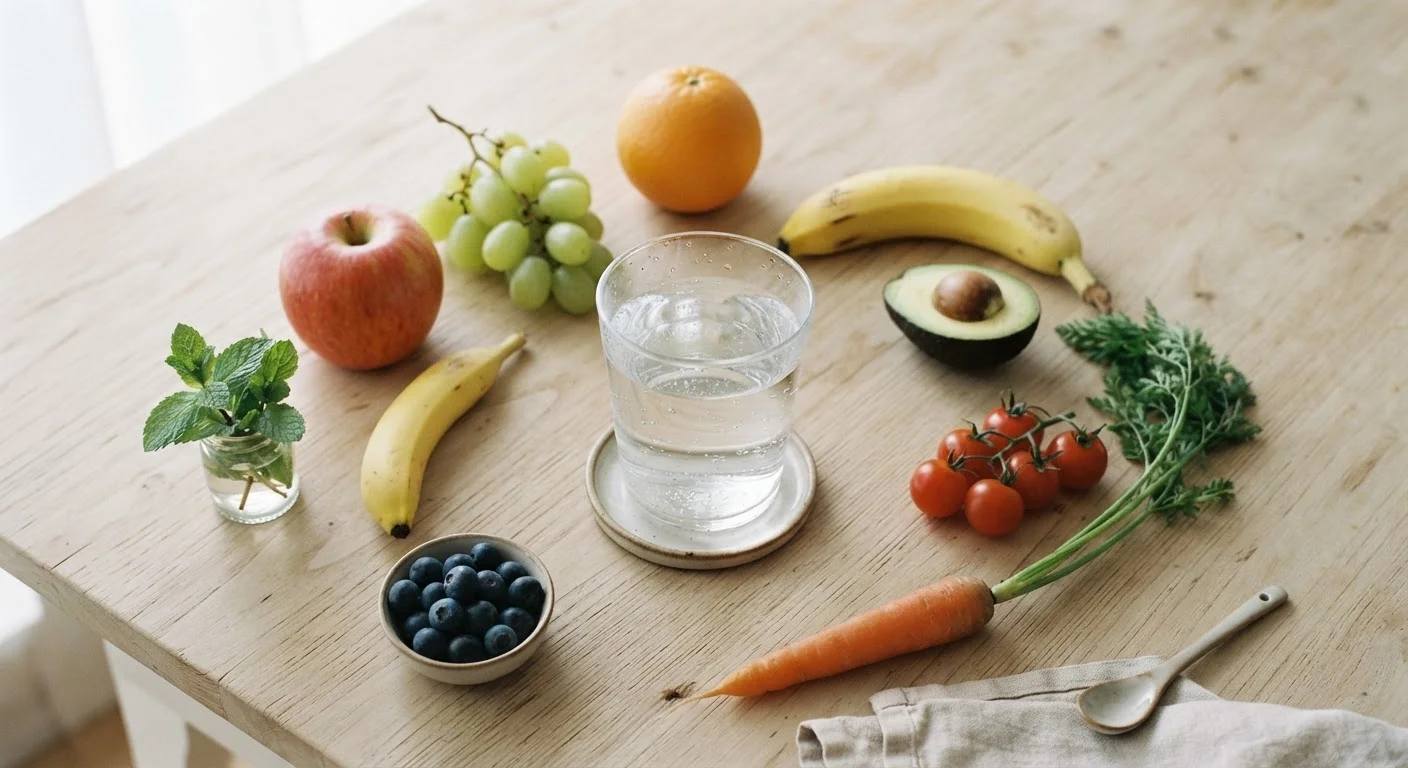
Food contributes more fluid than many people realize. On average, roughly 20% of daily water intake in the US comes from solid foods - particularly fruits and vegetables with high water content. Cucumbers, lettuce, tomatoes, strawberries, and watermelon are all over 90% water by weight, meaning eating a varied, produce-rich diet actively supports hydration.
This connection reinforces why building a balanced diet and staying hydrated are complementary goals rather than separate ones. A diet heavy in processed, low-moisture foods - chips, crackers, cured meats - puts a greater burden on beverages alone to meet fluid needs. A whole-food pattern naturally eases that load.
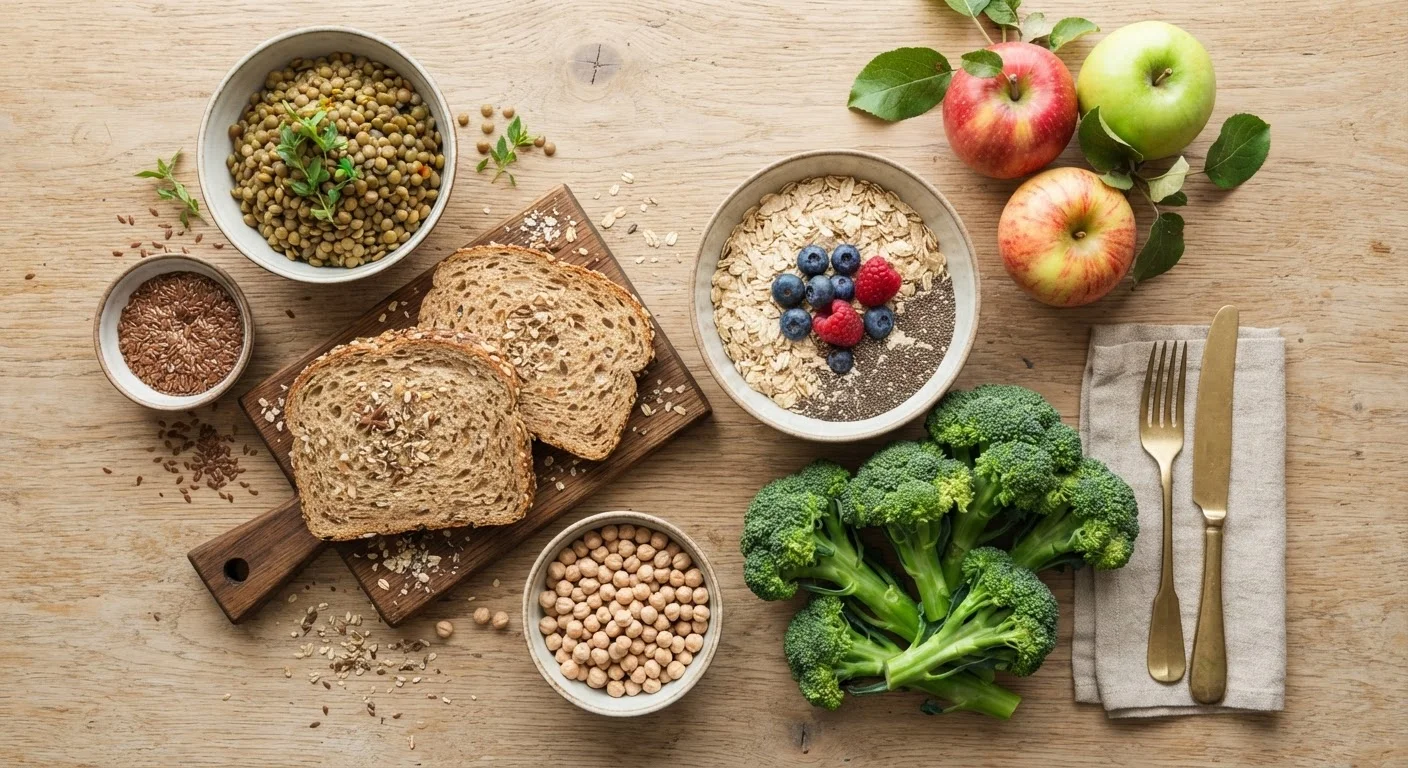
Dietary fiber, which is found in fruits, vegetables, legumes, and whole grains, also relies on adequate water to function properly. Fiber absorbs water in the digestive tract, where it slows digestion, supports gut motility, and feeds beneficial gut bacteria. Without enough fluid, a high-fiber diet can actually contribute to constipation rather than prevent it. Learn more about fiber and why most Americans fall short.
Recognizing and Responding to Hydration Needs
Hydration needs are not uniform. Body size, physical activity, environmental temperature, altitude, and certain health conditions all affect how much fluid a person requires. Pregnancy and breastfeeding also increase fluid needs - individuals in these situations should consult a healthcare provider for personalized guidance.
Urine color remains one of the most practical self-monitoring tools available. Pale straw yellow generally suggests adequate hydration; darker amber indicates it's time to drink more. Thirst is a helpful but imperfect signal - particularly for older adults, who may experience a reduced sense of thirst even when mildly dehydrated.
Mild dehydration - even at levels of 1-2% of body weight in fluid - has been associated with reduced concentration, increased fatigue, and impaired physical performance in research settings. These effects are modest but real, and they are reversible with adequate intake. For practical meal planning that keeps hydration in mind alongside food choices, see our guide on planning balanced meals through the week.
This article is for general informational purposes only and is not a substitute for professional medical advice. Consult a qualified healthcare provider for guidance specific to your health needs.