

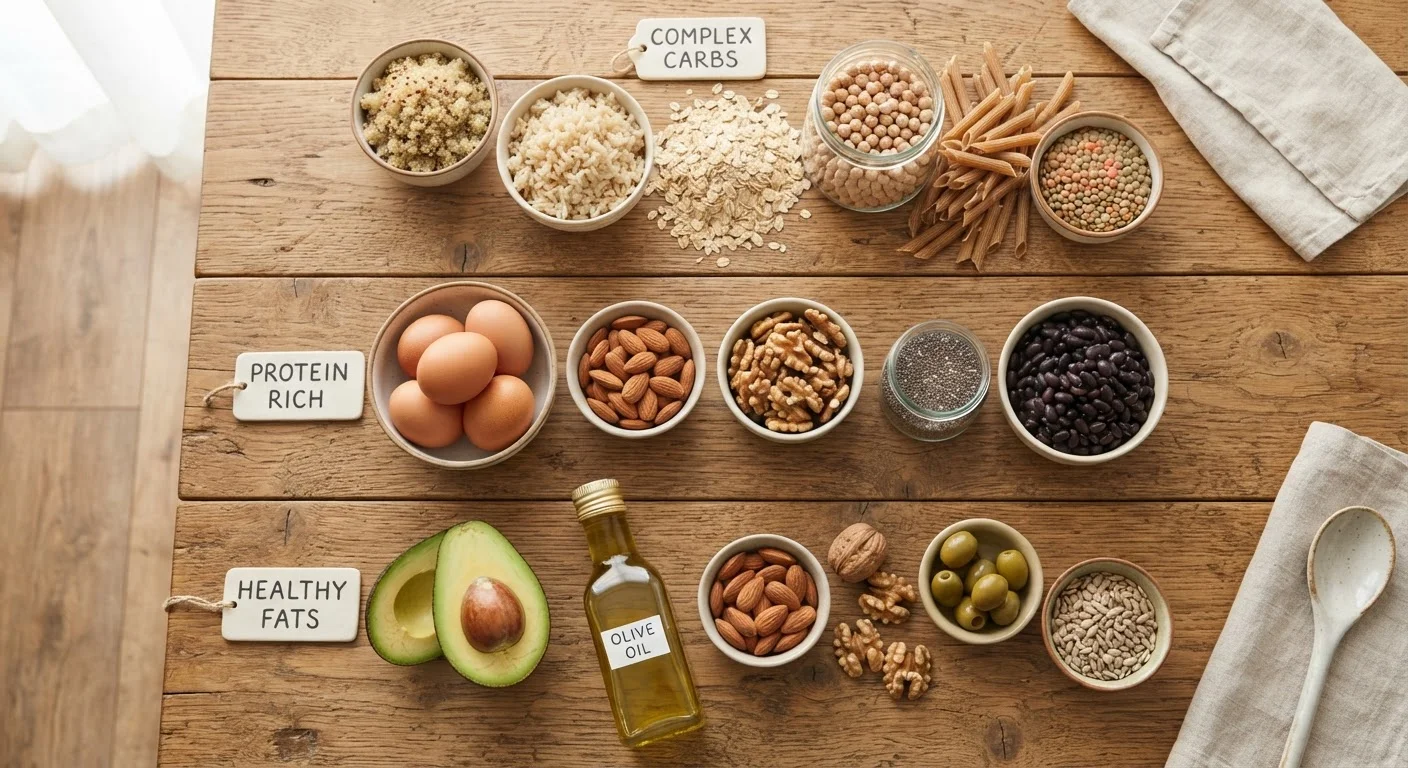
Carbohydrates: The Body's Go-To Fuel
Carbohydrates often get the most public debate, but their core function is straightforward: they are the body's primary and most rapidly available energy source. When you eat carbs, digestion breaks them down into glucose, which enters the bloodstream and powers everything from brain activity to muscle contractions.
Not all carbohydrates behave the same way. Simple carbohydrates - found in table sugar, fruit, and dairy - are digested quickly. Complex carbohydrates - found in whole grains, legumes, and starchy vegetables - digest more slowly, providing steadier energy and more dietary fiber. Fiber, technically a carbohydrate, is not digested for energy; instead, it supports digestive health, helps regulate blood sugar, and feeds beneficial gut bacteria.
Excess glucose that isn't immediately needed is stored in the liver and muscles as glycogen for later use. When glycogen stores are full, the body can convert remaining glucose to fat for longer-term storage. This is a normal metabolic process, not a reason to fear carbohydrates in a balanced diet.
Choose Carb Sources Wisely
When selecting carbohydrate-rich foods, prioritize sources that also deliver fiber, vitamins, and minerals - such as whole grains, legumes, fruits, and vegetables. These offer more sustained energy and greater nutritional value than refined options. The goal isn't to count grams obsessively, but to make whole-food choices most of the time.
Protein: The Body's Builder and Regulator
Protein's most recognizable role is building and repairing tissue - muscles, organs, skin, and hair all depend on it. But protein's responsibilities extend well beyond the gym. It forms enzymes that drive chemical reactions, antibodies that defend against infection, and hormones that coordinate bodily processes.
Proteins are made up of chains of amino acids. Of the roughly 20 amino acids the body uses, nine are considered essential - meaning the body cannot manufacture them and they must come from food. Complete protein sources, such as eggs, meat, fish, and soy, contain all nine essential amino acids. Most other plant sources contain some but not all, making dietary variety important for those eating primarily plant-based diets.
Protein also contributes to satiety. It is generally more filling per calorie than carbohydrates, which can help with appetite regulation as part of a balanced approach to eating. However, the optimal amount varies by individual - factors like age, physical activity, and health status all play a role. Consulting a registered dietitian is the most reliable way to identify your personal needs.
4 kcal/g
Energy provided by protein per gram
Per established nutritional science, protein and carbohydrates each yield 4 kilocalories per gram, while fat yields 9 - reflecting differences in energy density, not nutritional value.
9
Essential amino acids humans must obtain from food
The National Institutes of Health identifies nine amino acids as essential because the human body cannot synthesize them in adequate amounts from other compounds.
~60%
Proportion of the brain's dry weight that is fat
Research in neuroscience consistently highlights the brain's high lipid content, underscoring why dietary fat is critical for neurological health and cognitive function.
Dietary Fat: Far More Than Just Stored Energy
Fat has a reputation for being the macronutrient to minimize, but this misses its many critical functions. Dietary fat enables the absorption of fat-soluble vitamins - A, D, E, and K - which cannot enter the bloodstream without it. It also provides the structural material for cell membranes and supports the production of key hormones, including those that regulate inflammation and reproduction.
The brain is roughly 60% fat by dry weight, and fatty acids - particularly omega-3s found in fatty fish, walnuts, and flaxseed - are associated with cognitive function and reduced inflammation in ongoing research. While the science continues to evolve, the evidence consistently points to the type of fat mattering more than the total amount.
Unsaturated fats (found in olive oil, avocados, nuts) are widely regarded as beneficial. Saturated fats (found in red meat and full-fat dairy) are best consumed in moderation according to most major dietary guidelines. Trans fats, largely produced through industrial hydrogenation, have been extensively linked to cardiovascular risk and are now largely removed from the US food supply following regulatory action by the FDA.
For a broader view of how macros fit into your overall nutrition picture, see our complete nutrition guide. And if common claims about fat or carbs have left you confused, our nutrition myth fact-check offers science-grounded clarification.
Trans Fats and the US Food Supply
The FDA determined that partially hydrogenated oils - the primary source of artificial trans fats - are no longer Generally Recognized as Safe (GRAS) and required their removal from the US food supply. As a result, manufactured trans fats are now largely absent from packaged foods. Small amounts of naturally occurring trans fats still exist in some animal products, though their health impact differs from industrial trans fats.
Why Balance Across All Three Matters
Each macronutrient fills roles the other two cannot. Eliminating any one of them entirely - as some fad diets propose - creates real functional gaps. Very low-fat diets can impair vitamin absorption and hormone balance. Very low-carbohydrate diets deprive the brain of its preferred fuel and can be difficult to sustain. Very low-protein diets compromise tissue maintenance and immune response.
Rather than fixating on ratios or elimination, most established dietary guidelines emphasize overall food quality: choosing whole or minimally processed sources of each macronutrient, eating a variety of foods, and paying attention to how your body feels and functions. Macronutrients work together - alongside the vitamins and minerals your body depends on - as part of a complete nutritional picture.
This article is for general informational purposes only and is not a substitute for personalized medical or dietary advice. Always consult a qualified healthcare professional or registered dietitian before making significant changes to your diet.
“There are no good or bad foods - there are better or worse dietary patterns. Focusing on the overall quality and variety of your diet over time matters far more than any single food or nutrient.”
— Walter Willett, Professor of Epidemiology and Nutrition, Harvard T.H. Chan School of Public Health