
Why Nutrition Labels Matter
The Nutrition Facts label is one of the most practical health tools available to American consumers - and it's on nearly every packaged food you buy. Yet its small print and unfamiliar terms can make it feel more confusing than helpful. The good news: once you understand the structure, reading a label takes only a few seconds and can meaningfully inform your daily food choices.
This guide walks through each element of a standard FDA-format Nutrition Facts panel, explaining what the numbers mean and what to prioritize. For broader context on building a nutritious diet around these choices, see our beginner's guide to balanced eating.
This article is for general educational purposes only and is not a substitute for personalized medical or dietary advice. Consult a registered dietitian or qualified healthcare provider for guidance specific to your health needs.
What You Need Before You Start
No special tools are required - just a food package with a Nutrition Facts panel. Having a basic familiarity with the three main macronutrients (carbohydrates, protein, and fat) is helpful but not essential; this guide explains terms as they appear.
What you will need
Step-by-Step: Reading Each Section of the Label
Follow these steps in order. Each builds on the previous one, and skipping the first step - serving size - can make every other number misleading.
Find the Serving Size
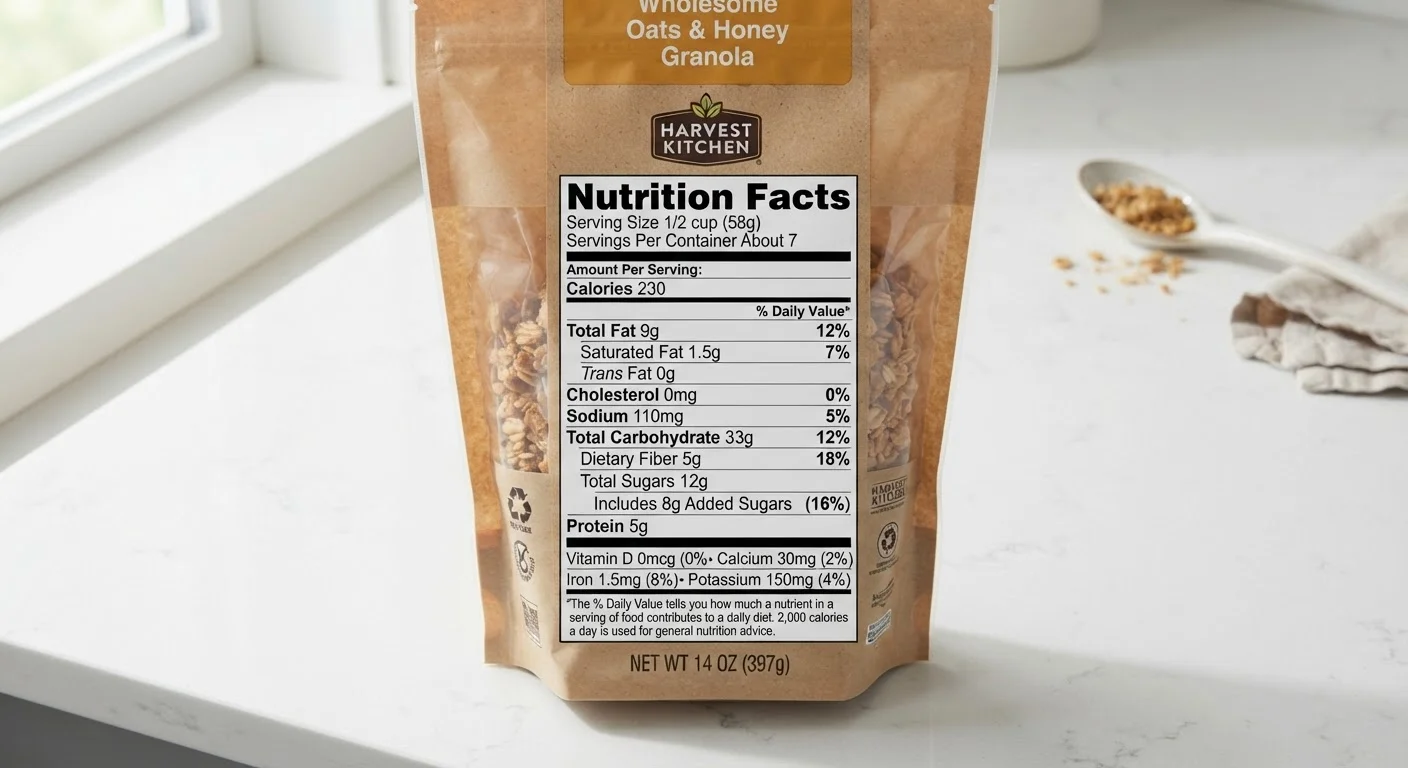
At the very top of every Nutrition Facts label is the serving size and the number of servings per container. Every single number on the rest of the label applies to one serving, not the entire package. If a bag of chips lists 7 chips as a serving but you typically eat half the bag, all nutrient values must be multiplied accordingly.
The FDA updated label formats in recent years so that serving sizes reflect amounts people typically eat, making this step more accurate than older labels - but it is still the most important number to confirm before reading anything else.
Check the Calories
Calories measure the total energy provided by one serving. The calorie count is displayed in large, bold type for easy visibility. Neither a high nor a low calorie count automatically makes a food good or bad - calorie needs vary widely based on age, body size, activity level, and health status. Use this number as one data point, not the whole story.
Understand % Daily Value (%DV)
The % Daily Value (%DV) column on the right side of the label shows how much of each nutrient one serving contributes toward a standard 2,000-calorie daily diet. A quick rule of thumb endorsed by the FDA: 5% DV or less is considered low for a nutrient; 20% DV or more is considered high. This scale works for both nutrients you want more of and those you want to limit.
Identify Nutrients to Limit
Three nutrients appear prominently because most Americans tend to consume too much of them:
- Saturated fat - linked to cardiovascular health; dietary guidelines generally recommend keeping intake low
- Sodium - excess intake is associated with elevated blood pressure in many people
- Added sugars - listed separately from total sugars; the Dietary Guidelines for Americans recommend limiting added sugars to less than 10% of total daily calories
Trans fat is also listed; dietary guidance generally recommends keeping intake as low as possible.
Look for Nutrients to Prioritize
Below the nutrients to limit, the label lists nutrients many Americans do not get enough of:
- Dietary fiber - supports digestive health and is associated with reduced risk of several chronic conditions
- Vitamin D and calcium - important for bone health
- Iron - essential for red blood cell function
- Potassium - supports healthy blood pressure
Using %DV here helps you choose foods that contribute meaningfully to these intake targets. Pairing label reading with a broader meal plan is a practical way to close nutritional gaps - see our guide to planning a week of balanced meals for practical strategies.
Use Labels for Comparison, Not Perfection
Nutrition labels are most useful when comparing similar products side by side - two breads, two yogurts - rather than as a measure of a food's absolute worth. A single food doesn't make or break a healthy diet. Focus on overall eating patterns, and use labels as a quick reference to inform, not to judge.
Beyond the Numbers: The Ingredient List
Directly below or beside the Nutrition Facts panel, you'll find the ingredient list. Ingredients are listed in descending order by weight, meaning the first ingredient makes up the largest proportion of the product. Scanning the first three to five ingredients gives you a quick sense of what the food is primarily made of.
Look for added sugars under many names - sucrose, high-fructose corn syrup, cane juice, dextrose, and maltose are all forms of added sugar. Whole-food ingredients (whole grains, vegetables, legumes) appearing early in the list are generally a positive sign.
"Natural" and "Healthy" Are Marketing Terms
Words like "natural," "wholesome," or "clean" on the front of a package are not regulated definitions with precise legal meanings under FDA rules. They do not reliably indicate a food's nutritional quality. Always flip to the Nutrition Facts panel and ingredient list to form your own assessment rather than relying on front-of-package claims.
For a deeper look at specific vitamins and minerals you might spot on labels, our micronutrients reference guide covers their roles and food sources in plain language. And if you want to understand how labels fit into a complete nutritional picture, explore the complete picture on nutrition.