

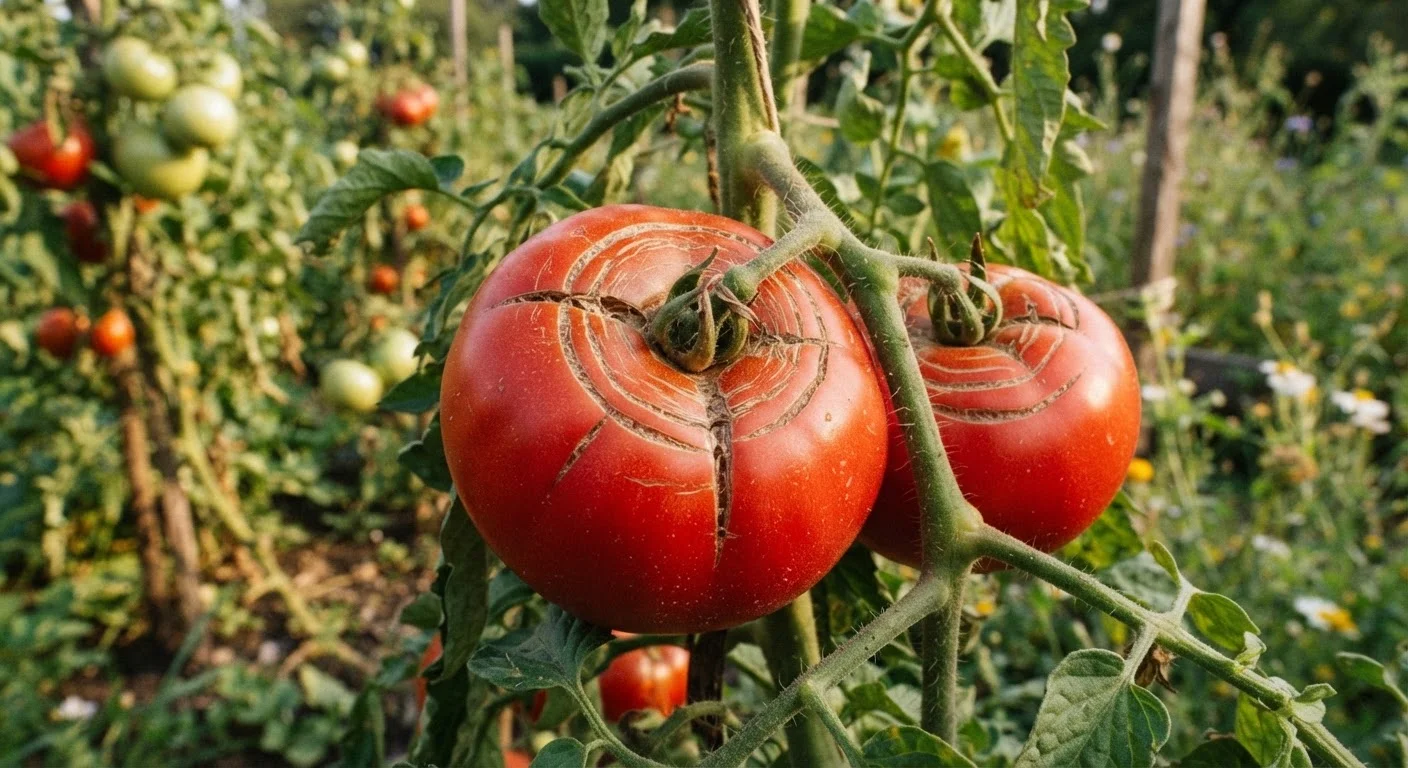
What's Actually Happening Inside a Cracked Tomato
Tomato cracking is a physiological response, not a disease. When a plant takes up water rapidly after a dry period, the fruit's interior - seeds, gel, and flesh - swells faster than the outer skin can expand to accommodate it. The skin splits under the pressure, producing cracks that radiate from the stem (radial cracking) or form rings around it (concentric cracking).
Radial cracks tend to run deeper and appear most often after heavy rain or sudden irrigation. Concentric cracks form rings and are more common late in the ripening process when the skin has already lost much of its flexibility. Both types signal the same underlying problem: uneven moisture delivery to the plant.
Understanding the mechanism matters because it shifts your attention to the real fix - managing water and soil conditions - rather than chasing a pest or pathogen that isn't there.
The Mistakes That Lead to Splitting Fruit
Most cracking problems come down to a handful of avoidable habits. Recognizing which mistakes apply to your garden is the first step toward a harvest you can actually enjoy.
Watering inconsistently - alternating between drought stress and heavy irrigation.
Why it happens: Many gardeners water reactively, waiting until plants look wilted before soaking the bed thoroughly. This boom-and-bust cycle is the single biggest driver of fruit cracking.
Skipping mulch around the base of tomato plants.
Why it happens: Gardeners often prioritize planting and fertilizing, treating mulch as an optional finishing step. Without it, soil moisture evaporates rapidly between waterings, creating the dry-wet cycle that cracks fruit.
Choosing crack-prone tomato varieties without knowing it.
Why it happens: Heirloom varieties, while prized for flavor, often have thin skins and are bred for taste rather than structural resilience. Gardeners select them without realizing the extra management they require.
Allowing foliage to thin out significantly as the season progresses.
Why it happens: Gardeners prune aggressively or ignore disease-related leaf loss, not realizing that the remaining fruit becomes exposed to intense direct sunlight. Solar heat accelerates uneven ripening and skin stress.
Leaving fully ripe tomatoes on the vine during periods of heavy rain.
Why it happens: It's tempting to wait for the deepest color and peak flavor, but fully ripe fruit has almost no remaining elasticity in its skin. A sudden rain event at this stage almost guarantees cracking.
Don't Overwater After a Dry Spell
Giving thirsty tomato plants a heavy soaking after several dry days seems intuitive, but it triggers the exact cracking mechanism you're trying to avoid. The sudden surge of water causes the fruit's interior to expand faster than the skin can stretch. Water slowly and steadily, allowing the soil to absorb moisture gradually rather than flooding the root zone all at once.
Timing Your Harvest to Beat the Crack
Even with optimal watering and mulching, an unexpected downpour can undo a week of careful management. Your harvest timing becomes a genuine tool for protecting fruit.
Tomatoes don't need to be fully red on the vine to taste good. Once a tomato enters the breaker stage - meaning it shows the first blush of color change - the fruit is no longer dependent on the plant for sugar development. Ethylene gas produced by the tomato itself finishes the ripening process regardless of whether the fruit is still attached.
During stretches of heavy rain or high humidity, pulling tomatoes at the breaker stage and ripening them on a countertop away from direct sunlight is a practical, low-effort strategy that preserves flavor and prevents loss. Avoid refrigerating unripe tomatoes, as cold temperatures halt ripening and permanently damage texture.
Cracked Tomatoes Are Still Edible - With Caution
A freshly cracked tomato that is harvested immediately is generally safe to eat if the crack is shallow and there are no signs of mold or insect entry. However, cracks that have been exposed overnight or longer create an open pathway for bacteria, fungal rot, and insects. Inspect cracked fruit carefully and use it the same day if you choose to consume it.