
Why These Spaces Deserve Your Attention
Attics and crawl spaces represent a significant portion of your home's overall envelope - the barrier between your living space and the outside world. Yet most homeowners go years without setting foot in either. Out of sight genuinely does become out of mind, and that's how small, fixable problems become expensive structural or mold remediation projects.
The three problems that cause the most damage in these spaces are moisture accumulation, poor ventilation, and pest intrusion. Each can develop quietly over months or years. Moisture weakens wood framing, encourages mold growth, and corrodes metal fasteners. Inadequate ventilation traps heat and humidity, shortening roof life and driving up energy costs. Pests - from mice to carpenter ants - can compromise insulation, gnaw wiring, and damage structural members. Understanding what you're looking for makes a big difference in catching issues before they escalate. For a broader look at how neglected maintenance translates into avoidable bills, see home maintenance myths that cost homeowners money.
Know Your Limits Before You Go In
Crawl spaces can harbor mold spores, radon gas, or sewage odors from failing pipes - hazards that aren't always visible. If you see standing water, smell sewage, or suspect significant mold growth, do not enter. Contact a qualified inspector or remediation contractor instead. Working in a confined, potentially contaminated space without proper training or equipment poses a real health risk.
Before you start, gather your tools and protective gear. You won't need anything specialized for a basic inspection.
Flashlight or Headlamp
Provides the illumination needed to see into dark corners, behind insulation, and along structural framing.
N95 or P100 Respirator
Protects your lungs from insulation fibers, mold spores, and dust common in unfinished spaces.
Moisture Meter
Measures the moisture content of wood framing and subfloor material to detect hidden dampness before visible damage appears.
Telescoping Inspection Mirror
Allows you to see around pipes, into tight corners, and behind structural members without repositioning your body.
Temporary Walkboards (plywood scraps)
Create a safe walking surface in the attic so you step only on structural joists, not between them.
How to Inspect Your Attic and Crawl Space
The steps below walk through a systematic inspection of both spaces. If your home only has one - some homes have neither a usable attic nor a crawl space - simply apply the relevant steps.
What you will need
Gather your gear and tell someone you're going in
Before opening any hatch, assemble your safety equipment: respirator, safety glasses, gloves, and protective clothing. Crawl spaces and attics can expose you to fiberglass insulation, dust, mold spores, and in some regions, radon or pest droppings. A basic N95 mask is the minimum; a P100 respirator is better if you suspect mold.
Tell a household member or neighbor that you are entering the space and approximately how long you expect to be inside. This simple step matters in a confined area where a fall or medical issue could go unnoticed.
Access the attic and assess ventilation first
Enter through the access hatch - typically a pull-down stair or a simple panel in a closet ceiling. Before moving further in, pause and look at the roof sheathing (the wood panels directly under your shingles). Uniform color with no dark staining is a good sign. Dark patches, streaking, or soft spots suggest moisture intrusion or condensation problems - both of which damage wood over time and can lead to mold.
Next, locate your vents: soffit vents along the eaves and ridge or gable vents near the peak. Check that insulation hasn't been pushed over soffit vents, blocking airflow. Proper attic ventilation - the specific requirement varies by roof area and local code - is essential for preventing the heat and moisture buildup that shortens shingle life and rots framing.
Check insulation coverage and condition
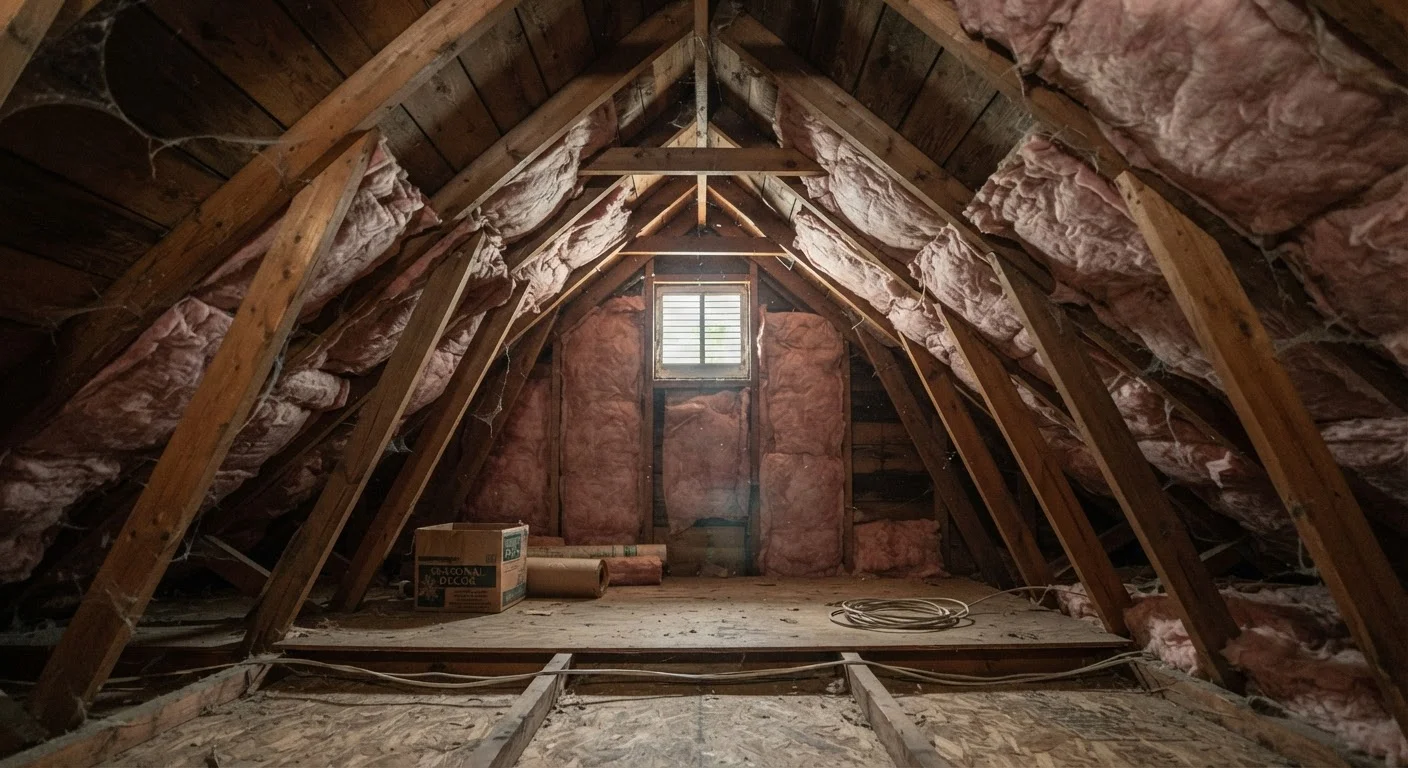
Scan the attic floor for even insulation coverage. Gaps, thin spots, or insulation that has been compressed by foot traffic significantly reduce its effectiveness. The U.S. Department of Energy publishes zone-specific R-value recommendations (R-value is the measure of thermal resistance) - many older homes fall well below current guidelines.
Also look for insulation that appears discolored, matted, or wet. Wet insulation loses almost all of its insulating value and can become a medium for mold growth. If batts (the rectangular sections of insulation) look darker at the edges or compressed, investigate the moisture source before simply replacing the insulation.
Look for pest activity and entry points
Rodents, squirrels, and birds commonly use attics as shelter, especially in fall. Signs include droppings, nesting material (torn insulation, leaves, or shredded paper), gnaw marks on wood or wiring, and worn trails through the insulation. Any evidence of gnawed wiring should prompt a call to a licensed electrician - damaged insulation on wires is a fire hazard.
Trace the roofline and look for gaps where soffit meets the fascia, around pipe penetrations, or near gable vents with damaged screens. Sealing these entry points is the most effective long-term pest control measure. Common home maintenance myths include the belief that a tidy home repels pests - in reality, structural gaps are the primary entry route regardless of cleanliness.
Move to the crawl space and check for moisture
Access the crawl space through the exterior vent panel or an interior hatch. Lay down a piece of plywood if the ground is wet or uneven. Your primary concern here is moisture: look for standing water, wet soil, condensation on pipes, and rust on metal connectors or fasteners.
The ground in most crawl spaces should be covered by a vapor barrier - a heavy plastic sheeting, typically polyethylene, that limits moisture evaporation from the soil into the space above. Check that the barrier is intact, overlapping seams by at least 6-12 inches, and weighted down at the edges. Gaps or tears in the vapor barrier are easy and inexpensive to fix but have an outsized impact on long-term wood health. Issues found in your crawl space may also appear on a professional home inspection report, so knowing what to look for helps you interpret those findings.
Inspect structural framing and insulation from below
With your flashlight, examine the floor joists - the horizontal timbers supporting your home's main floor - for signs of rot, cracks, or sagging. Probe any discolored or soft-looking wood with a screwdriver; wood that crumbles or gives way easily indicates rot that needs professional evaluation. Do not attempt structural repairs without consulting a licensed contractor or structural engineer.
If insulation is installed between the floor joists, check that it hasn't fallen down. Dropped insulation reduces energy efficiency and leaves the subfloor exposed to cold and moisture. Insulation support rods (inexpensive wire rods available at hardware stores) can temporarily hold batts in place until you can make a more permanent repair.
Log your findings and schedule any follow-up
Before exiting, make a quick written list of everything you observed: areas of concern, approximate locations, and whether the issue appears new or long-standing. Use the photos you took as a reference. Sort your findings into three categories: (1) fix now - immediate safety or water intrusion issues; (2) fix soon - deteriorating conditions that aren't yet critical; and (3) monitor - minor concerns to check at your next inspection.
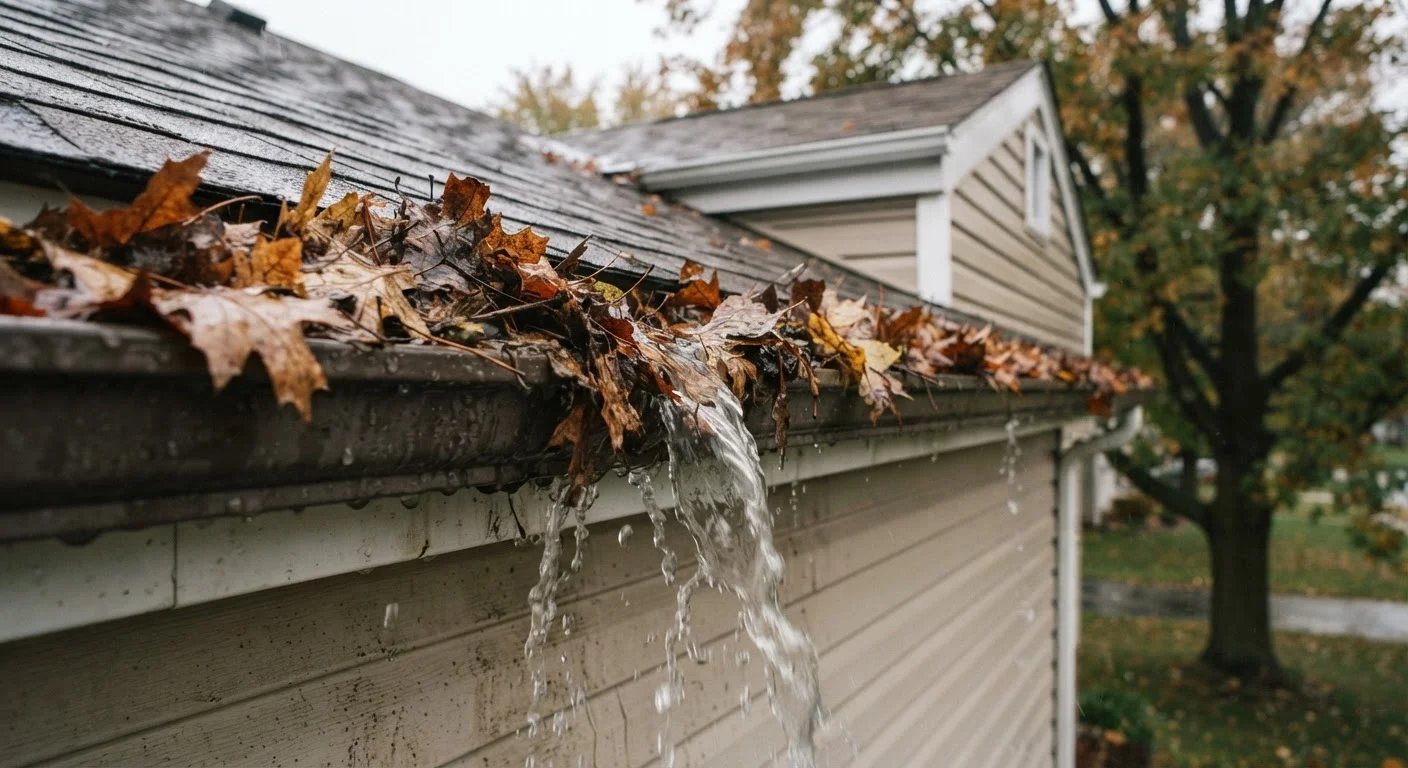
Aim to do this inspection at least once a year. Many homeowners find fall the most practical timing - conditions are usually dry, and any problems found can be addressed before winter weather stresses the home. Pairing this with gutter maintenance makes practical sense; gutter failure is one of the leading causes of the moisture issues you'd be looking for in your crawl space.
Photograph Everything You Find
Use your phone to take clear photos of any staining, damage, pest evidence, or insulation gaps before you leave the space. A visual record helps you track whether a problem is getting worse over time and gives a contractor a clear picture without requiring an additional site visit.
Don't Step Between Attic Joists
Attic floors are typically unfinished - the only structural support is the narrow framing. Stepping between joists onto insulation or drywall can send you through the ceiling below. Always step only on the joists themselves, or lay down temporary walkboards before moving around.
If you discover active mold growth covering more than a small area (roughly 10 square feet is a commonly cited threshold for professional remediation), standing water, damaged structural members, or evidence of significant pest infestation, stop and contact a licensed professional. These are not DIY situations. Note also that some crawl spaces in certain regions may have elevated radon levels - if you haven't tested your home for radon, it's worth doing separately from this inspection.
Keeping this kind of maintenance routine is part of responsible homeownership - the same principle that applies to overlooked systems throughout the house. Just as smoke detectors and CO alarms require regular testing to function when it counts, your structural spaces need periodic eyes on them to stay sound.