
The Core Question: What's the Real Cost of Getting It Wrong?
Every home repair decision comes down to one honest question: what happens if this goes wrong? For a botched caulk job around the bathroom sink, the answer is simple - you scrape it off and redo it. For a wiring mistake, the answer might be an electrical fire. That gap in consequence is the foundation of the DIY-versus-pro decision.
It's worth understanding that the line isn't drawn by skill alone. It's drawn by risk, regulation, and reversibility. A task can be within your technical reach but still require a licensed contractor because local building codes demand it - and skipping that step can cause real problems when you sell the house or file an insurance claim. See our overview of projects that commonly require permits for a useful baseline.
Start every repair by asking three things: Could this injure me or damage the home if done incorrectly? Does it involve electrical, gas, or structural systems? Is a permit likely required? If you answer yes to any of these, lean strongly toward hiring a professional.
Repairs Most Homeowners Can Handle Safely
A wide range of common maintenance tasks carry low risk and don't require specialized licenses. These are good candidates for DIY - provided you follow product instructions, use proper safety gear, and know when a job has grown beyond the original scope.
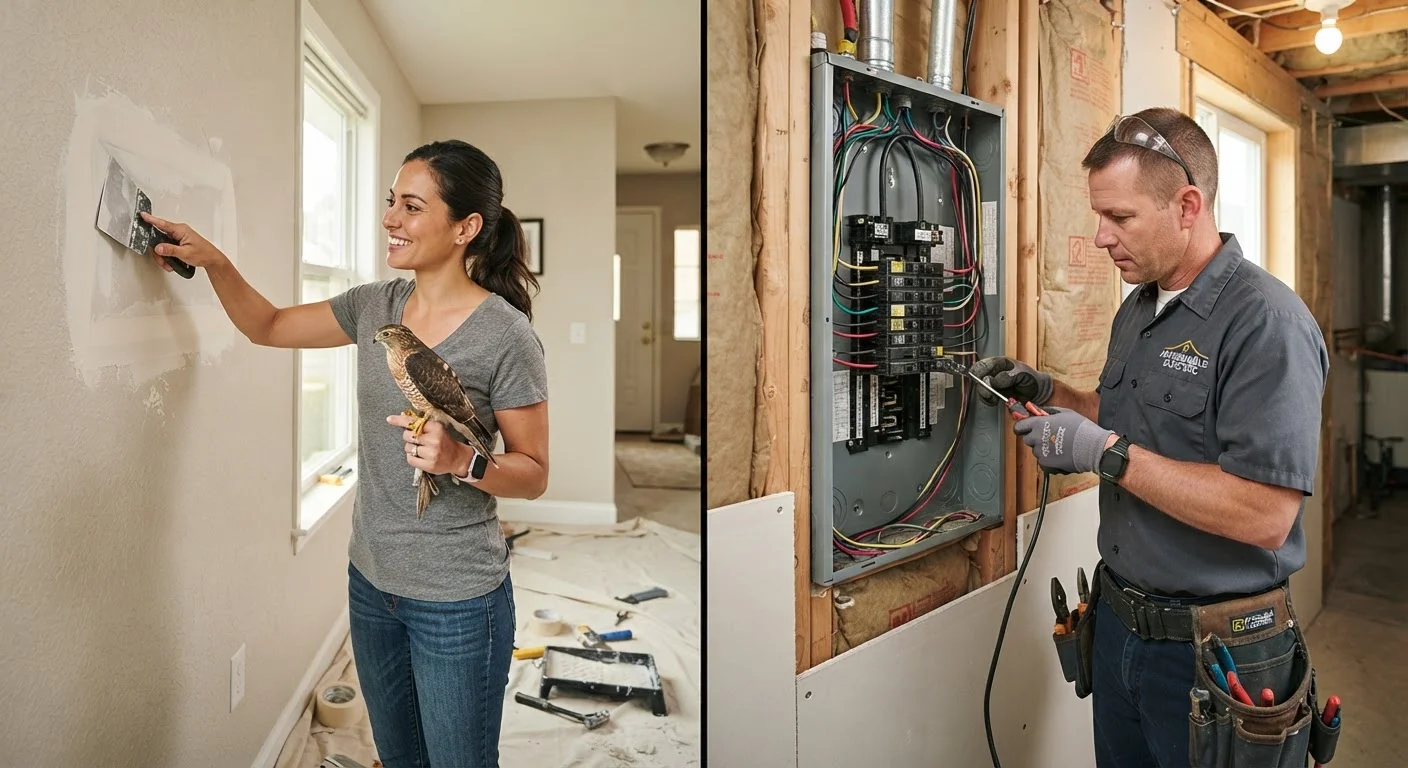
- Patching drywall: Small holes from nails or doorknobs are straightforward fixes using patching compound and a putty knife.
- Caulking and weatherstripping: Sealing gaps around windows, doors, and tubs prevents moisture damage and heat loss.
- Replacing faucet aerators, showerheads, or toilet flappers: These involve no soldering or main line work - just hand tools and a shut-off valve.
- Painting interior walls: Prep work matters more than brush technique. Clean surfaces and proper primer make the difference.
- Unclogging drains: A drain snake or enzymatic cleaner handles most slow drains without touching supply lines.
- Replacing light switches, outlets, and fixtures: Swapping like-for-like devices is manageable only when power is fully confirmed off at the breaker and you understand basic wiring.
If you're newer to homeownership and building your maintenance confidence, this grounded introduction to home improvement covers where to start and how to prioritize.
Do a Honest Skills Audit Before Starting
Before beginning any repair, list the steps involved and ask whether you've successfully done each one before. Watching a tutorial is not the same as having hands-on experience. If two or more steps are unfamiliar, consider getting a professional quote - it may cost less than fixing a DIY mistake. Many contractors also offer paid assessments that help you understand scope before committing.
Work That Should Always Go to a Licensed Professional
Certain categories of home repair carry consequences serious enough - legally, physically, and financially - that professional licensing exists specifically to protect homeowners and neighbors.
| Task Type | DIY-Friendly | Hire a Pro | |
|---|---|---|---|
| Safety risk if done wrong | Low - cosmetic or easily reversible | High - injury, fire, or structural damage possible | |
| Permit typically required | No | Often yes | |
| Specialized license needed | No | Yes - electrical, gas, structural | |
| Skill/tool threshold | Basic tools, widely accessible techniques | Specialized training and equipment | |
| Example tasks | Caulking, painting, drain clearing | Panel upgrades, gas lines, roof replacement | |
| Cost of getting it wrong | Low - redo the work | High - major repairs, fines, or safety hazards |
- Electrical panel work: Upgrading a panel, adding circuits, or any work inside the breaker box involves risks that extend to your entire home's wiring. Licensed electricians are required in virtually all jurisdictions.
- Gas lines: Any modification, extension, or repair to gas supply lines must be handled by a licensed plumber or gas fitter. A small leak can be catastrophic.
- Structural changes: Removing or altering walls - especially load-bearing ones - affects your home's structural integrity. Before swinging a hammer, understand how to identify load-bearing walls.
- Roofing: Beyond minor shingle replacements, roof work involves fall risk, moisture barriers, and often permit requirements. Improper installation can void manufacturer warranties.
- Main plumbing lines: Tying into supply or drain lines that connect to the municipal system typically requires permits and a licensed plumber.
When you do hire someone, knowing what to look for matters. These questions help you vet contractors before any work begins, and understanding a contractor estimate helps you evaluate what you're being quoted.
The Gray Zone: Tasks That Depend on Circumstance
Some repairs sit in between - manageable for an experienced DIYer, but risky for someone without the right background. These require an honest self-assessment rather than a blanket rule.
Tile and flooring installation is within DIY range for small rooms with straightforward layouts, but large-format tile, heated floors, or tricky subfloor conditions can go sideways fast. Minor roof repairs - replacing a handful of damaged shingles - are technically simple but require comfort working at height and knowledge of flashing and underlayment. HVAC filter replacement and basic upkeep is firmly DIY territory, but refrigerant handling and duct modifications are not.
The most important thing you can do in the gray zone is avoid letting a project creep beyond your original scope without reassessing. A ceiling patch that reveals water damage, or a faucet replacement that uncovers corroded pipes, changes the risk profile entirely. Stop, assess, and call a professional if the job evolves.
It's also worth checking some common home maintenance myths - several of them involve homeowners either over-DIYing or unnecessary spending on professional services they didn't need.