

Labor Costs: What You're Paying For Beyond the Work Itself
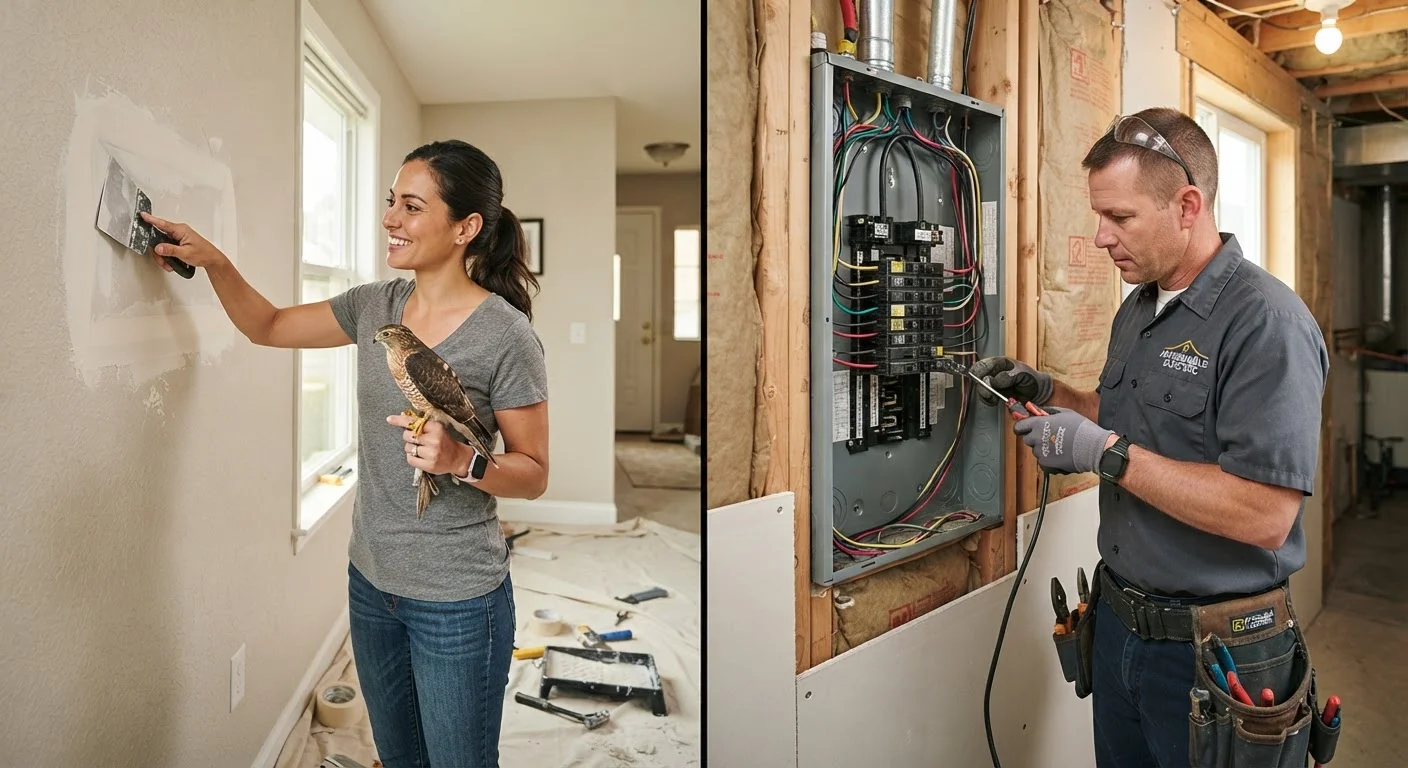
Labor is typically the largest single line item on a contractor estimate - and it's also the most misunderstood. The hourly rate a contractor quotes isn't what a worker takes home. Built into that rate are the contractor's payroll taxes, workers' compensation insurance, general liability insurance, and sometimes benefits. When a skilled tradesperson is listed at $85 per hour, a significant portion of that covers costs that protect both the worker and you as the homeowner.
Some estimates break labor into subcomponents - rough carpentry, finish work, demolition - while others lump it into a single total. Ask for a breakdown if it isn't provided. This helps you understand where time is being spent and makes it easier to compare estimates from different contractors on an apples-to-apples basis.
For guidance on when labor is worth hiring out versus handling yourself, see our DIY vs. hiring a pro guide.
Ask for a Detailed Labor Breakdown
If an estimate lists labor as a single lump sum, ask the contractor to break it into categories - demolition, framing, finish work, cleanup. This transparency makes it easier to compare proposals and understand where your money is going. Contractors who are confident in their pricing are generally willing to provide this detail.
Materials, Markup, and Allowances: The Numbers That Often Surprise
After labor, materials represent the next major cost bucket. Contractors typically purchase materials at trade pricing, then mark them up - commonly between 10% and 30% - before passing the cost to the homeowner. This markup covers their time sourcing, ordering, and managing materials, and it is a standard and legitimate business practice.
Allowances deserve special attention. An allowance is a placeholder figure for any item not yet finalized - think light fixtures, cabinet hardware, or flooring tile. If your estimate includes a $500 allowance for bathroom fixtures and you select fixtures that cost $900, you are responsible for the $400 difference. Allowances are one of the most common drivers of budget overruns. Push your contractor to use real product specifications wherever possible, and treat every allowance as a potential cost increase.
You may also see a line for subcontractors - electricians, plumbers, or HVAC technicians the general contractor brings in. These typically carry their own markup, since the GC is coordinating and taking responsibility for that work.
10-20%
Typical contractor overhead and profit markup
Industry guidelines from the National Association of Home Builders suggest overhead and profit commonly fall in this range, though market conditions and project size affect the figure.
5-15%
Recommended project contingency buffer
Construction cost consultants generally advise homeowners to budget a contingency of at least this amount to cover unforeseen conditions during renovation work.
For a plain-language explanation of renovation terminology that appears throughout estimates, our homeowner's renovation vocabulary guide covers the most common terms.
Permits, Overhead, and Contingency: The Line Items Homeowners Often Overlook
Permit fees are a non-negotiable cost on most renovation projects - and they belong in the estimate. The dollar amount varies by municipality and project type, but it should appear as a discrete line item, not hidden inside overhead. Confirm whether the contractor or the homeowner is responsible for pulling the permit. In most cases, the licensed contractor pulls permits in their name, which keeps accountability clear.
Overhead and profit (sometimes labeled O&P) is a separate line on more detailed estimates. This covers the contractor's business costs - office expenses, vehicles, estimating time, software - plus their profit margin. A typical combined O&P figure ranges from 10% to 20% of the total project cost, though this varies by market and project complexity. Seeing it itemized is a sign of a transparent estimate.
A contingency line - usually 5% to 15% of total cost - acknowledges that renovation work sometimes uncovers surprises: rotted framing behind a wall, outdated wiring that must be brought to code, or soil conditions that complicate a foundation. A contingency isn't a contractor padding their profit; it's a realistic buffer for genuine unknowns. Projects without a contingency often end up going over budget anyway - the contingency just makes the conversation more honest upfront.
Before signing any contract, review our questions to ask before hiring a contractor to make sure you've covered all your bases.
Permits Protect You, Not Just the Contractor
Permitted work is inspected by a local building official, which provides an independent check that the work meets code. Unpermitted work can create complications when refinancing, selling your home, or filing an insurance claim. If a contractor suggests skipping the permit process, treat that as a serious red flag. Always verify what permits are required with your local building department before work begins.
How to Compare Estimates Without Getting Misled by the Bottom Line
When you have multiple estimates in hand, resist the urge to simply compare totals. A lower bottom line often means something is missing - a permit fee excluded, a subcontractor cost omitted, or materials specified at a lower grade. True comparison requires reading each estimate against a consistent scope of work.
Create a simple checklist of what the project should include and verify each item appears in every estimate. If one contractor includes demolition and haul-away and another doesn't mention it, that's a real cost difference - not a sign that one contractor is more efficient. Ask each contractor directly: What is not included in this estimate? The answer is often as revealing as the estimate itself.
Pay attention to how each estimate handles change orders - modifications to the original scope after work has begun. Reputable contractors specify in writing how change orders are priced and approved. An estimate with no mention of change orders is a gap worth closing before work begins.