
Why Finish Matters as Much as Color
Most homeowners spend considerable time picking the perfect paint color - and then grab whatever finish is on sale. That's a mistake worth understanding. Paint finish, also called sheen level, determines how light bounces off a wall, how easy the surface is to clean, and how long it holds up in demanding environments like kitchens and bathrooms.
Finish is not just an aesthetic detail. A flat matte paint in a high-traffic hallway will show scuff marks and resist cleaning poorly. A high-gloss finish in a bedroom can feel clinical and amplify every wall imperfection. Matching sheen to function saves repainting headaches and money over time.
| Number of standard finish levels | 5 (Flat, Eggshell, Satin, Semi-Gloss, High-Gloss) |
| Most washable finish | High-Gloss |
| Best finish for ceilings | Flat / Matte |
| Recommended finish for bathrooms and kitchens | Semi-Gloss |
| Finish that best hides wall imperfections | Flat / Matte |
| Most common finish for living rooms | Eggshell or Satin |
The Five Main Finish Types Explained
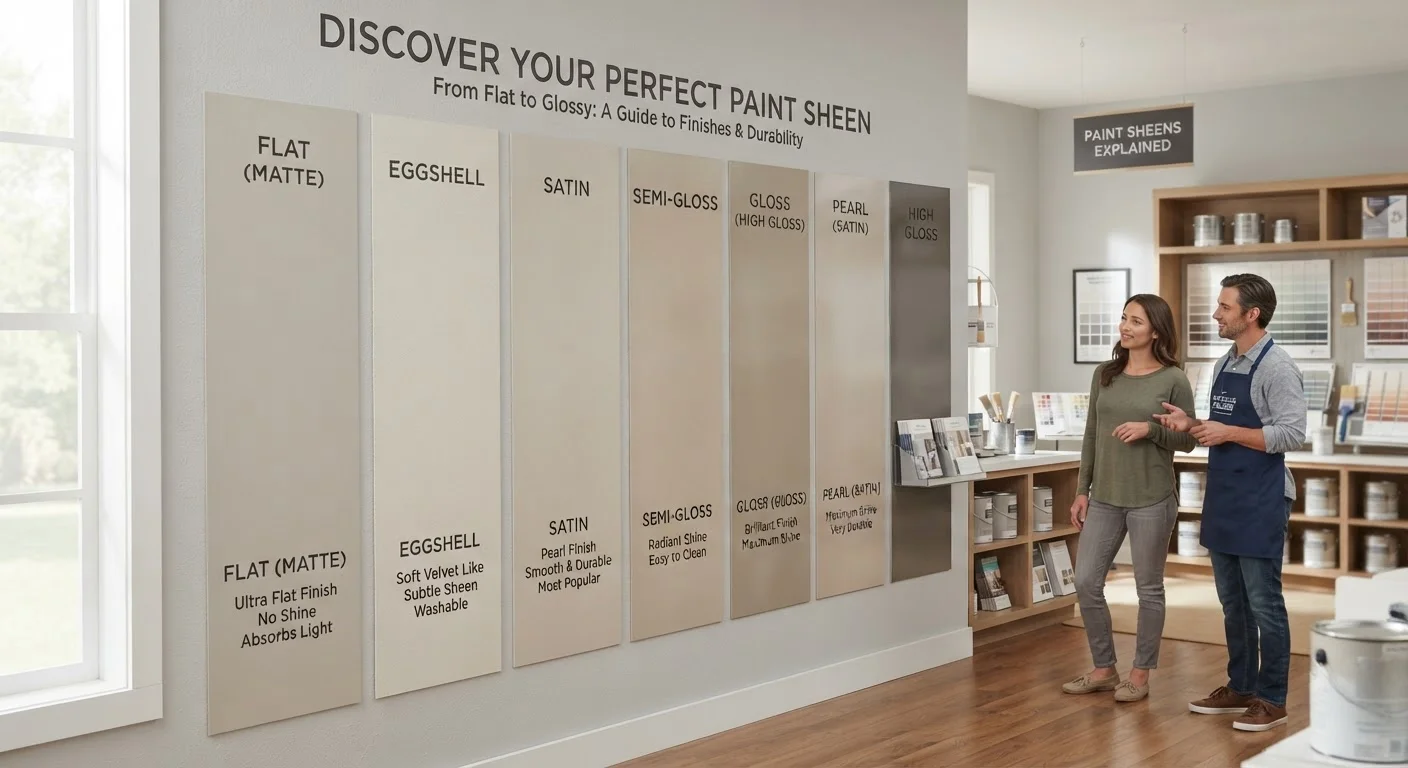
Paint manufacturers use slightly different terminology, but the industry broadly recognizes five sheen levels:
- Flat / Matte: Reflects very little light. Hides surface imperfections exceptionally well because the texture diffuses light rather than bouncing it. Difficult to wipe clean without removing paint. Best suited for low-traffic areas like formal dining rooms, ceilings, and adult bedrooms where walls rarely need scrubbing.
- Eggshell: Named for the subtle sheen of an eggshell. A step up from flat, it offers a faint glow and slightly better washability. A popular choice for living rooms and bedrooms where a clean look matters but heavy cleaning is rare.
- Satin: A smooth, velvety sheen that reflects more light than eggshell. Considerably more washable and moisture-resistant, making it well-suited to children's rooms, hallways, and family spaces that see active use. Also works on trim when a softer look is preferred over gloss.
- Semi-Gloss: Noticeably shiny and highly durable. Resists moisture and stands up to repeated cleaning. The standard choice for kitchens, bathrooms, laundry rooms, and woodwork including doors, trim, and cabinets.
- High-Gloss: The shiniest option available. Extremely hard and washable, but unforgiving - it highlights every bump, crack, or roller mark on a wall surface. Typically reserved for trim, furniture, cabinetry, and accent details rather than large wall areas.
Sheen level
A measure of how much light a dried paint surface reflects. Higher sheen means more light is bounced back, resulting in a shinier appearance.
Flat / Matte finish
A paint finish with minimal light reflection that excels at hiding surface imperfections but offers limited washability.
Eggshell finish
A low-sheen finish with a subtle glow resembling an eggshell surface, offering slightly better cleanability than flat paint.
Satin finish
A mid-range sheen that provides a smooth, velvety look with good washability, suitable for moderate-traffic areas.
Semi-gloss finish
A notably shiny, moisture-resistant paint finish commonly used in kitchens, bathrooms, and on woodwork due to its durability.
High-gloss finish
The highest sheen level available, extremely durable and washable, but highly reflective - best reserved for trim and accent surfaces.
Primer
A preparatory coating applied before paint to improve adhesion, seal porous surfaces, and ensure consistent color and sheen results.
Room-by-Room Finish Guide
Using these sheen levels as a reference, here's a practical room-by-room framework:
| Room | Recommended Finish | Why |
|---|---|---|
| Living Room | Eggshell or Satin | Balanced washability without a shiny appearance |
| Bedroom (adult) | Flat or Eggshell | Low traffic, hides imperfections, soft look |
| Children's Room | Satin | Handles crayon and handprint cleaning well |
| Kitchen | Semi-Gloss | Resists grease, steam, and repeated wiping |
| Bathroom | Semi-Gloss | Moisture and mildew resistance |
| Hallways / High-Traffic | Satin or Semi-Gloss | Durability against scuffs and marks |
| Trim, Doors, Cabinets | Semi-Gloss or High-Gloss | Hard finish for frequent contact surfaces |
| Ceiling | Flat | Minimizes reflections and imperfections overhead |
Keep in mind that surface preparation matters regardless of finish. Even the most durable semi-gloss paint won't perform well over unprepared, dirty, or unprimed surfaces.
Common Mistakes and Practical Tips
Even experienced DIYers repeat a few avoidable errors when choosing finish:
- Using flat paint in bathrooms: Without moisture resistance, flat paint can peel, blister, and harbor mold in humid spaces. Always use a finish rated for wet areas.
- Skipping primer before switching sheen levels: Jumping from a high-gloss surface to a matte paint without priming first often leads to adhesion failure and uneven sheen.
- Assuming one finish for all trim: Interior trim typically benefits from a harder finish than walls. Using the same eggshell on both walls and trim can make woodwork look undefined and harder to wipe clean.
- Ignoring lighting conditions: A satin finish in a room flooded with direct sunlight will appear significantly shinier than the same paint in a dimly lit space. Test a sample panel and observe it at different times of day before committing.
A Note on Paint Labeling Variation
Not all manufacturers use identical terminology. Some brands label their mid-range sheen as 'pearl' or 'velvet' rather than 'satin.' When in doubt, check the product's sheen percentage or ask for a comparison chart at the paint counter. The underlying sheen performance - not the marketing name - is what matters for your room's needs.