
Why a Home Monitoring Routine Matters
Veterinary checkups are essential, but your pet only sees the vet a few times a year. The rest of the time, you are the most important observer of their health. Because animals instinctively mask discomfort, the earliest signs of illness are often subtle - a slight dullness to the coat, a modest drop in appetite, or a small change in energy level. These clues can vanish from memory by the time an appointment rolls around.
A structured at-home routine closes that gap. It trains your eye to recognize your pet's personal baseline, so even small deviations stand out. Think of it less as playing vet and more as being an informed witness - someone whose careful observations help a veterinarian do their job better. For more on what that professional partnership looks like, see our guide to annual wellness exams.
The routine outlined below works for dogs and cats and takes roughly 10-20 minutes once you've practiced it a few times. You'll need no medical training - just patience, consistency, and a willingness to look closely.
What you will need
What You'll Need Before You Start
No specialized equipment is required, but a few basic items make the process more reliable and the results more useful over time.
Bathroom or pet scale
Used to track your pet's weight accurately at each check.
Notebook or notes app
Records observations over time so you can identify trends and share findings with your vet.
Small flashlight or phone torch
Helps illuminate the mouth, ears, and skin for a clearer visual inspection.
Fine-tooth comb or grooming brush
Parts the coat for a closer look at skin condition and helps detect parasites.
Step-by-Step: Your At-Home Health Check
Work through these steps in roughly the same order each time. Consistency helps your pet stay calm and helps you notice when something is off. Pair this routine with our monthly room-by-room wellness checklist for a thorough approach.
Weigh Your Pet
Use a scale consistently - ideally the same one each time. For small dogs and cats, step on a bathroom scale holding your pet, then subtract your own weight. For larger dogs, a flat pet scale gives more accurate readings. Record the number in your log. Weight loss or gain of more than 5-10% of body weight over a few weeks is worth discussing with your vet, as it can indicate metabolic, dental, or digestive issues.
Check the Gums and Mouth
Gently lift your pet's lip and look at the gum tissue. Healthy gums in dogs and cats are typically a salmon-pink color and moist to the touch. Press a fingertip against the gum, release it, and count how long the color takes to return - this is called capillary refill time, and it should be under two seconds. While you're there, scan for broken teeth, heavy tartar, inflamed tissue, or unusual odors. Dental disease is common and often underdetected; our article on overlooked dental health in pets explains what to watch for.
Examine the Eyes and Ears
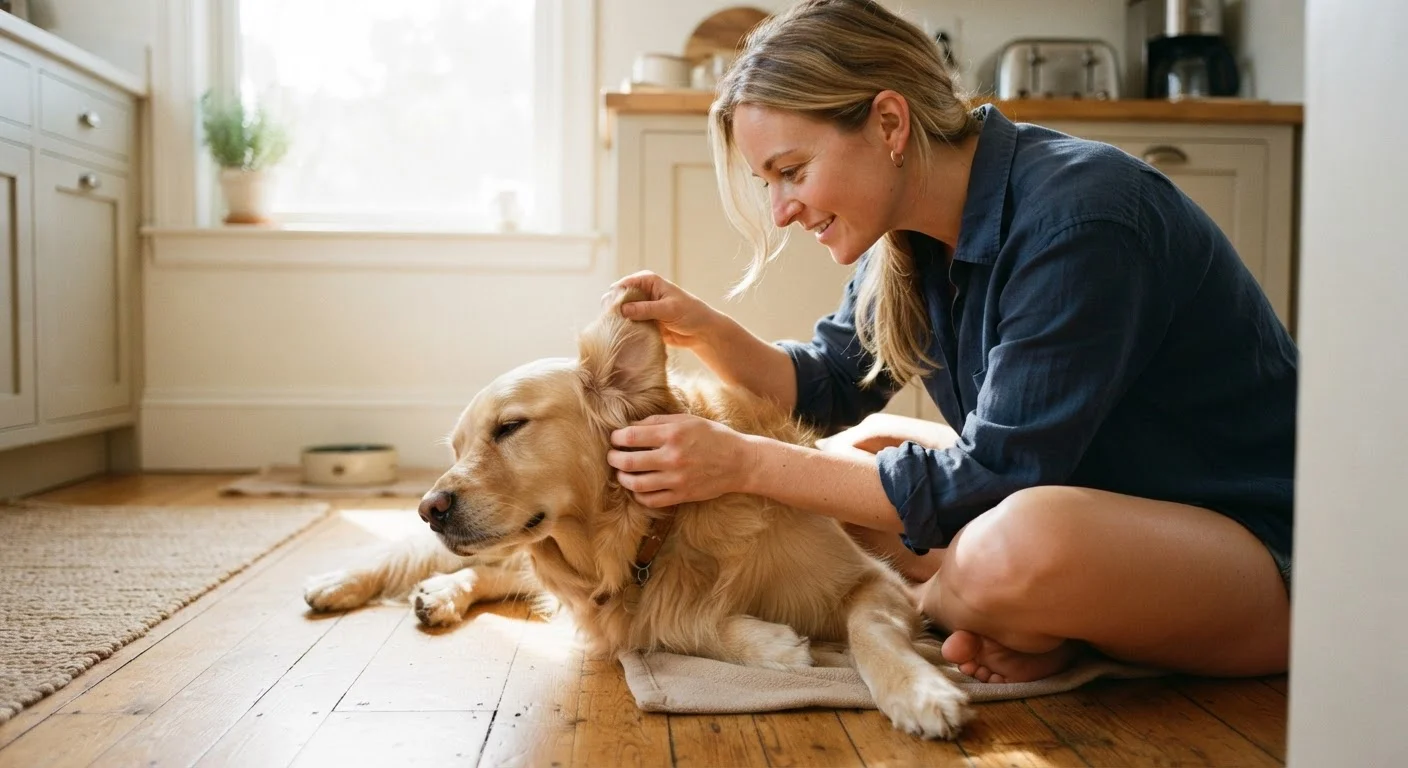
Look at each eye for clarity, equal pupil size, and the absence of discharge or redness. A small amount of crust at the inner corner can be normal, but ongoing watering, cloudiness, or squinting warrants attention. For the ears, check for redness, swelling, dark debris, or a strong odor - these can indicate infection or parasites. Don't probe the ear canal; a visual check of the outer area is sufficient at home. For a detailed reference on what normal looks like, see what a healthy pet's coat, eyes, and ears actually look like.
Assess the Coat and Skin
Run your hands slowly along your pet's entire body. You're looking for lumps, bumps, or tender spots, as well as changes to the coat itself - thinning areas, excessive shedding, dandruff, or a dull texture can all signal nutritional gaps, allergies, hormonal shifts, or parasites. Part the fur in several spots to check for fleas, ticks, or skin irritation at skin level. A healthy coat is generally smooth, clean-smelling, and free of bald patches.
Observe Behavior and Mobility
Take a few minutes to watch your pet move, eat, drink, and interact normally. Is their gait smooth and even? Are they using stairs without hesitation? Note any limping, stiffness after rest, reluctance to jump, or changes in posture. Changes in thirst or urination frequency, shifts in appetite, unusual vocalizing, or decreased interest in play are all worth logging and mentioning to your vet. These behavioral signals often appear before any visible physical sign. Your pet's needs also shift with age - our overview of pet wellness across life stages covers what to prioritize at each phase.
Record Your Findings
Write down the date, your pet's weight, and any observations - both normal and abnormal. A basic notebook or a notes app works fine. Over weeks and months, this record becomes a meaningful health history that helps your veterinarian identify patterns and make more informed decisions. Bring it to every appointment. Even consistently normal entries are useful, because they establish your pet's personal baseline.
Recognizing When to Call the Vet
At-home checks are not a substitute for professional diagnosis. If your routine turns up anything that concerns you - or if your pet's behavior changes noticeably between checks - contact your veterinarian promptly. Don't wait for the next scheduled appointment if something feels wrong.
Specific red flags to act on immediately include persistent vomiting or diarrhea, labored breathing, collapse or extreme weakness, pale or white gums, inability to urinate, or signs of significant pain such as crying out or refusing to move. Our article on physical symptoms that warrant a vet call provides a thorough reference for distinguishing urgent from monitor-at-home situations.
Behavioral changes are equally important. Withdrawal, sudden aggression, or a significant drop in activity can all signal pain or illness before any physical symptom is visible. See our guide to behavioral changes that warrant a vet visit for a practical checklist.
Make It a Habit, Not a Task
The most effective monitoring routine is one you actually stick to. Try anchoring your weekly check to something you already do - a weekend morning walk, a regular grooming session, or a specific day of the week. Pets also respond better when the process is calm and associated with gentle handling and positive reinforcement. Keeping it short and consistent matters more than making it exhaustive.
This article is for general informational and educational purposes only and is not a substitute for professional veterinary advice. Always consult a licensed veterinarian with any concerns about your pet's health.