
How Common Is Pet Obesity - and Why Does It Matter?
According to data from the Association for Pet Obesity Prevention, more than half of dogs and cats in the United States are estimated to be overweight or obese. Despite how widespread it is, many owners do not recognize their own pet as having a weight problem - a phenomenon researchers sometimes call the "fat pet gap."
This matters because excess body weight is not merely a cosmetic issue. It places sustained physical stress on nearly every body system. Joints bear greater mechanical load, increasing the risk and progression of osteoarthritis. The pancreas can become strained, raising the likelihood of insulin resistance and diabetes - particularly in cats. The heart and lungs work harder, and inflammation throughout the body increases. Research in dogs has suggested that maintaining an ideal body weight may extend lifespan by roughly two years compared to overweight counterparts.
Understanding the scope of the problem is the first step toward addressing it. For more context on how health monitoring fits into long-term care, see building an at-home health monitoring routine.
~59%
U.S. dogs estimated overweight or obese
According to Association for Pet Obesity Prevention survey data, the majority of American dogs fall above their ideal body weight.
~61%
U.S. cats estimated overweight or obese
The same Association for Pet Obesity Prevention surveys suggest cats have an even higher prevalence of overweight status than dogs in the U.S.
~2 years
Potential lifespan reduction linked to obesity in dogs
A long-term Labrador Retriever study published in the Journal of Veterinary Internal Medicine found dogs maintained at lean body condition lived significantly longer than overweight counterparts.
What Actually Drives Weight Gain in Pets?
The fundamental mechanism is the same as in humans: caloric intake consistently exceeds caloric expenditure. But several specific factors make pets particularly vulnerable.
- Overfeeding and free-feeding: Leaving food available at all times makes it nearly impossible to track intake. Portion sizes printed on pet food bags are often general estimates and may not suit every individual animal.
- Treats and table scraps: Even small amounts of high-calorie human food or frequent treat-giving adds up quickly, especially for small dogs and cats where a single treat can represent a substantial fraction of daily caloric needs.
- Reduced activity: Indoor-only cats and dogs in apartment settings frequently get less exercise than their bodies require. Activity naturally declines with age as well.
- Spay and neuter status: Altered pets have a reduced resting metabolic rate, making them more susceptible to weight gain if feeding amounts are not adjusted accordingly.
- Medical conditions: Hypothyroidism in dogs and hyperadrenocorticism (Cushing's disease) can cause or worsen weight gain. This is why veterinary evaluation before starting a weight-loss program is important - an underlying condition may need to be treated first.
Some well-meaning owner behaviors contribute to the problem in non-obvious ways. Well-intentioned habits that quietly harm pets explores several of these patterns in more depth.
Weigh Food, Don't Just Scoop It
Measuring cups can vary significantly in how much food they actually deliver, depending on how they're filled. Using a kitchen scale to weigh portions in grams is more accurate and helps ensure your pet is getting the calories intended. Ask your veterinarian what daily gram target is appropriate for your pet's weight-loss plan.
How Veterinarians Assess and Approach Weight Management
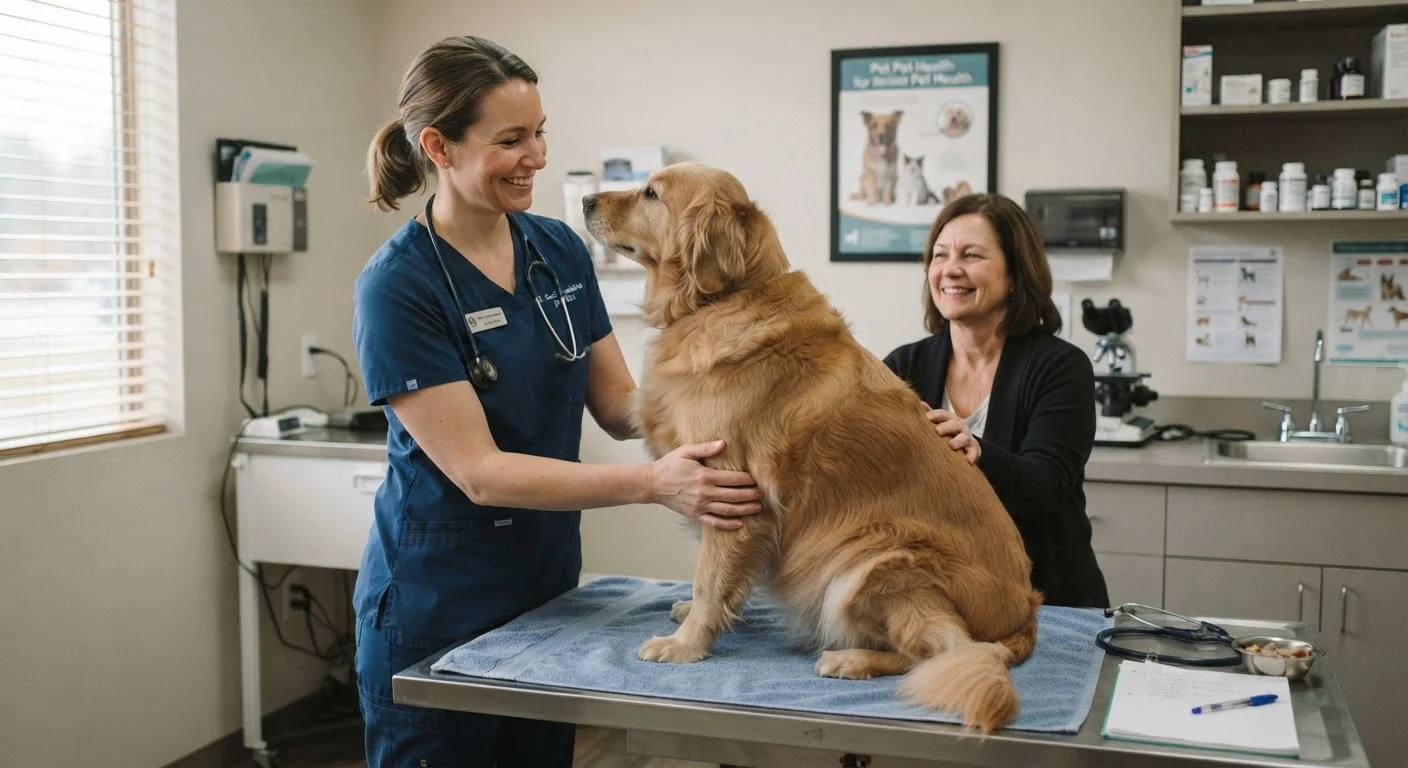
A vet-guided weight management plan typically begins with a thorough physical exam and Body Condition Score assessment. Blood work may be ordered to rule out hormonal or metabolic causes of weight gain before any dietary changes are made.
From there, a veterinarian will typically calculate your pet's resting energy requirement (RER) and set a target caloric intake based on the ideal - not current - body weight. This distinction matters: feeding for the weight you want your pet to reach, not the weight they are at, is a core principle of safe weight reduction.
Key components of a science-supported weight management plan generally include:
- Measured, scheduled meals instead of free-feeding, using an actual measuring cup or kitchen scale.
- Calorie-appropriate food, which may include a therapeutic weight-loss diet recommended by your vet - these are formulated to reduce calories while maintaining adequate protein and nutrients.
- Regular, appropriate exercise - the type and duration will vary by species, breed, age, and health status. A dog with arthritis needs a different exercise plan than a healthy young dog.
- Consistent weight monitoring, ideally at scheduled vet weigh-ins, so the plan can be adjusted based on actual progress rather than guesswork.
It is worth noting that some popular beliefs about pet weight management are not well-supported by evidence. Common pet care myths covers a number of these in detail.
What Owners Can Realistically Do at Home
While veterinary guidance is essential, day-to-day management happens at home. Several practical habits are consistently supported by veterinary recommendations.
Track everything your pet eats. This includes meals, treats, dental chews, and any food used to administer medications. Many owners are genuinely surprised when they add this up.
Use enrichment to increase activity. Puzzle feeders, lick mats, and interactive toys can encourage movement and slow eating simultaneously. For cats especially, food-dispensing toys can replace part of the food bowl - adding both physical and mental stimulation.
Involve the whole household. Weight management fails most often when one family member continues offering extras outside the plan. Everyone in the home needs to understand and commit to the approach.
Avoid judging progress by appearance alone. Gradual weight loss is often not visually obvious week-to-week. Scheduled weigh-ins provide objective data and help prevent discouragement or premature changes to a plan that is actually working.
For a broader look at how your pet's needs - including weight management - shift across life stages, pet wellness from puppyhood to senior years offers useful context.
This article is for general informational purposes only and does not constitute veterinary advice. Always consult a licensed veterinarian before making changes to your pet's diet, exercise routine, or health care plan.