

How to Read a Pet Food Nutrition Label
Pet food packaging carries several distinct panels, and knowing what each one means helps you compare products on equal terms. The key sections to understand are the ingredient list, the guaranteed analysis, and the nutritional adequacy statement.
The ingredient list is ordered by weight before processing, so ingredients listed first contribute the most mass to the formula. Keep in mind that moisture content affects how ingredients rank-a fresh chicken item may appear first because raw chicken is mostly water, even if a dry protein source ends up contributing more protein per serving.
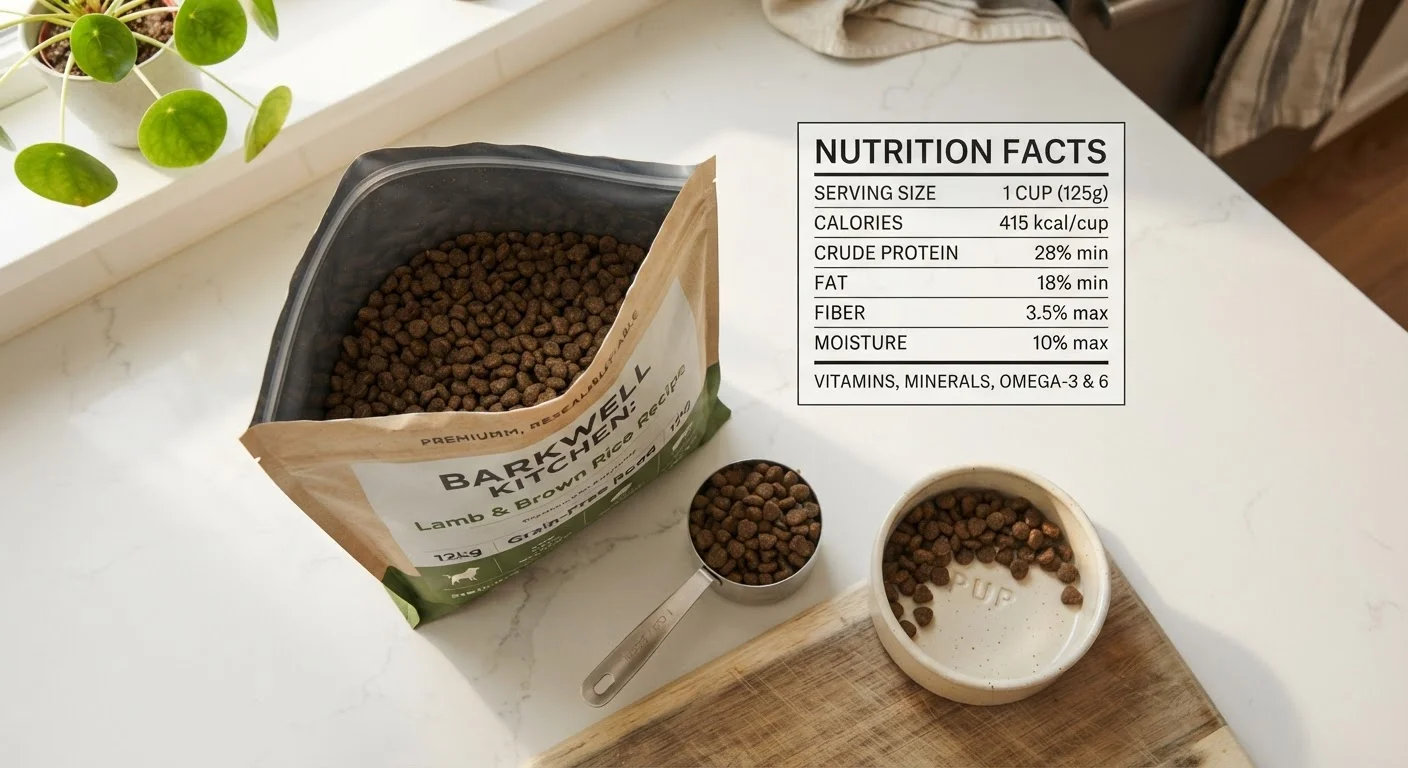
The guaranteed analysis reports minimum crude protein, minimum crude fat, maximum crude fiber, and maximum moisture. These are regulatory floors and ceilings, not precise measurements. Two foods with the same guaranteed analysis numbers can still differ significantly in actual nutrient content. For a thorough walkthrough of label language, see our guide to decoding pet food labels.
Guaranteed Analysis
A section of a pet food label that shows the minimum or maximum percentage of key nutrients like protein, fat, fiber, and moisture. It sets legal limits rather than exact nutrient amounts.
AAFCO
The Association of American Feed Control Officials-a voluntary organization that develops model nutrient profiles and labeling standards widely adopted by U.S. states to regulate pet food.
Nutritional Adequacy Statement
A required label statement explaining whether a food is complete and balanced for a specific life stage, and how that claim was substantiated-either by formulation or by feeding trial.
Life-Stage Formula
A pet food specifically designed to meet the nutrient and calorie needs of a particular phase of an animal's life, such as growth (puppy/kitten), adult maintenance, or senior care.
Body Condition Score
A hands-on rating system veterinarians use to evaluate whether a pet is underweight, at an ideal weight, or overweight, based on how easily ribs and other landmarks can be felt.
Crude Protein
A standardized measurement used on pet food labels to estimate total protein content based on nitrogen levels. It reflects quantity but not the digestibility or quality of the protein source.
What the AAFCO Statement Actually Tells You
The AAFCO nutritional adequacy statement is arguably the most important sentence on any pet food package. AAFCO is a voluntary membership organization that establishes model nutrient profiles and labeling regulations adopted by most U.S. states.
A compliant statement will appear in one of two forms. The first confirms the food was formulated to meet AAFCO nutrient profiles for a named life stage. The second states the food was verified through a feeding trial-meaning animals were fed the food under controlled conditions to confirm real-world adequacy. Both forms are meaningful, though feeding-trial substantiation involves additional evidence of palatability and digestibility.
If a label says 'for intermittent or supplemental feeding only,' the food is not nutritionally complete on its own and should not serve as the sole diet. This phrasing is easy to overlook but critical to catch.
Look for the AAFCO Statement First
Before comparing ingredient lists or guaranteed analysis numbers, locate the AAFCO nutritional adequacy statement. If a food doesn't carry one for your pet's life stage, it may not be suitable as a sole diet. This single check can filter out many unsuitable options quickly.
Life-Stage Formulas: Why Age Matters at Mealtime
A puppy or kitten's nutritional demands differ substantially from those of a healthy adult or an aging senior. Life-stage formulas are designed to match these shifting requirements rather than offer a one-size-fits-all approach.
- Growth formulas (puppy/kitten): Higher in calories, protein, and certain minerals like calcium and phosphorus to support rapid tissue and bone development. Large-breed puppy foods are typically calibrated to support slower, steadier growth, which helps protect developing joints.
- Adult maintenance formulas: Calibrated to sustain body condition, lean muscle, and organ function without excess energy that could lead to weight gain.
- Senior formulas: May include adjusted protein levels, added joint-support nutrients, or reduced calories-though formulations vary widely, and not all senior labels are standardized by AAFCO.
For more on how health needs evolve across a pet's life, our article on pet wellness from puppyhood to senior years covers the full picture beyond nutrition.
Feeding Frequency: How Often Is Often Enough?
How often a pet should eat depends on species, life stage, size, and individual health factors. Blanket rules rarely apply cleanly, but general principles can guide daily routines.
Dogs typically do well on two measured meals per day as adults. Puppies under six months generally benefit from three to four smaller meals to maintain stable blood sugar and support growth. Very small or toy breeds may be more prone to hypoglycemia and may need more frequent feeding-your vet can advise.
Cats are obligate carnivores with a natural tendency toward multiple small meals. Free-feeding (leaving food out all day) works for some cats but can contribute to overeating and weight gain in others. Scheduled meals of two to three servings daily are a common structured approach.
Portion guidance on packaging is calculated for an average animal of a given weight and should be treated as a starting point. Body condition-assessed by gently feeling for rib coverage and observing waist definition-is a more reliable guide to whether portions are appropriate. For species-specific feeding schedules, see our guide to feeding frequency by species.
When to Involve Your Veterinarian
Label literacy is a practical skill, but it has limits. Nutritional needs can shift with health conditions-kidney disease, food sensitivities, obesity, and diabetes all require diet modifications that go well beyond what a standard formula is designed to address.
Bring your vet into any decision involving a significant dietary change, a new life-stage transition, or a concern about weight, coat quality, energy level, or digestive changes. A licensed veterinary nutritionist can provide even more specialized guidance for complex cases.
This article provides general educational information about pet food labels and feeding principles. It is not a substitute for personalized veterinary advice. Always consult a qualified veterinarian before making meaningful changes to your pet's diet.
This article is for informational purposes only and does not constitute veterinary or dietary advice. Consult a licensed veterinarian for guidance specific to your pet's health and nutritional needs.