

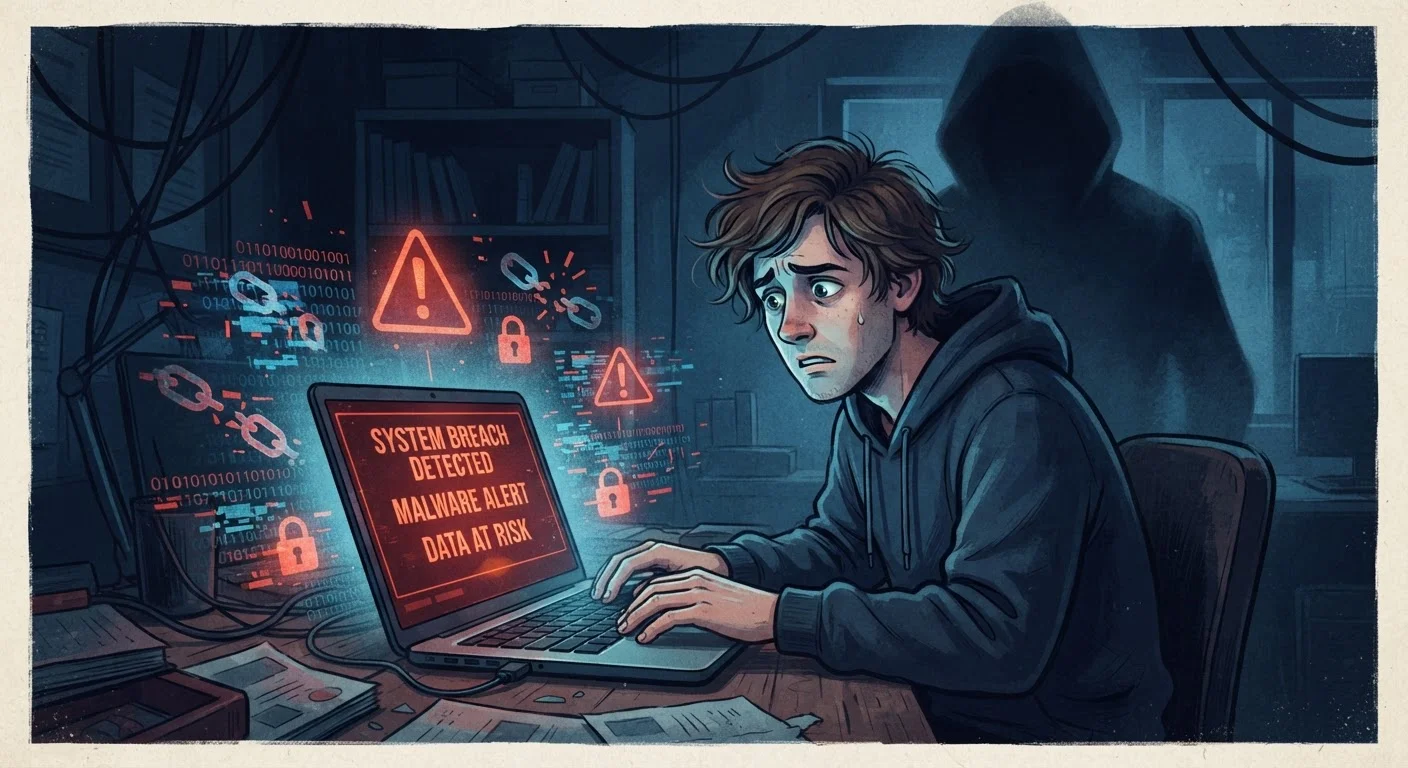
Why Today's Scams Are Harder to Spot
Online scams have moved well beyond clumsy emails full of typos and implausible promises. Modern schemes are designed by people who study human psychology, mimic legitimate brands convincingly, and exploit the specific anxieties of everyday life - a suspicious charge, a sick relative, a problem with your account.
The Federal Trade Commission consistently reports that Americans lose billions of dollars annually to fraud, and the victims span every age group, income level, and education background. No one is immune, but understanding how these tactics work dramatically reduces your risk.
The list below covers the most active and widely reported scam types circulating right now. Each one uses different bait, but they share a common thread: pressure, impersonation, and a sense that you must act immediately. Recognizing that pattern is your strongest defense. For a deeper look at one of the most common entry points, see our guide on spotting phishing emails vs. legitimate messages.
Fake Tech Support Calls and Pop-Ups
A browser window freezes and displays a blaring warning: your computer is infected, call this number immediately. Or your phone rings - a caller claims to be from a well-known tech company's support team and says they've detected a problem on your device.
Neither scenario is real. Legitimate technology companies do not cold-call customers about device problems, and they do not display phone numbers inside security alerts. The goal is to get remote access to your device - which then allows scammers to steal credentials, install malware, or demand payment for fake repairs.
If a pop-up appears, close the browser tab. If you can't, restart your computer. Never call a number displayed in an alert, and never grant remote access to someone who contacted you unsolicited.
Legitimate tech companies never cold-call you about problems on your device.
Phishing Emails and Text Messages (Smishing)
Phishing - fraudulent messages designed to steal login credentials or personal information - remains one of the most prolific scam methods online. Smishing refers to the same tactic delivered via SMS text message, which can feel more urgent and personal.
These messages typically impersonate banks, shipping carriers, government agencies, or popular online services. They create a believable scenario - a failed delivery, a suspicious charge, an expiring account - and provide a link that leads to a convincing fake login page.
The detail that gives them away: the actual web address (look at the full URL, not just the display text) doesn't match the real organization. Always navigate to any institution's website by typing the address yourself rather than clicking links in messages. For a detailed breakdown of red flags, see how to tell phishing emails from real ones.
Always navigate to a website yourself - never through a link in an unexpected message.
Romance and Relationship Fraud
Romance scams typically unfold over weeks or months. A scammer builds a genuine-feeling emotional connection through a dating app, social media, or even a text sent to the wrong number. Once trust is established, a crisis emerges - a medical emergency, a business opportunity, a travel problem - and money is requested.
The FBI consistently identifies romance fraud as one of the costliest scam categories, affecting people across all demographics. The damage is both financial and emotional. Key warning signs include a contact who refuses to video chat, claims to work in an occupation that keeps them abroad, and escalates emotional intimacy unusually quickly before any financial request arises.
A contact who avoids video calls and quickly asks for money is a major red flag.
Government Impersonation Scams
Scammers posing as IRS agents, Social Security Administration representatives, or Medicare officials use fear of legal or financial consequences to pressure people into immediate action. Common scripts include threats of arrest, benefit suspension, or account freezes - all of which can be avoided only by paying a fee or providing personal information right now.
Federal agencies communicate primarily by mail for initial contact. They will not demand immediate payment over the phone, and they will not ask you to pay using gift cards, wire transfers, or cryptocurrency. If you receive a call like this, hang up. You can always call the agency directly using a number from its official .gov website to verify whether any real issue exists.
Real government agencies don't demand immediate payment by gift card over the phone.
Online Shopping and Marketplace Fraud
Fake storefronts and fraudulent marketplace listings lure shoppers with deals that seem reasonable - not always dramatically cheap, which is a deliberate tactic to avoid suspicion. After payment, the product never arrives, arrives as something completely different, or is a counterfeit.
Scammers also pose as buyers in peer-to-peer marketplaces, sending fake payment confirmations or overpaying by check and requesting a refund of the difference before the original check bounces.
Protect yourself by checking seller reviews carefully, using payment methods with fraud protection, and being skeptical of any buyer or seller who pressures you to move the transaction off the official platform. What you share publicly online can also give scammers useful targeting information - see which oversharing habits put your identity at risk.
Scammers use plausible - not suspiciously low - prices to avoid triggering skepticism.
Account Takeover via Credential Stuffing
When a data breach exposes usernames and passwords from one service, criminals test those same credentials across hundreds of other sites automatically - a technique called credential stuffing. If you reuse passwords, a breach at one company can unlock accounts at your bank, email provider, or retailer.
The defense is straightforward: use a unique password for every account. A password manager makes this practical without requiring you to memorize dozens of complex strings. Enabling two-factor authentication (2FA) - a second verification step required at login - adds another layer that stops most automated takeover attempts even when a password is compromised. Our guide on keeping everyday devices secure covers both habits in plain language.
Reusing passwords means one data breach can unlock dozens of your accounts.
Staying One Step Ahead
Every scam on this list shares a common vulnerability: it depends on you acting before you think. Slowing down - even by 60 seconds - disrupts the mechanism. Before clicking a link, calling a number, or sending money, ask yourself: did I initiate this contact? Can I verify this through an official source I find myself?
When in Doubt, Verify Independently
If a call, text, or email claims to be from an institution you use, don't respond to it directly. Instead, look up the organization's official contact information yourself - from its website or the back of your card - and reach out through that channel. This one habit neutralizes a huge proportion of scam attempts regardless of how convincing they appear.
Building a few consistent digital habits also closes the doors scammers rely on. Reviewing your account settings, using strong unique passwords, and knowing what personal details you're sharing publicly all reduce your exposure. Our personal online security audit checklist walks you through exactly that - no technical expertise required.
If you believe you've been targeted, report it to the FTC at ReportFraud.ftc.gov or the FBI's Internet Crime Complaint Center (IC3) at ic3.gov. Reporting matters - it builds the data law enforcement uses to pursue scam networks and warn other consumers.