

What Jet Lag Actually Is
Jet lag - formally called circadian dysrhythmia - happens when your body's internal clock, known as the circadian rhythm, falls out of sync with the local day-night cycle at your destination. This internal clock is primarily set by light and darkness, regulating when you feel alert, sleepy, hungry, and mentally sharp. When you cross multiple time zones rapidly, your biology doesn't keep pace with your boarding pass.
The result is a cluster of symptoms: fatigue at odd hours, difficulty sleeping at night, brain fog, digestive disruption, and general irritability. These aren't imaginary inconveniences - they reflect genuine physiological stress. Understanding how time zones work can help travelers anticipate the degree of disruption they're likely to face before they even book a flight.
Jet Lag vs. Travel Fatigue
These two are often conflated but are distinct. Travel fatigue - general exhaustion from airports, disrupted meals, and dehydration - can be resolved with rest and hydration. True jet lag persists because it involves circadian misalignment, not just tiredness. You can feel travel fatigue on a long domestic flight; you can only experience jet lag when you've crossed a meaningful number of time zones.
Why Direction Matters
Not all jet lag is created equal. Research consistently shows that traveling east - shortening your day - tends to be harder than traveling west, which extends it. Your circadian rhythm naturally runs slightly longer than 24 hours, which means it's easier for your body to delay sleep (going west) than to advance it (going east).
A traveler flying from New York to Paris crosses about six time zones eastward, often arriving in the morning local time while their body insists it's the middle of the night. The adjustment period, in general terms, tends to be steeper than a comparable westward journey. Knowing this helps you plan realistic expectations - and smarter pre-departure strategies.
~1 day
Recovery time per time zone crossed
A commonly cited general estimate in sleep medicine, though individual recovery varies considerably based on age, health, and direction of travel.
65%
Travelers reporting jet lag symptoms
Studies on long-haul travelers frequently report majority of passengers experience measurable circadian disruption symptoms after crossing five or more time zones.
Evidence-Based Strategies for Managing the Transition
The science of circadian biology has produced a handful of genuinely useful approaches. None are magic cures, but used together they can meaningfully reduce recovery time.
Seek bright light strategically at your destination based on travel direction.
Light is the most powerful signal for resetting the circadian clock. Exposing yourself to morning light when traveling east helps advance your sleep phase; avoiding bright light in the early morning after westward travel helps delay it. This is the mechanism most consistently supported by chronobiology research.
Shift your sleep schedule gradually in the days before departure.
Pre-adjusting your bedtime by 30-60 minutes per day in the direction of your destination gives your circadian rhythm a head start. This is particularly helpful for eastward travel, which demands the most demanding phase shift.
Align meal timing with local hours at your destination as quickly as possible.
Emerging research suggests that meal timing is a secondary circadian cue - so eating breakfast at 7 a.m. local time, even if you're not hungry, may help reinforce the new schedule. Conversely, eating at your home schedule can anchor you to the wrong time zone.
Consider low-dose melatonin timed appropriately for your direction of travel.
Melatonin is a hormone that signals darkness to the brain. Some research supports its use as a circadian aid when taken at the right local bedtime, particularly for eastward travel. Dosage, timing, and appropriateness vary by individual - this is a conversation to have with a healthcare provider rather than a self-medication shortcut.
Avoid heavy alcohol and caffeine on long-haul flights.
Alcohol impairs sleep quality even when it induces drowsiness, and caffeine can prevent sleep from occurring when your body is ready for it. Both interfere with the natural sleep architecture your body needs to begin recalibrating.
It's also worth noting that jet lag shares some features with sleep debt - the cumulative cognitive toll of under-sleeping. Arriving already sleep-deprived makes jet lag harder to shake, so protecting your rest in the days before departure is a legitimate part of the strategy.
Start Adapting Before You Land
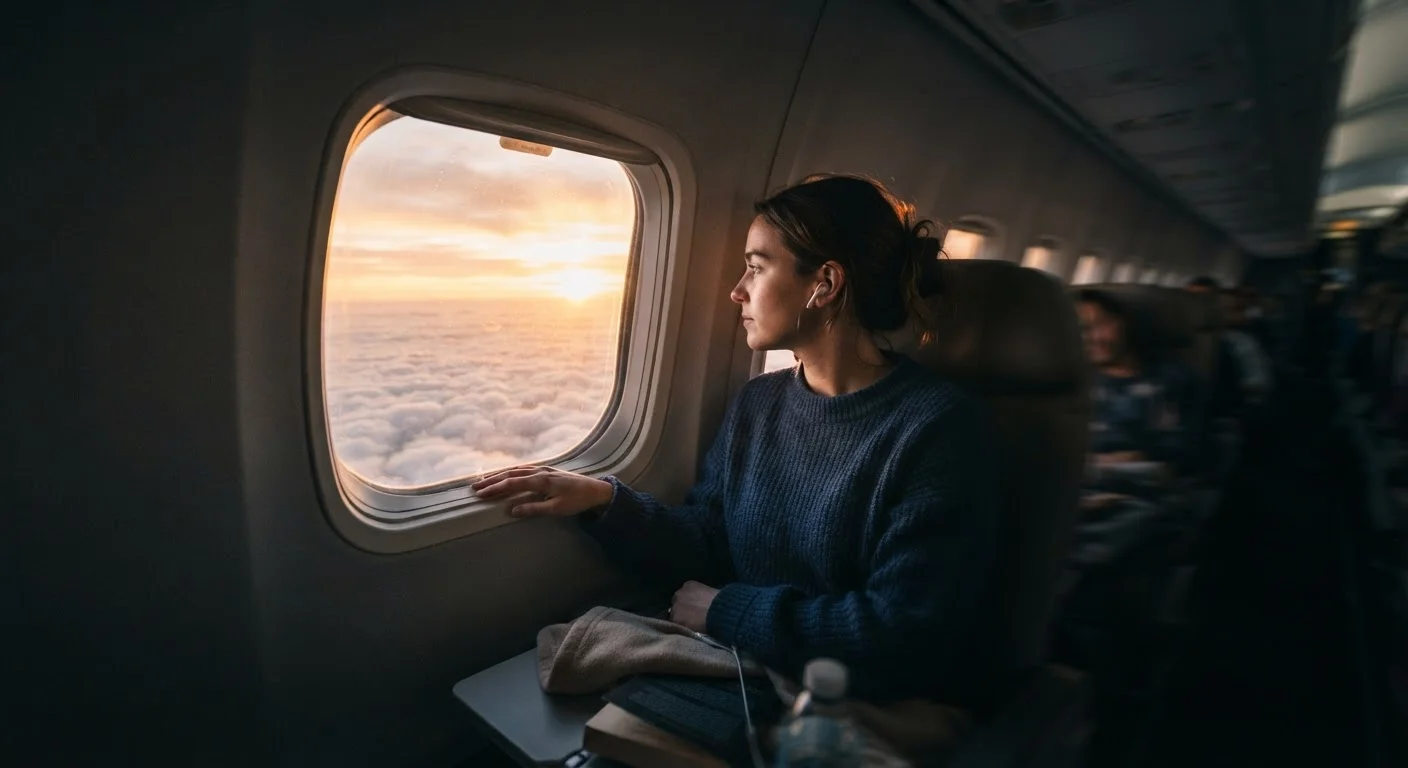
The cabin itself offers opportunities for earlier adaptation. Adjust your watch to the destination time zone right after takeoff - a simple psychological cue that helps you start thinking in local terms. Time your in-flight meals and sleep accordingly, and when possible, choose a flight that arrives in the early evening so natural darkness helps anchor your first night's sleep.
This article is for general informational purposes only and does not constitute medical advice. For questions about sleep aids, supplements, or health conditions that may affect your travel experience, please consult a qualified healthcare professional.