

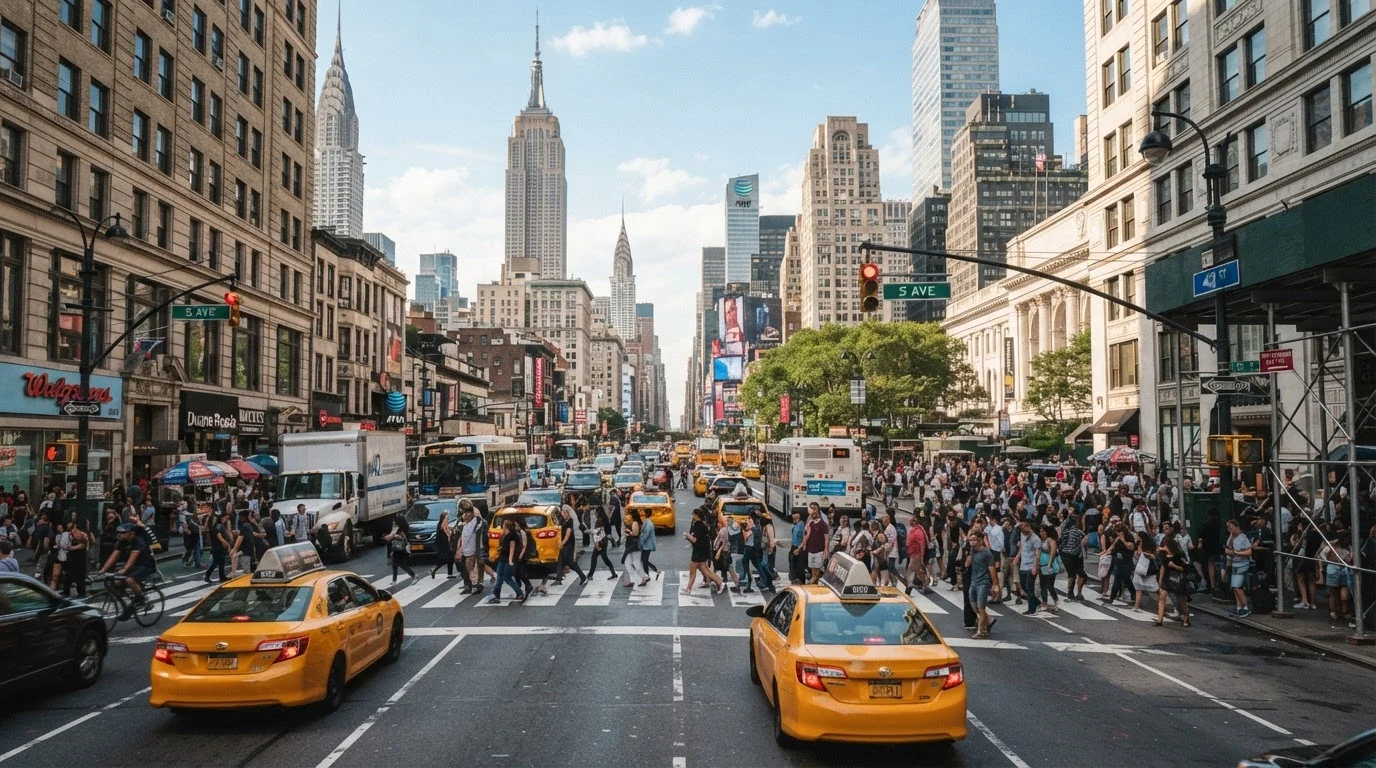
Why First-Timers Consistently Misjudge New York
New York City carries more accumulated myth per square mile than almost any place in America. Pop culture, movies, and decades of exaggerated storytelling have layered expectations onto the city that often bear little resemblance to what visitors actually encounter. The result? Travelers who arrive either over-prepared for threats that don't materialize, or under-prepared for the logistical reality of navigating a genuinely enormous, complex place.
The good news is that most of these misreads are easy to correct with a little honest information. Similar expectation gaps affect travelers venturing further afield too - first-time international travelers face their own set of surprises. But for New York specifically, the myths are so consistent and so fixable that addressing them head-on before you book is genuinely worth your time.
Myth
The subway is dangerous, confusing, and something tourists should avoid entirely.
Fact
The NYC subway is one of the most practical ways to get around the city, and millions of people use it safely every day.
The subway's gritty reputation is decades out of date for most lines and times of day. While the system has its quirks - service changes on weekends, occasional delays - it connects nearly every major attraction at a fraction of cab or rideshare cost. Download an offline map before you arrive, learn to read the letter/number line distinctions, and you'll navigate confidently within a day.
Myth
New Yorkers are rude and will make you feel unwelcome.
Fact
New Yorkers operate at a fast pace, but directness and brevity are cultural norms, not hostility.
Ask someone for directions and they'll almost always help - quickly and accurately. The perceived coldness is largely a pace difference: New Yorkers don't linger, and they expect visitors to keep moving too. Smile, be direct about what you need, and don't take a clipped response personally. The city's social texture is far warmer than its reputation suggests, especially outside of tourist-heavy zones.
Myth
Times Square is the heart of the city and the best base for exploring everything.
Fact
Times Square is a commercial district, not a central hub, and staying there can actually complicate getting around.
Times Square sits roughly in Midtown, which is geographically convenient for some attractions but far from others. Neighborhoods like the Lower East Side, Williamsburg, Astoria, or Harlem require real transit time from Midtown. Many experienced visitors choose to stay in neighborhoods outside the tourist core - not just to save money, but to get a truer feel for the city's character.
Myth
You need a car or cab to get anywhere meaningful.
Fact
New York City is one of the most walkable cities in the United States, and many popular areas are easily reached on foot.
The distance between Central Park's southern edge and the Brooklyn Bridge is roughly four miles - a two-hour walk that passes through some of Manhattan's most interesting blocks. Visitors who only ride miss the street-level texture that defines the experience. Comfortable shoes and a downloaded walking map will take you further (literally) than any cab booking app.
Myth
You can realistically see all the major attractions in two or three days.
Fact
New York City's five boroughs contain more cultural institutions, neighborhoods, and experiences than most cities have in an entire country.
The Metropolitan Museum of Art alone recommends budgeting three to five hours for a focused visit. Add the High Line, a walk across the Brooklyn Bridge, a meal in Flushing, and a stop at the 9/11 Memorial, and you've already filled two full days. Trying to tick off every landmark leads to a rushed, surface-level trip. Pick a few priorities and give them real time.
Myth
Eating well in New York requires spending a lot of money.
Fact
New York has an extraordinary range of affordable food across its neighborhoods, from corner bodegas to ethnic enclaves.
Some of the city's most celebrated meals happen at folding-table lunch counters in Flushing, Queens, or at century-old delis in the East Village. A slice of pizza, a falafel from a cart, a steaming bowl of noodles - excellent, affordable options are everywhere once you step outside the tourist corridors. Price is a poor proxy for quality in New York.
Adjusting Your Expectations Before You Arrive
The most satisfying New York trips tend to share a common trait: the visitor came with curiosity rather than a rigid checklist. That means accepting that the city will surprise you, that some days will involve getting turned around, and that a spontaneous detour into an unfamiliar neighborhood often beats a queued-up attraction.
Don't Plan Your Trip Around TV New York
Decades of films and television have given viewers a version of New York City that's heavily compressed and selectively curated. Iconic landmarks are portrayed as steps apart; neighborhoods are misrepresented or flattened. First-timers who plan their itinerary around screen-shaped expectations routinely end up disappointed, exhausted, or both. Ground your planning in maps and real transit times, not cinematic geography.
It also means thinking carefully about where you stay and how you move. The subway will almost always serve you better than a rideshare in terms of cost and predictability. And the boroughs beyond Manhattan - Brooklyn's brownstone neighborhoods, Queens' remarkable food diversity, the Bronx's cultural institutions - are not optional extras. They're essential New York.
Midtown Is Not the Whole City
Many first-time visitors spend their entire trip within a few blocks of Midtown Manhattan and leave thinking they've "seen New York." Brooklyn, Queens, the Bronx, and Harlem each offer distinct food, culture, and architecture. Anchoring exclusively to Times Square means missing most of what makes the city genuinely remarkable.
If you enjoy debunking travel assumptions, it's worth checking out why travelers consistently misjudge the American South - a similarly honest look at how preconceptions distort real destinations. The underlying lesson is the same: bring questions, not conclusions.