

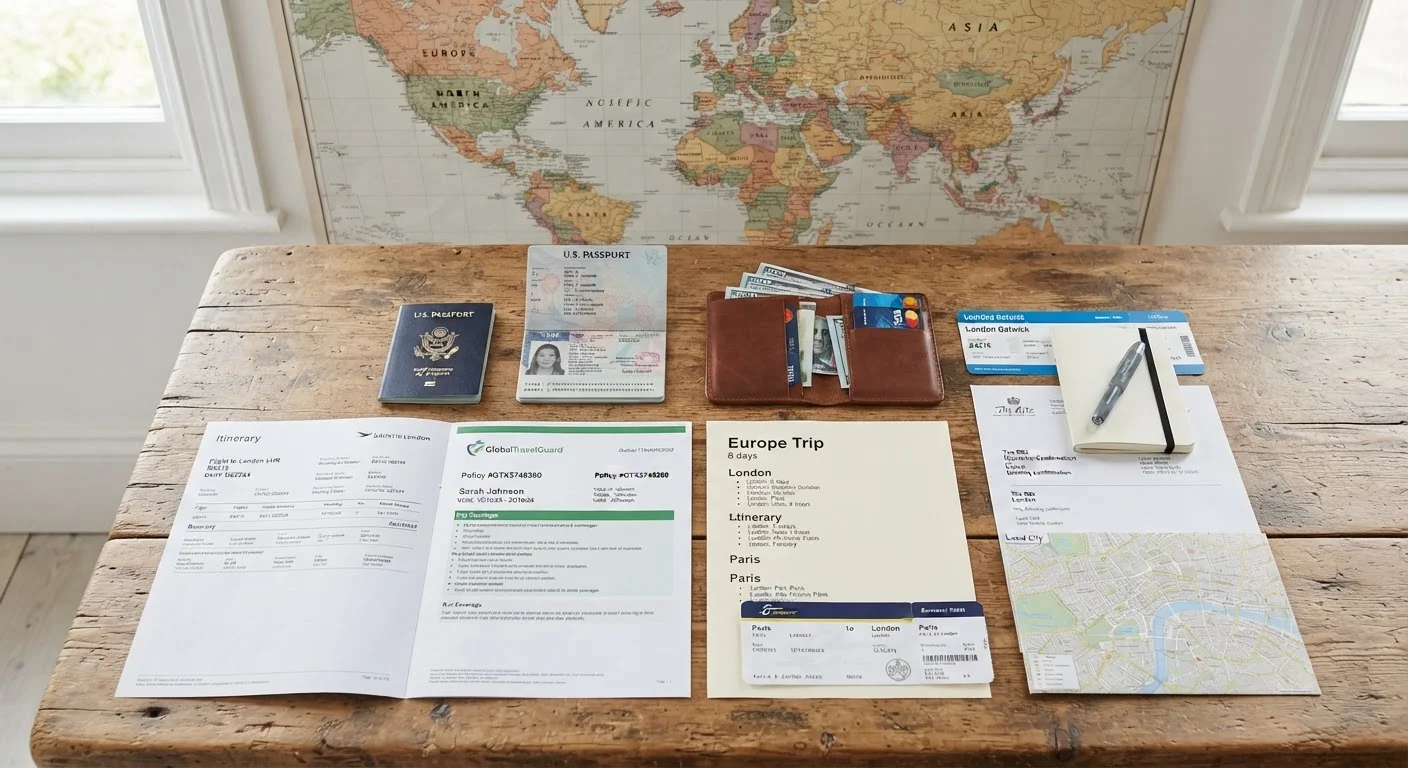
What Travel Insurance Is Actually Designed to Do
Travel insurance exists to protect the financial investment you've made in a trip when things go wrong through circumstances outside your control. Think of it less as a guarantee of safety and more as a reimbursement mechanism for specific, documented losses.
Most comprehensive policies bundle several coverage categories together. Understanding what each one does - and doesn't - cover is the difference between a policy that delivers real peace of mind and one that disappoints you at claim time. For a deeper look at international-specific coverage questions, see our guide to travel insurance for international trips.
~$5,000
Typical cost of emergency overseas hospitalization
The U.S. Travel Insurance Association notes that international medical emergencies frequently generate costs in the thousands, with evacuations running far higher.
~$20,000-$100,000+
Range of emergency medical evacuation costs
The U.S. State Department has noted that medical evacuations from remote destinations or aboard cruise ships can easily reach six figures.
50-75%
Typical reimbursement under Cancel for Any Reason coverage
CFAR upgrades offer flexibility but rarely cover the full trip cost; reimbursement caps vary by policy.
The Core Coverage Types - Explained Plainly
Trip Cancellation and Interruption: This is the coverage most people think of first. It reimburses prepaid, non-refundable costs if you cancel or cut a trip short due to a covered reason - typically sudden illness, a death in the family, jury duty, or severe weather. The key phrase is "covered reason." Simply changing your mind or experiencing a non-listed event usually won't qualify unless you've added a Cancel for Any Reason (CFAR) upgrade.
Emergency Medical Coverage: Many American travelers don't realize that standard US health insurance often provides little to no coverage abroad. Travel medical insurance fills this gap, covering emergency treatment at foreign hospitals. As our overview of foreign health care for Americans explains, international medical systems work very differently - and out-of-pocket costs can be steep.
Emergency Evacuation: If you need to be transported to an adequate medical facility or repatriated home, evacuation coverage handles those costs. This is particularly valuable on cruises, in remote regions, or in countries with limited medical infrastructure.
Baggage Loss and Delay: Policies typically reimburse for lost, stolen, or damaged luggage up to a set limit - often with per-item caps on valuables like electronics and jewelry. Baggage delay coverage pays for essentials (clothing, toiletries) if your bags are held up for a defined number of hours.
Buy Coverage Soon After Your First Deposit
Purchasing a policy within 10 to 21 days of your initial trip deposit typically unlocks the widest range of benefits - including pre-existing condition waivers and Cancel for Any Reason upgrades. Waiting until just before departure may mean missing these options entirely.
The Exclusions Most Travelers Overlook
The exclusions section is where most claims disputes originate. Here are the most commonly misunderstood ones:
- Pre-existing medical conditions: A condition that existed - even if managed or stable - before your policy's "look-back period" is typically excluded. A waiver is available on many plans, but only if purchased promptly after your initial deposit.
- Foreseeable events: If a hurricane is already named and bearing down on your destination before you buy coverage, damage from that storm won't be covered. Insurance is for unknown future risks, not events already in motion.
- Fear of travel: Deciding not to travel because you're nervous about unrest, illness, or crime - without a formal government advisory triggering coverage - is generally not a covered reason for cancellation.
- Adventure and high-risk activities: Injuries from skiing, motorcycling, scuba diving, or similar pursuits may require a separate rider. Review the policy's hazardous activities list carefully.
- Alcohol- or drug-related incidents: Claims arising from incidents where intoxication is a contributing factor are routinely denied.
For comparison, this kind of named-exclusion structure appears across many insurance types - from auto insurance to pet insurance.
"Cancel for Any Reason" Is an Upgrade, Not a Default
CFAR coverage must be explicitly added to your policy - usually within a short window after your first deposit - and comes at an additional cost. It provides flexibility but reimburses only a portion of your prepaid trip costs, typically 50-75%. It's worth considering for expensive or complex itineraries where plans might change.
How to Read a Policy Before You Buy
Every reputable travel insurance policy comes with a Summary of Benefits and a full policy document (sometimes called a Description of Coverage). Don't rely solely on the summary - it's the detailed document that defines covered reasons, exclusions, sub-limits, and the claims process.
A few things to look for specifically: the definition of "pre-existing condition" and the look-back period length; the list of covered reasons for cancellation; per-item limits on baggage claims; and whether medical evacuation is included or requires an add-on.
If you're planning international travel, be sure to cross-reference any entry requirements or health-related advisories with official government sources - travel insurance doesn't replace that due diligence, and conditions can change quickly. For broader planning context, explore the International Travel hub for destination-specific guidance.
This article is for general informational purposes only and does not constitute insurance or financial advice. Policy terms vary significantly between providers and plans. Always read the full policy documents and consult a licensed insurance professional for guidance specific to your situation.