
Why the Islands Are Nothing Like Each Other
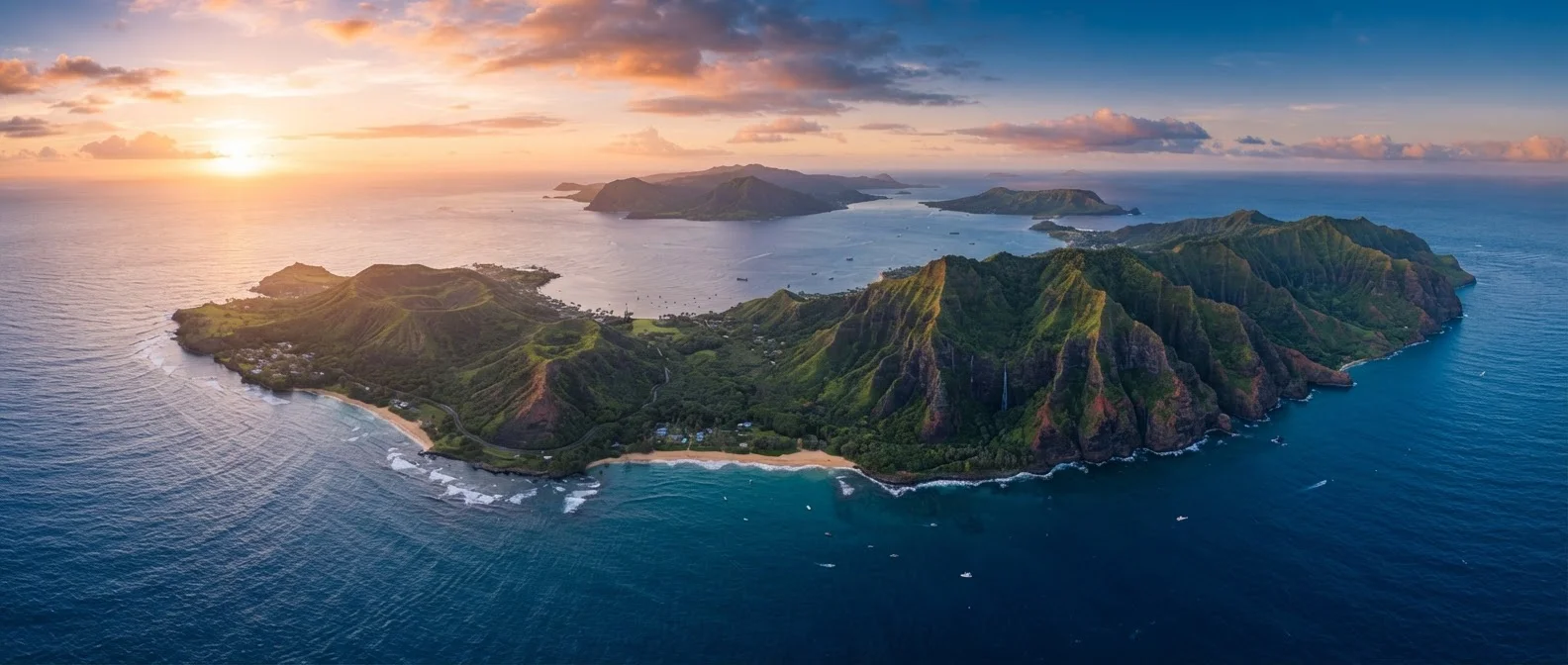
Most people picture a single, composite Hawaii - swaying palms, surf, and leis. The reality is far more interesting. The major Hawaiian islands were shaped by separate volcanic formations over millions of years, and each one developed its own climate zones, ecosystems, and cultural personality. Lumping them together would be like insisting Manhattan and rural Vermont are the same because they're both in the Northeast.
Before booking, it's worth understanding what genuinely separates these islands - not just in scenery, but in feel. The right match can make a trip feel effortless. The wrong one can leave you wishing you'd gone somewhere else entirely.
| Oahu | Maui | Kauai | Big Island | |
|---|---|---|---|---|
| Overall Vibe | Urban & culturally rich | Scenic luxury meets adventure | Wild & deeply natural | Vast & geologically dramatic |
| Best For | First-timers, history buffs | Diverse itinerary travelers | Hikers & nature seekers | Geology fans, stargazers |
| Crowds | High, especially Waikiki | Moderate to high | Lower, limited development | Variable by region |
| Landscape Variety | Good - beaches to mountains | High - coast to volcano | Dramatic but focused | Exceptional - 11 climate zones |
| Ease of Getting Around | Easiest - highways, transit | Good - car recommended | Car essential | Car essential, distances large |
| Rainy Season Impact | Mild, leeward side stays dry | Varies by region | North shore is very wet | Hilo side very wet, Kona dry |
Oahu: Energy, History, and Accessibility
Oahu is where most visitors land, and for good reason - it offers the widest range of experiences with the most infrastructure to support them. Honolulu and Waikiki provide a cosmopolitan base: restaurants, nightlife, world-class museums, and the sobering historical weight of Pearl Harbor and the USS Arizona Memorial.
The North Shore delivers big-wave surfing culture, shrimp trucks, and a slower, sandier rhythm entirely different from the city. Oahu is often underestimated as a tourist hub, but its diversity of experience within a single island is genuinely impressive. It suits travelers who want options rather than isolation.
Choose Your Side of the Island Wisely
Most Hawaiian islands have a wetter windward side and a drier leeward side - and the difference can be dramatic. On Oahu, the North Shore and Kailua receive far more rain than Waikiki. Checking microclimates by region, not just by island, can significantly shape how you experience your stay. A brief look at local weather patterns before booking accommodations pays off.
Maui: The Island of Extremes
Maui earns its devoted following through sheer variety. The Road to Hana - a winding coastal drive through bamboo forests, waterfall pullouts, and remote taro farms - is one of the most cinematic drives in the United States. Haleakalā, a dormant volcano rising above 10,000 feet, offers sunrise views above the clouds that feel almost otherworldly.
The west side of the island around Lahaina and Kaanapali has long been associated with resort-style luxury, though the 2023 Lahaina fire reshaped that community significantly. Visitors should verify current conditions and remain sensitive to the area's ongoing recovery. Maui threads the needle between polish and adventure more smoothly than any other island.
Kauai: The Garden Isle's Unfiltered Wild
Kauai is where Hawaii starts to feel genuinely remote. The Nā Pali Coast - a series of emerald sea cliffs plunging into the Pacific - is accessible only by boat, helicopter, or a strenuous multi-day trail. The Waimea Canyon, sometimes called the "Grand Canyon of the Pacific," stretches across the island's interior in deep rust and green.
Development here is deliberately limited; no building can be taller than a coconut palm. That constraint shapes the whole island's atmosphere. Kauai draws travelers who are comfortable with fewer resort amenities in exchange for extraordinary natural immersion. It rains frequently on the north shore - that's precisely why everything is so impossibly green.
The Big Island: Scale and Geological Drama
The Big Island of Hawaii is larger than all the other main islands combined, and it contains eleven of the world's thirteen climate zones - from tropical coastlines to alpine desert to snow-capped Mauna Kea. That last point surprises many visitors: yes, you can ski in Hawaii, at least in theory and in season.
Hawaiʻi Volcanoes National Park remains one of the most extraordinary places in the country, offering a close-up look at active lava flows and lava tubes that remind you the island is still being built. The Kohala Coast brings world-class snorkeling with manta rays and calm, sunny conditions even when the rest of the island is wet. For travelers who want geological wonder alongside beach relaxation, nowhere else compares. Always check current park conditions and access updates before visiting, as volcanic activity can change trail and road availability.
11 of 13
World climate zones found on the Big Island
The Big Island of Hawaii contains more climate zones than almost any comparably sized landmass on Earth, according to the National Park Service.
72 miles
Length of the Road to Hana on Maui
The Hana Highway spans roughly 52 miles of road through approximately 620 curves and 59 bridges, making the journey itself the destination.