
Scale, Geography, and What That Means for Travelers
The Rocky Mountains are enormous in the most literal sense - a chain of ranges running roughly 3,000 miles from New Mexico through Canada. That scale is both a gift and a logistical puzzle. You can spend two weeks in Colorado alone and never repeat a trailhead. The flip side? Deciding where to go in the Rockies requires real planning, because "the Rockies" is less a single destination than a loose collection of mountain subranges, parks, and plateaus.
The Sierra Nevada is tighter and more concentrated. Running about 400 miles along California's eastern spine, it packs extraordinary terrain - Yosemite, Kings Canyon, Sequoia, Lake Tahoe, and the High Sierra backcountry - into a corridor that's easier to mentally map. For visitors flying into California with a week to spare, the Sierra offers a more contained itinerary.
| Criterion | Rocky Mountains | Sierra Nevada |
|---|---|---|
| Geographic span | ~3,000 miles, 7 states | ~400 miles, primarily California |
| Peak summer season | June-September | July-September (shorter window) |
| Dominant geology | Sedimentary & volcanic variety | Exposed granite, glacially carved |
| Typical crowd pressure | Spread across many destinations | Concentrated at iconic park hubs |
| Permit requirements | Varies by park and trailhead | Widespread, especially in summer |
| Wildlife highlights | Elk, bison, grizzly bear, moose | Black bear, mule deer, marmot |
| Skiing & winter access | Extensive resort infrastructure | Strong (Lake Tahoe corridor) |
Climate, Snow, and Seasonal Windows
Snow defines both ranges but behaves differently in each. The Sierra Nevada is known for a massive snowpack - a boon for skiers and a genuine hazard for early-season hikers. High passes on the John Muir Trail can stay buried until mid-July in heavy snow years. Once summer arrives, conditions are often spectacular, but the window between snowmelt and first autumn storms is narrower than many visitors expect.
The Rockies get significant snow too, but the range's breadth means elevation and latitude vary wildly. Trails in lower Colorado foothills can be snow-free by May; Wyoming's high country may stay closed into June. Afternoon thunderstorms are a consistent summer feature across the Rockies - plan hikes for morning starts to stay ahead of lightning risk.
Altitude Awareness for Both Ranges
High elevation affects visitors differently regardless of fitness level. Symptoms of altitude sickness - headache, nausea, fatigue - can appear above 8,000 feet. Ascending gradually, staying hydrated, and avoiding alcohol in the first 24 hours are widely recommended precautions. Anyone with cardiovascular or respiratory conditions should consult a healthcare professional before planning a high-altitude trip.
Both ranges see dramatic weather shifts with little warning. Layered clothing, sun protection at altitude, and a flexible schedule aren't optional - they're standard practice for either destination.
Terrain Character and Geology
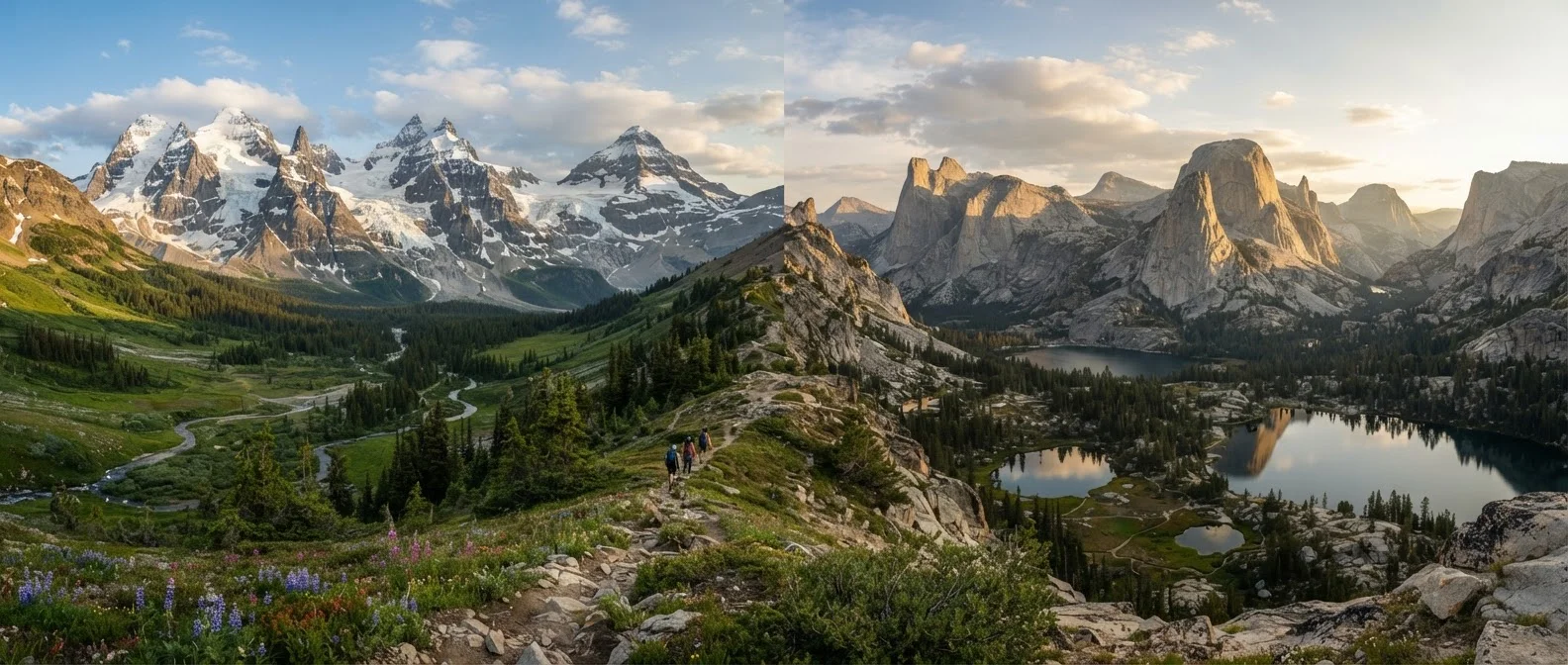
Geologically, these ranges tell different stories. The Sierra Nevada is dominated by exposed granite - polished by ancient glaciers into smooth domes, sheer cliffs, and bright glacial lakes called tarns. The landscape feels almost architectural. Yosemite's El Capitan and Half Dome are globally recognized expressions of that character.
The Rockies are more varied. Sedimentary formations, volcanic remnants, and fault-block structures all appear depending on which subrange you're exploring. Colorado's Maroon Bells deliver that classic jagged, layered-rock silhouette. Montana's Glacier National Park showcases glacially carved arêtes. Wyoming's Grand Tetons jut skyward with an abruptness that makes them look almost unreal. If geological variety appeals to you, the Rockies win on sheer range.
54
Colorado fourteeners (peaks over 14,000 ft)
Colorado alone contains 54 peaks exceeding 14,000 feet, making the Rockies a premier destination for high-altitude summiting.
14,505 ft
Elevation of Mt. Whitney, Sierra Nevada's highest point
Mt. Whitney is the highest peak in the contiguous United States, located at the southern end of the Sierra Nevada range.
~4 million
Annual visitors to Yosemite National Park
According to National Park Service visitation data, Yosemite consistently draws several million visitors per year, making crowd planning essential.
Crowds, Access, and Honest Logistics
Yosemite Valley is among the most visited places in the entire US park system, and summer crowds are genuinely intense. Timed entry reservations and day-use permits have become standard in peak season, and parking is consistently strained. Venture beyond the valley floor - to places like the Hoover Wilderness or the Ansel Adams Wilderness - and the crowds thin dramatically, but that requires more logistics and often a wilderness permit of its own.
Rocky Mountain National Park and other popular Rockies destinations face their own crowd challenges, but the sheer expanse of the range distributes visitors more naturally. Lesser-known spots in Colorado's San Juan Mountains or Montana's Bob Marshall Wilderness absorb adventurous travelers without the bottleneck feel. If ease of access and flexibility matter to you, the Rockies' geographic spread works in your favor.