
Why Gutters Matter More Than Most Homeowners Realize
Gutters are easy to ignore - they sit up high, out of sight, and seem to work fine until they don't. But a properly functioning gutter system is one of the most important lines of defense your home has against water damage. It channels rain and snowmelt away from your roof edge, siding, foundation, and landscaping. When gutters fail, water finds its way into places it shouldn't: behind siding, under fascia boards, into basements and crawl spaces.
The good news is that most gutter problems are preventable. They tend to result from a handful of repeated, avoidable mistakes rather than sudden failure. Understanding those mistakes - and the simple habits that prevent them - can save homeowners significant repair costs down the road. For a broader look at exterior upkeep after harsh weather, the Spring Exterior Walkthrough covers related checkpoints worth reviewing each year.
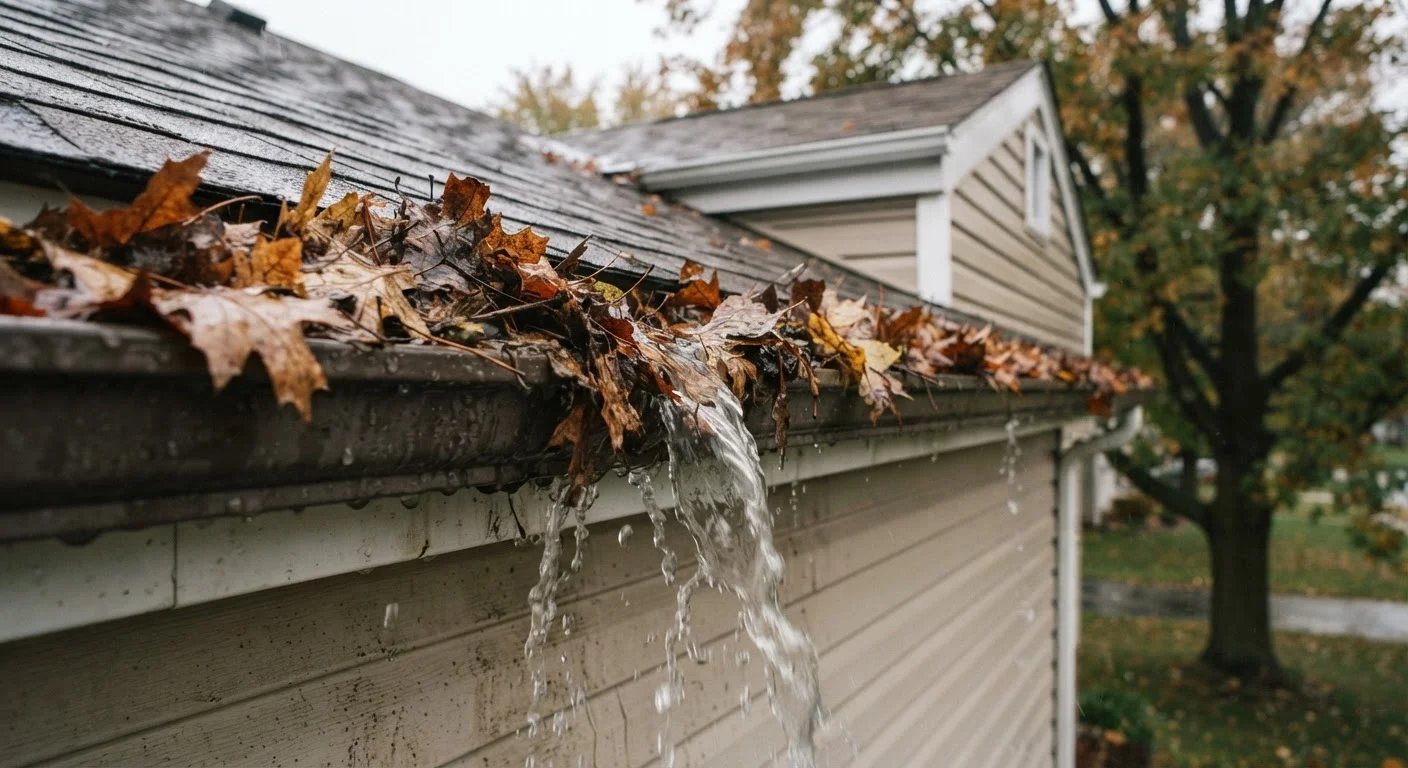
Cleaning gutters only once a year, or skipping cleanings entirely.
Why it happens: Many homeowners treat gutter cleaning as an occasional task rather than a scheduled one, especially if they can't easily see inside the gutters from ground level.
Ignoring gutters that sag or pull away from the fascia.
Why it happens: Sagging happens gradually, so it often goes unnoticed until gutters separate from the roofline or develop visible low spots.
Letting downspouts drain too close to the foundation.
Why it happens: Downspouts are often installed with minimal extensions, and homeowners don't realize how much water volume flows through them during a moderate rainstorm.
Overlooking joint separations and cracks in the gutter body.
Why it happens: Sections and end caps can separate over time due to expansion and contraction from temperature changes, but the gaps are hard to spot without getting close.
Assuming gutter guards eliminate the need for maintenance.
Why it happens: Gutter guards are often marketed as a near-permanent solution, so homeowners stop inspecting after installation.
Building a Routine That Keeps Gutters Functional
Preventing gutter problems comes down to a consistent inspection and cleaning schedule. Aim to clean gutters at least twice a year - once in late spring after tree seeds and pollen have settled, and once in late fall after the majority of leaves have dropped. Homes surrounded by pine trees may need a third cleaning, since pine needles accumulate quickly and break down slowly.
2x/year
Minimum recommended gutter cleaning frequency
Most home maintenance guidelines recommend cleaning gutters at least twice annually, with additional cleanings for tree-heavy properties.
3-4 ft
Minimum downspout discharge distance from foundation
Building and drainage professionals generally recommend downspouts extend water at least three to four feet away from the home's foundation to prevent erosion and moisture intrusion.
During each cleaning, take a few extra minutes to check the gutter slope. Water should flow toward downspouts, not pool in low spots. A simple test: run water through the gutter with a garden hose. If it drains freely to the downspout, the slope is adequate. If it puddles, the hangers may need adjustment.
Also inspect the downspout extensions. Water should discharge at least three to four feet from the foundation. Splash blocks can help redirect flow, but extensions are more reliable on sloped or clay-heavy soils where pooling is likely.
Gutters are just one part of keeping the exterior of your home in shape. The Fall Home Maintenance Checklist provides a full seasonal framework that includes gutters alongside your roof, heating system, and more. And if you're also seeing signs of roof wear, the article on warning signs your roof needs attention can help you determine whether what looks like a gutter issue is actually something above it.
Don't Climb a Ladder Without a Spotter
Gutter cleaning requires working at height, which carries real fall risk - especially on two-story homes or sloped terrain. Always use a stable, properly rated ladder and have another person present as a spotter. If your roofline is steep or your gutters are difficult to access safely, consider hiring a professional for the cleaning and inspection.