
Why Waiting for a Leak Is the Wrong Strategy
Most homeowners don't think about their roof until water stains appear on the ceiling - and by that point, damage has often been building for months. The good news is that a failing roof rarely fails silently. It gives off clear, visible signals well before any water makes it inside your living space.
Learning to recognize those signals puts you in a far better position to act while repairs are still manageable. A roof inspection doesn't require climbing up; many warning signs are visible from the ground with a pair of binoculars, or from inside the attic with a flashlight. Pair a roof check with your seasonal home maintenance routine and you'll be far less likely to face an emergency repair.
The warning signs below represent the most common indicators homeowners miss - and what each one actually means for your roof's condition.
Curling or Buckling Shingles
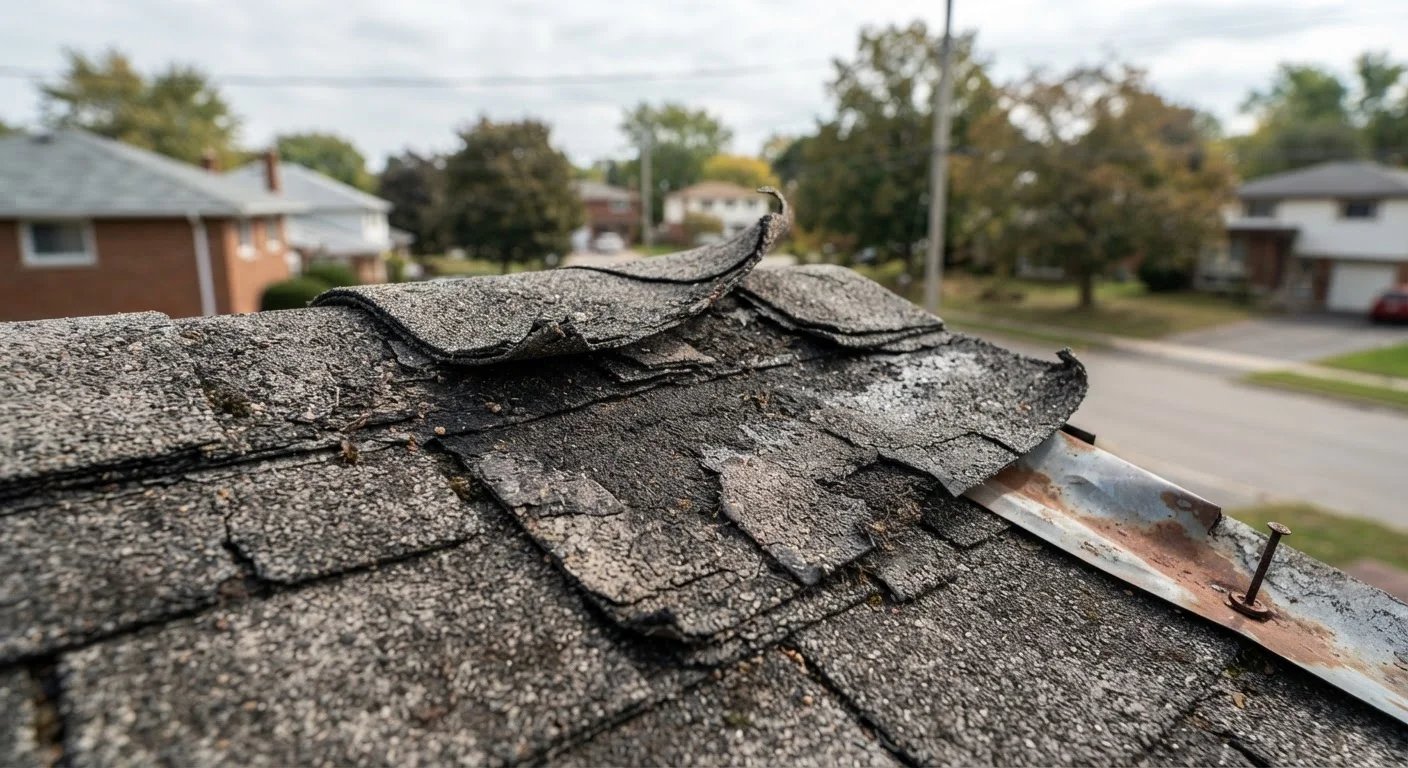
Asphalt shingles curl in two distinct ways: cupping, where the edges turn upward, and clawing, where the middle lifts while edges stay flat. Both indicate that the shingle is aging, drying out, or losing its bond to the decking below. Curled shingles are more vulnerable to wind uplift and allow water to slip underneath - which is how leaks begin.
Cupping is often caused by moisture imbalance between the top and bottom of the shingle. Clawing can signal poor attic ventilation, which traps heat and accelerates shingle breakdown from below. Either pattern visible on multiple areas of the roof suggests the surface layer is nearing the end of its useful life.
Curled shingles are far more vulnerable to wind uplift - water slips underneath before you notice.
Granule Loss in the Gutters
Asphalt shingles are coated with mineral granules that protect the asphalt layer from UV radiation and add fire resistance. As shingles age, these granules loosen and wash into the gutters. You may notice dark, sand-like material collecting in downspout runoff or accumulating in the gutter trough.
Some granule loss is normal on new shingles, but heavy or widespread loss on an older roof means the protective coating is depleting. Exposed asphalt hardens and cracks faster, shortening the roof's remaining lifespan significantly. Checking your gutters for granule buildup is a simple, no-ladder diagnostic step. Our related article on gutter care and maintenance explains what else to look for while you're at it.
Heavy granule accumulation in gutters signals the protective coating is depleting rapidly.
Cracked, Missing, or Loose Shingles
Wind, thermal cycling, and general aging can crack shingles or detach them entirely. Even a single missing shingle creates a direct pathway for water to reach the decking and eventually the structure below. Cracked shingles are less obvious from the ground but represent the same risk once moisture begins seeping in.
After any significant wind event, take a slow walk around your home and look for shingle debris in the yard or driveway. Missing shingles on a relatively new roof may indicate an installation issue rather than simple aging - another reason to document what you observe and discuss it with a qualified roofing professional.
A single missing shingle creates a direct water pathway to the decking beneath.
Damaged or Deteriorated Flashing
Flashing is the thin metal material - typically galvanized steel or aluminum - installed at joints and transitions on your roof: around chimneys, skylights, vents, and where two roof planes meet (called valleys). These are the most water-vulnerable points on any roof. When flashing corrodes, separates, or was installed incorrectly, it allows water to enter at exactly the spots where it's most concentrated.
Look for rust streaks on the roof surface below a chimney, lifted metal edges, or caulk that has cracked and pulled away from joints. Flashing failures are among the most common causes of localized leaks, and they're frequently repairable without replacing the entire roof - provided they're caught before water has had time to penetrate the decking.
Flashing failures at chimneys and valleys are among the most common causes of localized leaks.
Sagging Roof Decking
A roof that visibly sags - either along the ridge line or in patches between rafters - is signaling structural concern, not merely surface wear. Sagging typically means the decking (the plywood or OSB layer under the shingles) has absorbed moisture over time and lost structural integrity, or that the supporting rafters beneath have been compromised.
This is not a wait-and-see situation. Structural deterioration can worsen quickly, and a sagging roof carries an increased risk of more serious failure under heavy rain, ice, or snow load. A licensed roofing contractor or structural inspector should evaluate any visible sag promptly. Your attic inspection can often confirm whether decking deterioration is present before it's obvious from the exterior.
Visible sagging signals structural compromise - this is not a situation to monitor without professional input.
Daylight or Staining Inside the Attic
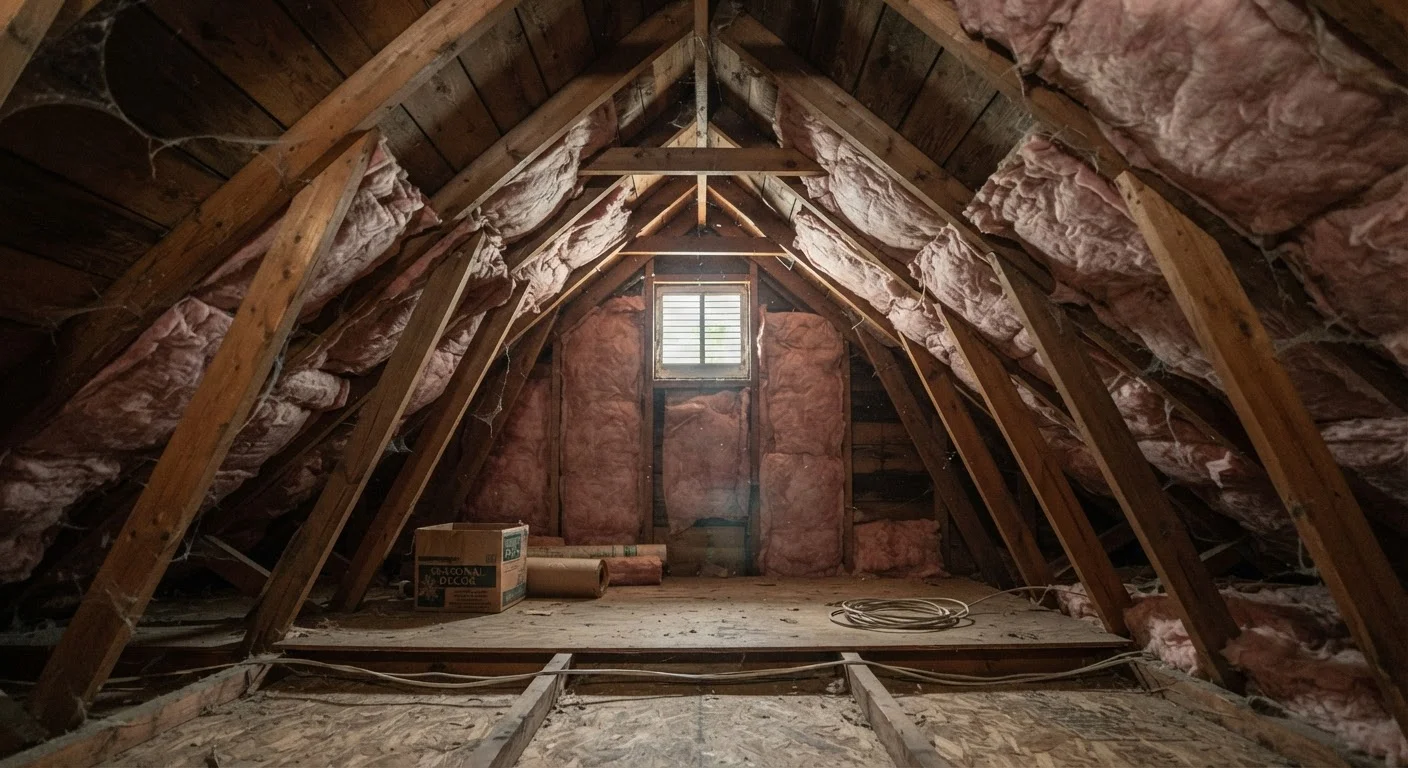
One of the most reliable - and underused - diagnostic steps is a simple attic inspection. On a bright day, turn off your attic light and look toward the roof deck. Any pinpoints of daylight indicate gaps or holes in the roof surface. Also look for dark water staining on the decking or rafters, soft or discolored wood, or any mold growth, all of which confirm moisture has been entering.
A flashlight sweep along the underside of the decking after heavy rain can reveal active drips or wet spots that haven't yet traveled down to the ceiling below. Catching water intrusion at this stage - before it soaks through insulation and ceiling drywall - dramatically limits repair scope and cost.
Pinpoints of daylight or attic staining confirm moisture entry before a ceiling leak appears.
When to Call a Professional
Spotting warning signs is only the first step. Any time you notice sagging decking, widespread granule loss, damaged flashing, or daylight visible from your attic, contact a licensed roofing contractor for a professional assessment. A qualified roofer can determine whether spot repairs will suffice or whether a full replacement is warranted - and that judgment depends on the roof's overall age, the extent of damage, and the underlying decking condition.
Schedule Inspections Twice a Year
A ground-level visual check each spring and fall takes under 15 minutes and can reveal most of these warning signs early. Use binoculars to get a closer look at shingles, ridgelines, and flashing without the risk of climbing. If in doubt about what you're seeing, a professional roof inspection typically costs far less than an emergency repair.
Before winter arrives, a roof check is especially worthwhile. Moisture trapped under damaged shingles can freeze and expand, accelerating deterioration rapidly. See our guide on weatherizing your home before winter for a broader pre-season checklist. And if you've had a harsh winter, a spring exterior walkthrough is an ideal time to reassess your roof's condition.