
What an HVAC Filter Change Actually Does
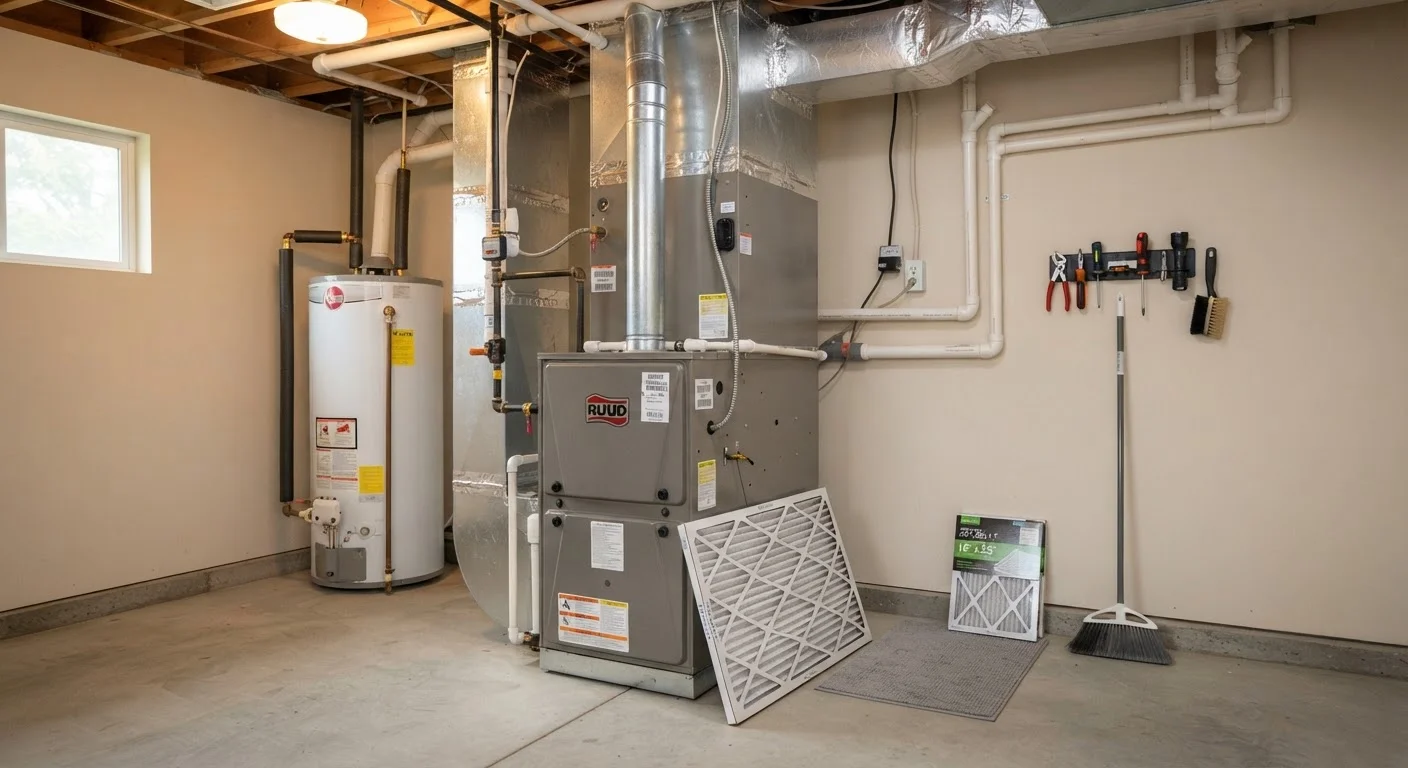
Your furnace and air handler pull air through a filter before circulating it through your home. That filter traps dust, pet dander, pollen, and other airborne particles - protecting both your indoor air quality and the internal components of the HVAC system itself.
Replacing the filter is genuinely a DIY task. You locate the filter slot (usually at the return air vent or on the furnace itself), slide out the old filter, and insert a new one of the same size and rating. The whole job typically takes under five minutes and requires no tools.
How often you need to change it depends on your filter type, household conditions, and whether you have pets. A basic fiberglass filter may need monthly replacement; a higher-density pleated filter might last two to three months. A clogged filter forces your system to work harder, which raises energy use and puts stress on the blower motor - two consequences that are easy and cheap to avoid.
| Criterion | HVAC Filter Change | Furnace Tune-Up |
|---|---|---|
| Who performs it | Homeowner (DIY) | Licensed HVAC technician |
| Typical frequency | Every 1-3 months | Once per year |
| Time required | Under 5 minutes | 1-2 hours |
| Tools or equipment needed | None (just the new filter) | Diagnostic and calibration tools |
| Safety inspection included | No | Yes - heat exchanger, gas, flue |
| Addresses combustion efficiency | No | Yes |
| Best time to do it | On a set monthly or quarterly schedule | Early fall, before heating season |
For a broader look at what this fits into seasonally, see our Fall Home Maintenance Checklist - filter changes are one of the first heating-season tasks listed.
What a Furnace Tune-Up Actually Covers
A furnace tune-up is a professional service visit, typically performed by a licensed HVAC technician once a year. It goes well beyond replacing a filter - a qualified technician inspects, cleans, and tests the mechanical and safety systems inside the furnace itself.
A standard tune-up generally includes: inspecting the heat exchanger for cracks (a cracked heat exchanger can allow carbon monoxide to enter your living space), checking the burners and ignition system, testing gas pressure and combustion efficiency, lubricating moving parts, verifying that safety controls and limit switches operate correctly, and checking the flue and venting for blockages or deterioration.
None of these are tasks a homeowner should attempt independently. Gas-fired equipment involves combustion and potentially hazardous gases - always leave internal furnace work to a licensed professional. Many municipalities also require permitted work for certain furnace repairs.
Carbon Monoxide: Why the Heat Exchanger Check Matters
A cracked heat exchanger is one of the more serious - and less visible - furnace problems a homeowner can face. It can allow combustion gases, including carbon monoxide, to mix with the air circulating through your home. Because carbon monoxide is odorless and colorless, this risk is impossible to detect without proper equipment. This is a key reason professional inspection is not optional for gas furnaces - it's a safety matter, not just a maintenance preference.
It's worth noting that skipping annual tune-ups is one of the most common oversights homeowners make - our article on home maintenance myths that cost money addresses exactly why deferred HVAC service tends to lead to larger repair bills down the road.
Side-by-Side: How They Compare
The easiest way to understand the difference is to think of filter changes as ongoing upkeep and tune-ups as periodic inspections. One keeps the system running day to day; the other confirms the system is fundamentally safe and operating correctly.
1-3 months
Recommended filter replacement interval
The U.S. Department of Energy notes that replacing clogged filters is one of the simplest ways to reduce HVAC energy consumption.
15%
Potential energy savings from clean filters
The U.S. Department of Energy estimates that keeping filters clean can lower an air conditioner's energy use by up to 15 percent.
Once a year
Recommended furnace tune-up frequency
Most HVAC industry guidance and many equipment manufacturers recommend annual professional inspection of gas furnaces.
A clean filter supports the work a tune-up does, but it cannot replace it. Likewise, an annual tune-up doesn't eliminate the need to change filters regularly in between. The two tasks address entirely different parts of the system and serve different purposes - doing one does not mean you can skip the other.
If you're in the habit of maintaining other systems around the house on a schedule, thinking about your furnace the same way helps. Just as a car benefits from both regular fluid checks and periodic full-service inspections, your HVAC system needs both routine filter maintenance and yearly professional review to stay reliable through heating season.