
What Pressure Washing Actually Does
Pressure washing uses a motorized pump to force water through a narrow nozzle at high velocity - typically between 1,300 and 4,000 PSI (pounds per square inch) for residential use. That concentrated force strips away surface-level buildup: dirt, mold, mildew, algae, bird droppings, and general grime that accumulates on exterior surfaces over months and years.
The key word is surface. Pressure washing cleans what sits on top of a material. It does not repair structural damage, penetrate deeply into porous materials to eliminate embedded stains, or address the root causes of recurring problems like moisture intrusion or failing caulk. Homeowners who go in expecting it to restore rather than clean often come away disappointed - or with new damage.
Nozzle selection matters enormously. A narrow 0° or 15° nozzle concentrates force in a small point and can etch concrete or strip paint. A wider 40° nozzle disperses pressure and is more appropriate for general cleaning. Adjusting distance from the surface - closer increases force, farther reduces it - gives you further control. Starting at a safe distance and working closer only as needed is a good rule of thumb.
Surfaces Pressure Washing Handles Well
Effectively removes mold, algae, and surface grime
High-pressure water dislodges biological growth and accumulated dirt from hard surfaces without the need for intensive scrubbing. This makes it one of the faster ways to restore the appearance of a driveway, patio, or walkway.
Extends the life of painted and sealed surfaces
Cleaning siding or decking before repainting ensures better adhesion and a more durable finish. Removing biological growth also slows the degradation that algae and mold can cause over time.
Efficient cleaning for large surface areas
A pressure washer covers driveways, fences, and patios far faster than hand scrubbing. This makes it practical for seasonal maintenance that many homeowners would otherwise skip entirely.
Can reveal hidden damage before it worsens
Running a washer over siding or wood surfaces sometimes exposes cracks, soft spots, or failing caulk that were hidden under grime - giving you the opportunity to address them before water intrusion causes larger damage.
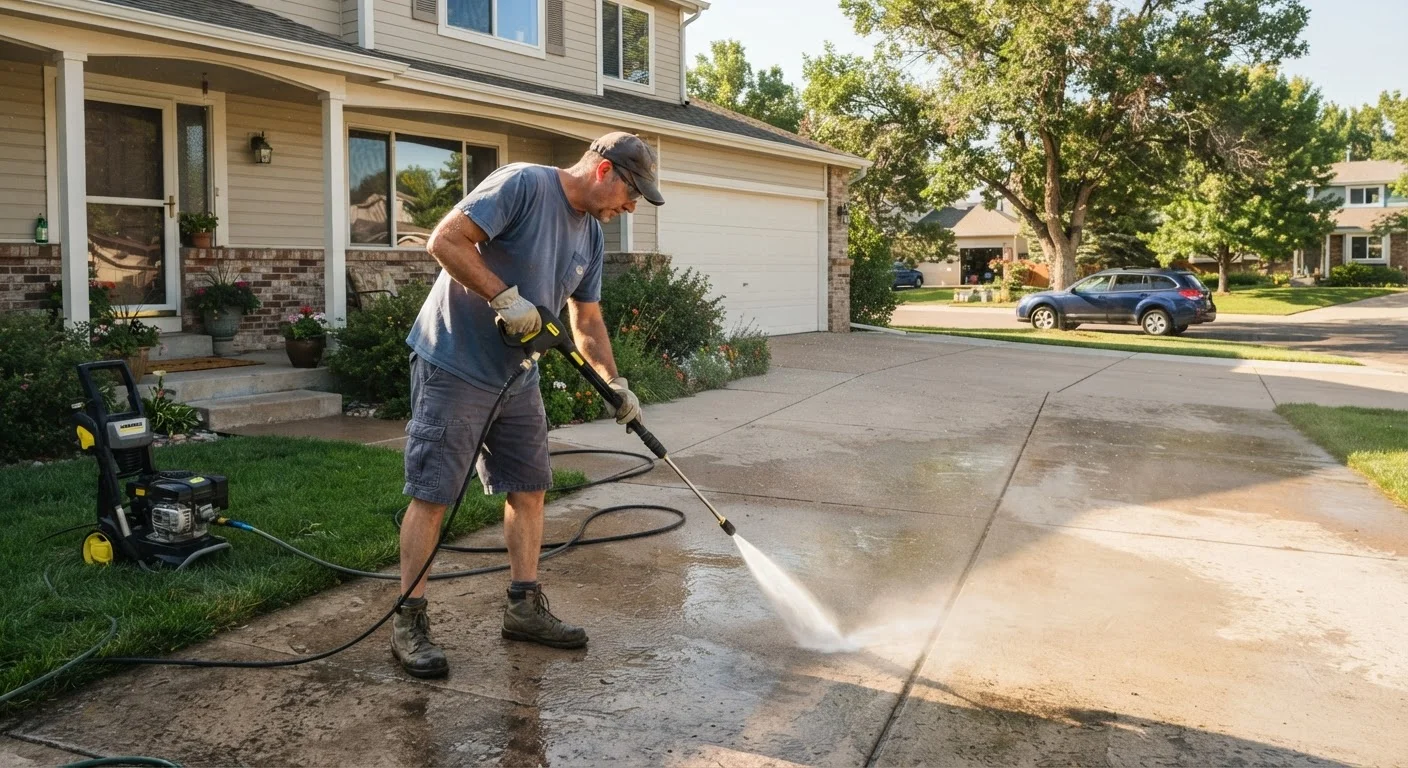
Concrete driveways and walkways are pressure washing's strongest application. The material is dense and resilient, and a thorough wash removes years of oil residue, moss, and weathering stain effectively. Brick patios and retaining walls respond similarly well, provided the mortar joints are in sound condition. Composite and PVC decking - unlike natural wood - tolerates moderate pressure without raising the grain or splintering fibers.
Vinyl siding is another reasonable candidate, as long as you use a lower-pressure setting and aim the spray downward rather than up beneath the panels, where water can work its way behind them. The same downward-angle rule applies around window frames. Properly done, cleaning vinyl siding ahead of repainting or as seasonal maintenance extends its appearance and lifespan meaningfully.
For exterior maintenance tasks beyond washing - such as addressing the gutters that often overflow and stain siding - see our guide to gutter maintenance for related upkeep steps.
Where Pressure Washing Falls Short or Causes Harm
Can permanently damage soft or older materials
Natural wood siding, cedar shakes, and soft stone are vulnerable to high-pressure water, which can raise grain, splinter surfaces, or etch the material. Damage from incorrect use is often irreversible without replacement.
Does not fix embedded stains or root causes
Rust, deep oil stains, and efflorescence typically require chemical treatments in addition to or instead of water pressure. Pressure washing alone often spreads these problems rather than resolving them.
Water intrusion risk around compromised seals
Directing high-pressure water at cracked caulk, failing window seals, or aging siding joints can force moisture into wall cavities, leading to mold and structural damage that develops out of sight.
Easy to cause damage without proper technique
Incorrect nozzle choice, too-close proximity, or upward spray angles can strip paint, blow out mortar, or saturate materials. Rental equipment provides the tool but not the training to use it safely.
Not suitable for all common exterior surfaces
Older painted wood, stucco, soft stone, and roof shingles are generally poor candidates. Assuming any exterior surface can be pressure washed is a common and costly mistake.
Several common homeowner expectations exceed what pressure washing can realistically deliver. Rust stains from metal furniture or fertilizer are a frequent example: water pressure moves surface rust around but rarely lifts the mineral compounds causing the discoloration. Those typically require an oxalic acid-based cleaner applied separately. Oil stains on driveways often need a degreaser pre-treatment before water can flush them away.
Efflorescence - the chalky white mineral deposit that appears on brick and concrete - responds inconsistently to pressure washing alone. Depending on depth, it may require an acidic wash to break the salt deposits down chemically.
Beyond stain limitations, certain materials are actively at risk from pressure washing. Older painted wood siding, cedar shingles, and weathered natural wood can splinter, raise grain, or have paint stripped unevenly - leaving the underlying wood exposed to moisture. Soft stone, like limestone or certain sandstones, can be etched or pitted at higher pressures. And soft mortar in older brick or stone walls can be blown out entirely, requiring repointing - a repair that costs far more than a cleaning session.
Window screens, light fixtures, exterior vents, and any surface with failing caulk or cracked seals should be avoided or shielded. Water forced under compromised seals can reach interior wall cavities and contribute to moisture damage and mold - problems that develop out of sight and are expensive to remediate. This is a situation where pressure washing creates a problem rather than preventing one. For guidance on when a task crosses from DIY territory into professional work, our DIY vs. hiring a pro guide is a useful reference.
Using Pressure Washing Wisely
Soft-Washing: A Gentler Alternative
Soft-washing uses water pressure well below 500 PSI combined with biodegradable cleaning solutions to treat algae, mold, and mildew on sensitive surfaces. It is commonly used on roof shingles, painted wood, and stucco where standard pressure washing would cause damage. If your surface is borderline for pressure washing, soft-washing is worth exploring as a safer option. A licensed exterior cleaning professional can advise on which method is appropriate for your specific materials.
Approaching pressure washing as a precision maintenance tool - rather than a cure-all - produces the best outcomes. Before you start, inspect the surface for any cracks, failing caulk, or loose material. Address those first; running high-pressure water over compromised areas will only worsen them.
Match your PSI and nozzle to the material. Concrete can typically handle 2,500-3,000 PSI; wood decking and siding call for 1,200-1,500 PSI or less. Many homeowners find that soft-washing - lower pressure combined with appropriate cleaning solutions - does a better job on biological growth like algae and mold than brute water force alone, with less risk of surface damage.
If you are uncertain about a surface or suspect underlying moisture issues, bringing in a professional for assessment is worthwhile. Pressure washing equipment is widely available for rent, but knowing how to use it correctly on your specific exterior materials is what protects your investment. Curb appeal matters for more than aesthetics - it factors into how others perceive a property's condition and upkeep, as explored in our look at what affects a home's appraised value.