
Understanding Your Water Heater Type
Before you can maintain a water heater properly, you need to know what type you have. The two most common in American homes are storage tank and tankless (on-demand) models, and their maintenance needs differ meaningfully.
Storage tank water heaters hold 30-80 gallons of preheated water in an insulated tank. They are the most common type and run on natural gas, propane, or electricity. Sediment accumulates on the tank floor over time, reducing efficiency and stressing the unit.
Tankless water heaters heat water only when a tap is opened, passing cold water through a heat exchanger. They last longer on average - often 15-20 years - but require descaling in regions with hard water and benefit from annual filter cleaning.
A third, less common option is the heat pump water heater (also called a hybrid), which extracts heat from surrounding air. These require periodic filter cleaning and adequate surrounding space for proper airflow.
Check the label on your unit for the model, fuel type, and first-hour rating. This information is also essential when scheduling service or ordering parts. For a broader look at home systems that need seasonal attention, see our fall home maintenance checklist.
What to Do Right After Installation
A new water heater isn't entirely care-free from day one. A few early steps set the stage for a long, trouble-free service life.
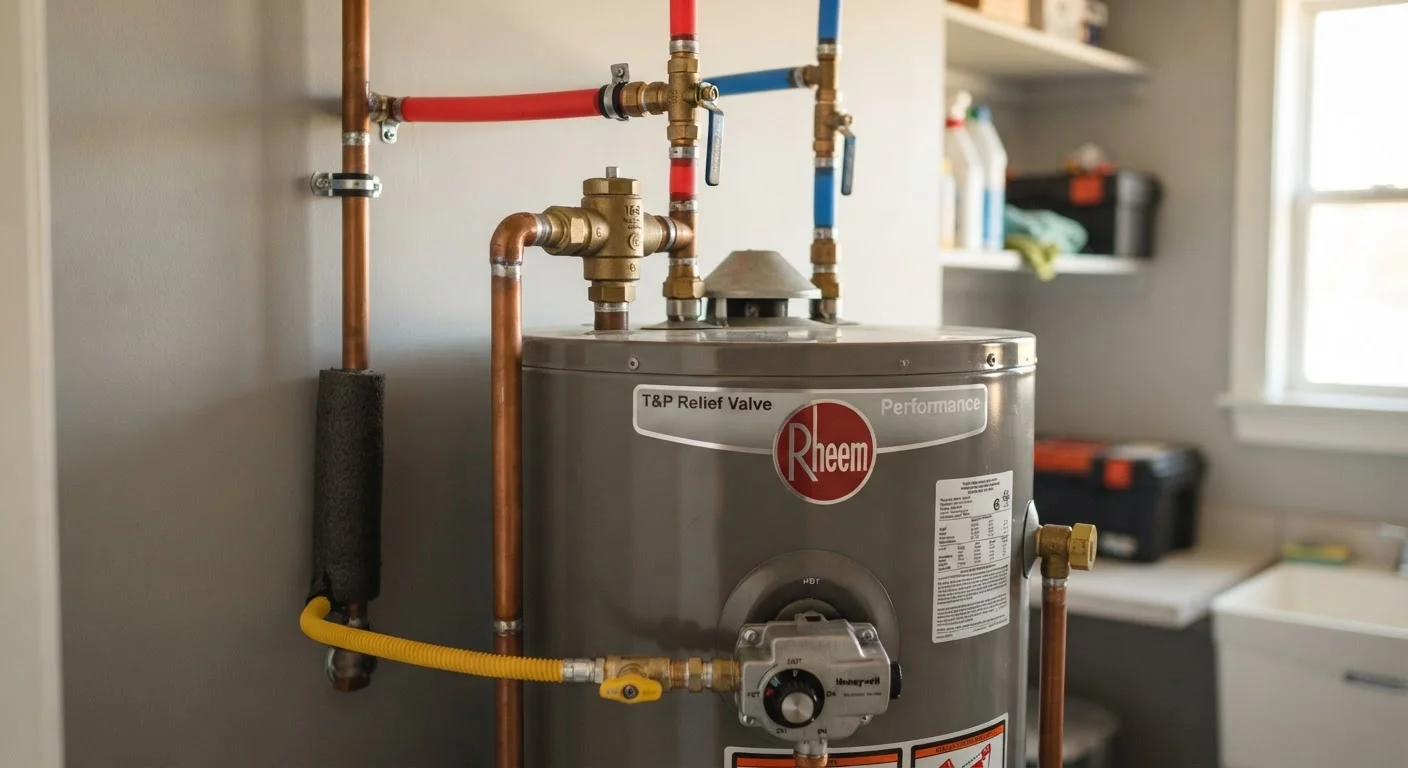
- Verify the pressure relief (T&P) valve: This safety device releases pressure if the tank overheats. Lift the lever briefly to confirm it moves freely and allows water to discharge through the drain pipe. Never cap or remove this valve.
- Check the temperature setting: Many new units arrive set to 140°F from the factory. The U.S. Department of Energy recommends lowering this to 120°F for most households to reduce scalding risk and save energy.
- Record installation details: Write the installation date on a piece of tape and stick it to the unit. This makes future maintenance scheduling and warranty claims far simpler.
- Locate the shutoff: Know where the cold-water supply valve and gas or electrical shutoff are before you ever need them in an emergency.
Set a Recurring Calendar Reminder
Schedule water heater maintenance on the same date each year - many homeowners tie it to a seasonal task like furnace servicing or winterization. Consistency is the single biggest factor in extending your unit's life. A quick annual check takes less than an hour and can prevent a costly emergency replacement.
Annual and Seasonal Maintenance Tasks
Consistent annual maintenance is the single most impactful thing a homeowner can do to extend a water heater's life. For tank models, flushing sediment is the centerpiece task.
To flush a storage tank heater:
- Turn the thermostat to the lowest setting (or to "vacation" mode on gas units).
- Connect a garden hose to the drain valve at the base of the tank and route it to a floor drain or outside.
- Open a hot-water tap in the house to prevent a vacuum from forming.
- Open the drain valve and let water flow until it runs clear. On heavily sediment-laden tanks, this may take several minutes.
- Close the valve, remove the hose, and restore normal operation.
For tankless heaters, annual maintenance centers on descaling. A technician or experienced DIYer circulates a food-grade white vinegar solution or manufacturer-approved descaler through the heat exchanger using a submersible pump and hoses, dissolving mineral deposits that would otherwise restrict flow and reduce efficiency.
The plumbing maintenance guide covers related tasks - like inspecting shutoff valves - that pair naturally with annual water heater service.
40-50%
Share of home energy use from water heating
The U.S. Department of Energy estimates water heating accounts for roughly 14-18% of a home's total energy use, making it one of the largest single contributors.
8-12 years
Typical lifespan of a tank water heater
Industry estimates consistently place standard storage tank water heater service life in the 8-12 year range with routine maintenance.
120°F
Recommended water heater temperature
The U.S. Department of Energy recommends 120°F as the default setting for most households to balance safety and energy efficiency.
The Anode Rod: Your Heater's Hidden Guardian
The anode rod is a long metal rod - typically magnesium or aluminum - suspended inside the tank. It works through a process called sacrificial corrosion: the rod corrodes so the steel tank walls don't have to. Without a functioning anode rod, a tank water heater rusts from the inside out.
Inspect the anode rod every two to three years. If it has corroded down to less than half an inch of core wire, or is heavily coated in calcium, replace it. In households with softened water, rods deplete faster - annual checks are prudent in those cases.
Replacement is a straightforward task for someone comfortable with basic plumbing: shut off the cold-water supply, relieve pressure through a hot tap, and use a 1 1/16-inch socket wrench to unthread the rod from the top of the tank. Thread in the new rod and restore water supply. Because hex-head access is sometimes blocked by cabinetry or framing, flexible anode rods are available for tight spaces.
When replacing an anode rod, wrap the threads with plumber's tape (PTFE tape) before installing the new rod to prevent future seizing - a rod that has fused in place is far harder to remove at the next inspection.
Corrosion and mineral deposits can bond the rod threads to the tank port over years; a small preventive step now saves significant effort later.
If you have a whole-house water softener, use an aluminum/zinc alloy anode rod rather than a pure magnesium rod - softened water accelerates magnesium rod depletion and can impart a sulfur odor to hot water.
Softened water is more electrically conductive, which speeds up the sacrificial corrosion process on magnesium rods specifically.
Temperature Settings and Energy Efficiency
Setting your water heater to the right temperature balances safety, comfort, and operating cost. The U.S. Department of Energy recommends 120°F as a default. At this level, the risk of scalding is significantly reduced compared to higher settings, and the heater works less hard, lowering energy bills.
Some households should consider a higher setting - 140°F - including those with compromised immune systems or older plumbing where Legionella bacteria growth is a concern. In those cases, a mixing valve (also called a tempering valve) can be installed at the outlet to deliver blended, lower-temperature water to taps while keeping the tank hotter for sanitation. Consult a licensed plumber before adjusting settings for medical or health-related reasons.
Also worth checking: the insulating jacket on older tank units. An insulating blanket (rated R-8 or higher) added around older tanks can reduce standby heat loss. Verify compatibility with your model before installing one - some newer tanks are already well-insulated and don't benefit from additional wrapping.
Warning Signs and When to Call a Professional
Certain symptoms indicate problems that go beyond routine upkeep and warrant a call to a licensed plumber.
- Rust-colored or metallic-tasting water: Often signals internal tank corrosion or a depleted anode rod.
- Rumbling or popping sounds: Typically caused by sediment buildup on the heating element or burner. Flushing may help, but persistent noise can indicate scaling damage.
- Water pooling around the base: Any visible leak from the tank itself - not from fittings - usually means the tank has failed internally and replacement is needed.
- Inconsistent hot water: Could point to a failing thermostat, heating element, or burner assembly.
- Pressure relief valve dripping repeatedly: This can signal excessive water pressure or a faulty valve - both require professional diagnosis.
Gas and Electrical Work Requires a Licensed Professional
Any repair or replacement work involving gas lines, burner assemblies, electrical connections, or flue venting must be performed by a licensed plumber or HVAC technician. Unpermitted or improper work on these systems poses serious fire, explosion, and carbon monoxide risks. Most jurisdictions also require permits for water heater installation - confirm local requirements before any work begins.
Gas water heater repairs involving the burner assembly, gas line, or venting should always be performed by a licensed professional. Improper gas connections are a serious safety hazard.
End of Life: Knowing When to Replace
Most storage tank water heaters have a practical service life of 8-12 years. Tankless models can reach 15-20 years with proper maintenance. The installation date you recorded at setup is the key reference point.
Consider replacement when:
- The unit is older than 10 years and showing any of the warning signs above.
- Repair costs exceed roughly half the price of a new unit.
- You're planning a home sale - buyers and inspectors will flag an aging heater.
- You're experiencing repeated failures in the same component.
When selecting a replacement, consider upgrading to a more efficient model. Heat pump water heaters, for instance, use significantly less electricity than conventional electric resistance models, and may qualify for federal or utility rebates - check with your local utility and a tax professional for current incentive details.
Dispose of the old unit responsibly. Many municipalities require that tank water heaters be taken to a designated recycling or bulk-waste facility. Your plumber can often arrange hauling as part of the installation service.
Replacing a water heater - and connecting it to gas or electrical supply and proper venting - requires permits in most jurisdictions. Always verify local code requirements and use a licensed contractor for the installation itself.