
Why Plumbing Maintenance Matters
Plumbing problems rarely announce themselves before they become expensive. A slow drip under the kitchen sink can quietly rot the cabinet floor over months; an uninsulated pipe can burst on the first hard freeze of winter. Routine maintenance shifts you from reactive to proactive - small investments of time now prevent large repair bills later.
Plumbing maintenance also protects your home's structural integrity, indoor air quality, and water efficiency. A running toilet can waste tens of thousands of gallons per year, and damp conditions behind walls invite mold growth. For a broader view of how plumbing fits into your overall home care rhythm, see your home's annual maintenance calendar.
Main shutoff valve
A valve - usually located where the water supply enters the home - that stops all water flow to the house when turned off.
Anode rod
A metal rod inside a tank water heater designed to corrode in place of the tank itself, extending the heater's life.
P-trap
The curved pipe section beneath a sink drain that holds a small amount of water to block sewer gases from entering the home.
Hose bib
An outdoor faucet attached to an exterior wall, used for garden hoses; also called a spigot or sillcock.
Sediment flush
The process of draining accumulated mineral deposits from the bottom of a water heater tank to maintain efficiency.
Fixture shutoff
A small individual valve located behind a toilet or under a sink that isolates water supply to just that fixture.
Know Your Shutoff Valves
The single most important piece of plumbing knowledge for any homeowner is the location of the main water shutoff valve. In an emergency - a burst pipe, a broken supply line - turning off water quickly limits damage dramatically. The main shutoff is typically located where the water line enters the house: near the front foundation wall in a basement or utility room, or in a crawl space.
Beyond the main valve, familiarize yourself with fixture-level shutoffs - the small valves behind toilets and under sinks. These let you isolate a single fixture without cutting water to the whole house. Test each one by turning it off and on once a year. Valves that haven't moved in years can seize or corrode, and discovering that problem during a calm inspection is far better than discovering it during a flood.
Label Your Shutoff Valves Now
Take 15 minutes on a calm day to locate every shutoff valve in your home and label each one with a piece of painter's tape and a marker. Include the main valve, fixture-level valves, and any zone valves for irrigation systems. This simple step can save critical minutes - and thousands of dollars - in an emergency.
Routine Checks You Can Do Yourself
A few simple walkthroughs each year catch most problems early. Work through this checklist at least once annually:
- Inspect exposed pipes for corrosion, moisture, or discoloration at joints.
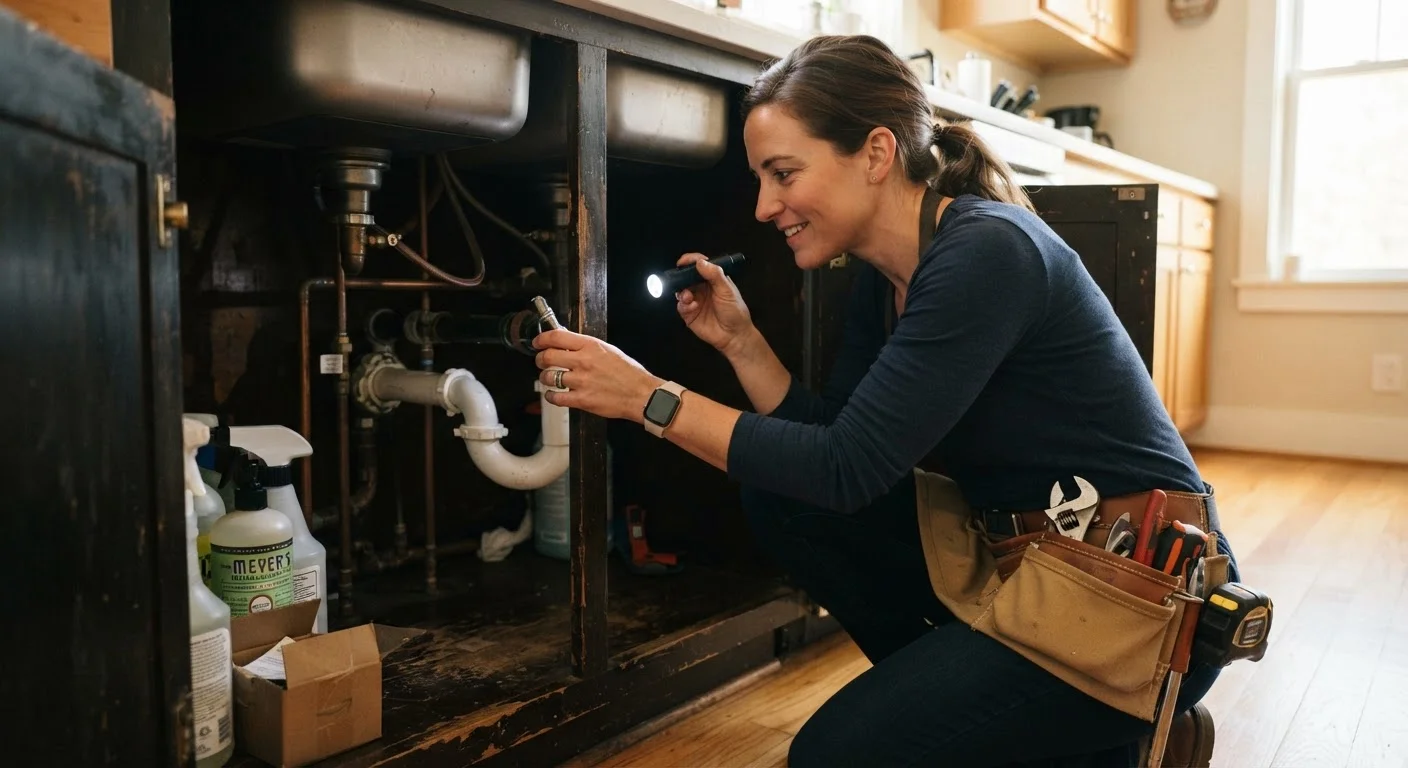
- Check under sinks for drips, soft cabinet floors, or staining - signs of slow leaks.
- Test all faucets for reduced flow, which can indicate mineral buildup or a failing aerator.
- Listen to your toilets. A faint hissing after the tank fills usually means the flapper isn't sealing properly - a common, inexpensive fix.
- Monitor your water bill. An unexplained spike often signals a hidden leak worth investigating.
If you're new to home upkeep, this beginner's guide to home improvement can help you build confidence before tackling any hands-on work.
Water Heater Upkeep Basics
Your water heater works every day and often receives no attention until it fails. Two maintenance tasks make a measurable difference in its performance and lifespan.
Flushing the tank: Sediment - primarily mineral deposits from hard water - accumulates at the bottom of tank-style heaters. This layer forces the heating element to work harder, raises energy use, and can cause premature failure. Flushing the tank annually clears this buildup. The process involves attaching a garden hose to the drain valve and draining until the water runs clear, with the heat source turned off first. Always consult your unit's documentation before attempting this.
Inspecting the anode rod: This sacrificial metal rod inside the tank attracts corrosive minerals, protecting the tank lining. It should be inspected every three to five years and replaced when significantly depleted. This is a task many confident DIYers can handle, though a plumber can do it quickly if you'd prefer. For a complete look at water heater care from installation to replacement, see this end-to-end water heater guide.
Seasonal Plumbing Tasks
Plumbing needs shift with the seasons, particularly in climates that experience freezing temperatures.
Before winter: Disconnect and drain garden hoses, shut off outdoor hose bibs from their interior valves, and insulate any pipes in unheated spaces such as garages or crawl spaces. Exposed pipes can freeze and burst when temperatures drop below 32°F (0°C), especially when wind chill is factored in. The fall home maintenance checklist covers these steps alongside other cold-weather prep tasks.
In spring: Turn outdoor spigots back on slowly and check for leaks that may have developed over winter. Inspect washing machine hoses for cracking or bulging - these fail without warning and can cause significant flooding.
Never Ignore Frozen Pipe Warning Signs
If you turn on a faucet during cold weather and little or no water comes out, a pipe may already be frozen. Do not use an open flame to thaw it - this is a fire hazard. A hair dryer on low heat or warm towels applied to the pipe are safer options, but if you're unsure of the pipe's location or condition, call a plumber promptly. A frozen pipe that has already cracked may flood the moment it thaws.
When to Call a Licensed Plumber
Good plumbing maintenance also means knowing which tasks to hand off. Some work is regulated, requires permits, or involves risks that make professional involvement the right call:
- Main line repairs or replacements - work that connects to municipal supply or sewer lines typically requires permits and licensed work in most jurisdictions.
- Gas line connections to water heaters or appliances must always be handled by a licensed professional.
- Persistent low water pressure throughout the house may signal a failing pressure regulator, a significant leak, or supply line corrosion - diagnostics that benefit from professional tools.
- Sewage odors inside the home warrant prompt professional inspection; the cause can range from a dry P-trap to a cracked sewer line.
Attempting to skip permits or professional oversight on regulated work can create liability issues when you sell the home and may void your homeowner's insurance in some cases. When in doubt, consult a licensed plumber - many offer free or low-cost diagnostic visits. Plumbing myths can also lead homeowners astray; see common home maintenance myths that cost money for perspective on what not to believe.