
Why Cat Behavior Can Be Hard to Read
Cats evolved as both predators and prey, which shaped a communication style that is often understated, context-dependent, and easy for humans to misread. Unlike dogs, who developed thousands of years of close social signaling with people, cats maintained more of their solitary communication repertoire. That means the signals they send - a slow blink, a rhythmic paw press, a rapid chittering sound - carry real meaning that owners can learn to decode.
Understanding these behaviors not only deepens your bond with your cat; it also helps you recognize when something might be off. For a broader foundation, see our guide to reading pet body language.
| Kneading origin | Nursing instinct retained into adulthood |
| Slow blink research | Study shows cats approach slow-blinking humans more readily (Scientific Reports, 2020) |
| Chirping target | Most often triggered by birds, squirrels, or insects |
| Head bunting purpose | Scent marking and social bonding signal |
| Tail held high meaning | Confident, friendly greeting posture |
Kneading: Comfort, Contentment, and Instinct
Kneading - the rhythmic pushing of alternating front paws against a soft surface - begins in kittenhood. Nursing kittens knead their mother's belly to stimulate milk flow, and the behavior becomes strongly associated with warmth and security. Adult cats retain it as a self-soothing mechanism.
When your cat kneads your lap or a blanket, it generally signals deep contentment and relaxation. Some cats also knead when marking territory: paw pads contain scent glands, so kneading deposits a personal scent signature on the surface. You may also notice kneading before a cat settles down to sleep, which likely traces back to an ancestral habit of pressing down grass or leaves into a resting spot.
Key point: Kneading directed at you is typically a sign of trust and affection, not a demand or discomfort signal. If your cat kneads excessively or appears anxious rather than relaxed, it may be worth discussing with a veterinarian to rule out stress-related causes.
Chirping and Chattering: The Predator's Dilemma
That rapid, stuttering sound - often described as chirping, chattering, or twittering - typically erupts when a cat spots prey it cannot reach, such as a bird outside a window. Researchers have noted it frequently accompanies focused visual tracking of prey animals, though its exact function is still debated among animal behaviorists.
One widely discussed hypothesis, supported by some field observations, is that the vocalization mimics the calls of prey species as a lure. A 2010 study in Brazil documented wild pied tamarins apparently mimicking the calls of small prey, suggesting such vocal mimicry may exist across feline species, though direct evidence in domestic cats remains limited.
Another interpretation is that chirping is simply an expression of frustrated predatory arousal - the cat's motor system priming for a hunt it cannot execute. Either way, the behavior is normal and harmless. Similar predatory instincts also explain other puzzling feline habits.
Kneading
A rhythmic pawing motion where a cat alternates pressing its front paws against a soft surface. It originates from nursing behavior and persists into adulthood as a self-soothing and scent-marking action.
Chattering / Chirping
A rapid, stuttering vocalization cats produce when observing prey they cannot access. It is associated with predatory arousal and may involve elements of instinctive prey-call mimicry.
Slow Blink
A deliberate, unhurried closing and reopening of the eyes used as an affiliative signal. It communicates relaxation and non-threat and is considered a feline gesture of social comfort.
Head Bunting
The act of pressing the forehead or cheeks against a person or object to deposit scent from facial glands. It is a social bonding behavior indicating familiarity and trust.
Trilling
A short, melodic vocalization that falls between a purr and a meow. Cats typically use it as a friendly greeting directed at people or other cats they know well.
Affiliative Behavior
Social actions that promote bonding and reduce tension between individuals. In cats, examples include slow blinking, head bunting, and mutual grooming.
Slow Blinking: A Genuine Feline Social Signal
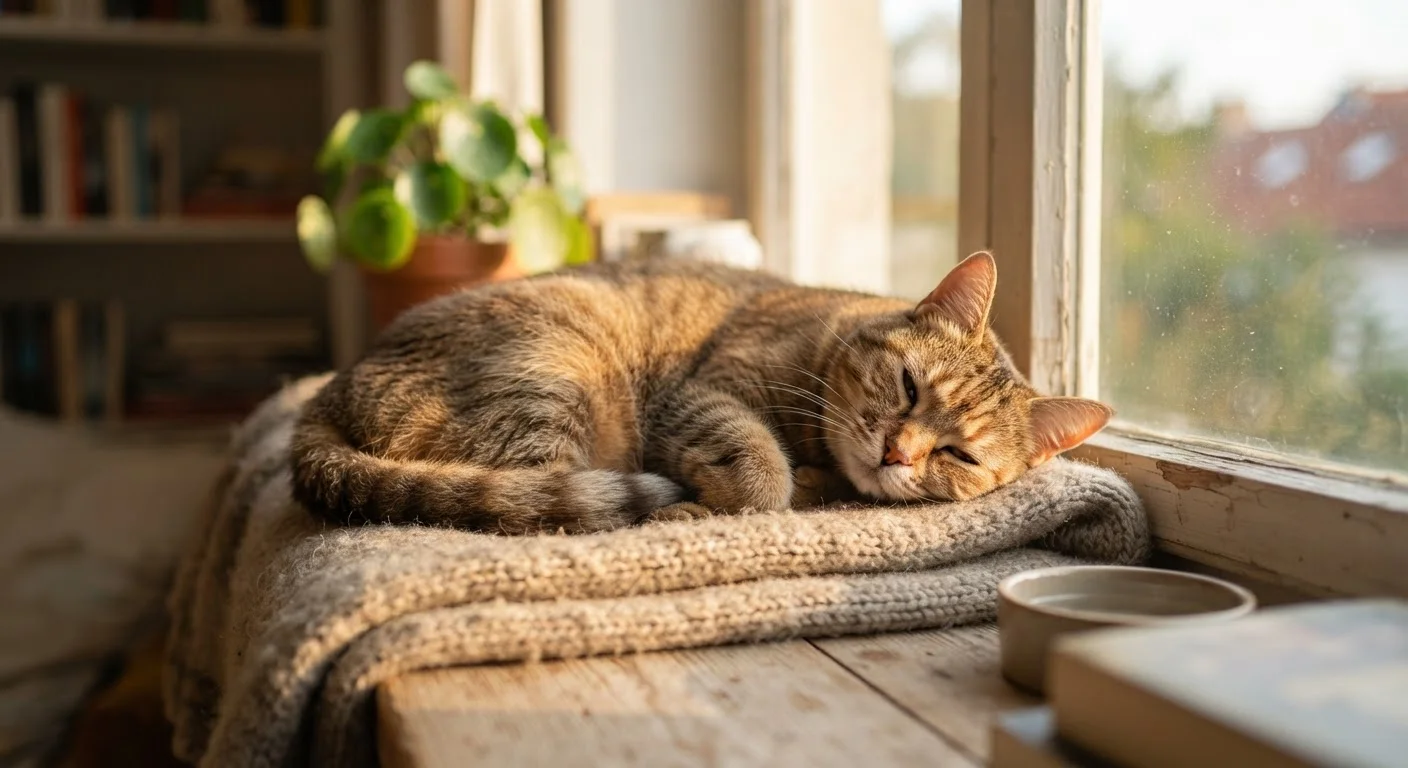
The slow blink - a deliberate, unhurried closing and reopening of the eyes - is one of the clearest affiliative signals a cat can offer. In feline social dynamics, a direct, unbroken stare signals threat or dominance. Deliberately breaking that stare by slowly closing the eyes communicates that the cat is relaxed, non-threatening, and comfortable in your presence.
A peer-reviewed study published in Scientific Reports (2020) found that cats were more likely to approach an unfamiliar person when that person slow-blinked at them, compared to maintaining a neutral expression. Owners can use this as a gentle communication tool - try slow-blinking at your cat and observe whether they return the gesture.
It is worth noting that slow blinking is context-dependent. A cat that blinks slowly while hunched and showing other stress signals - flattened ears, tucked tail - may simply be avoiding confrontation rather than expressing affection. For more on misread signals, see our article on behaviors owners frequently misinterpret.
Other Common Behaviors Worth Knowing
Beyond the three headline behaviors, cats display a range of signals that carry consistent meaning:
- Head bunting (headbutting): Pressing the forehead or cheeks against a person or object deposits scent and signals social bonding. It is generally a mark of familiarity and trust.
- Tail position: A tail held high and loosely is a greeting signal; a puffed tail indicates fear or arousal; a low, tucked tail suggests submission or anxiety.
- Trilling: A short, melodic sound (distinct from a full meow or chirp) that cats often use to greet familiar humans or other cats - it typically carries a positive, friendly tone.
- Hiding: Temporary hiding can be normal stress-coping behavior. Prolonged hiding or hiding paired with appetite loss may signal illness and warrants a veterinary check.
Cats also communicate stress in subtle ways that owners frequently overlook. Our piece on how pets communicate stress without making a sound covers those quieter signals in detail.
This article provides general educational information about cat behavior and is not a substitute for professional veterinary guidance. If your cat displays sudden or significant behavioral changes, consult a licensed veterinarian.