
The Predatory Instinct at the Root of It All
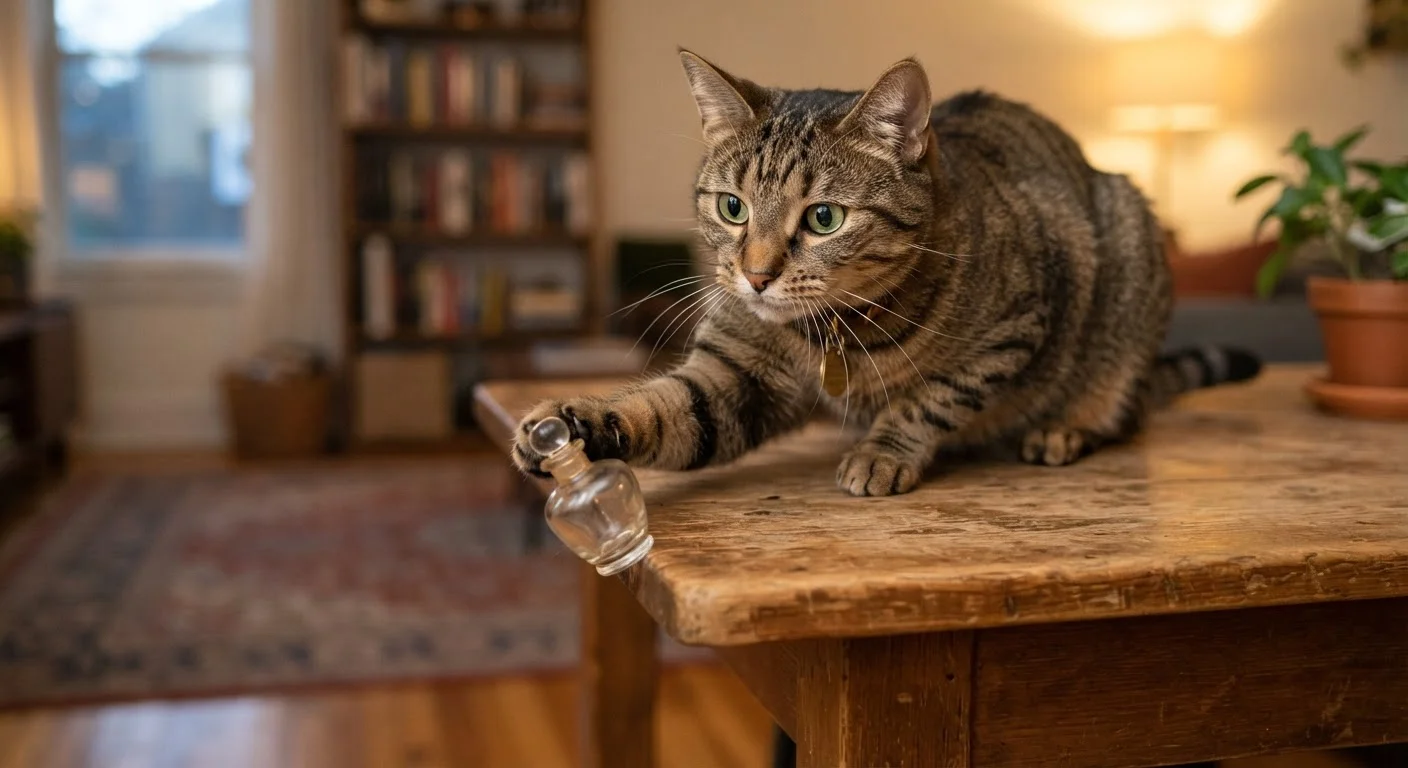
Cats are obligate carnivores with a deeply embedded prey drive - and that drive doesn't switch off just because dinner comes from a bowl. When a cat pats, bats, or shoves an object on a table, it is performing a compressed version of prey-testing behavior. In the wild, a cat approaching a small animal it has caught will tap it cautiously to determine whether it's still alive and safe to grab. Your cat's water glass is standing in for that role.
The paw is a remarkably sensitive tool. Cats have dense concentrations of mechanoreceptors - pressure-sensitive nerve endings - in their paw pads. When a cat taps an object repeatedly, it is gathering tactile information: weight, texture, whether it moves, and how it responds. That investigative process is the same one used to assess prey. The fact that the object then falls and skitters across the floor is essentially a bonus - it behaves unpredictably, which is exactly what prey does.
This is closely related to other instinct-driven behaviors described in why cats bring you dead animals - hunting circuitry runs deep, and domestic life doesn't erase it.
Curiosity, Boredom, and the Role of Enrichment
Beyond prey drive, plain curiosity motivates a lot of tabletop mischief. Cats are natural environmental investigators. An object sitting still on a high surface is a sensory puzzle: it takes up space, reflects light, and may even make an interesting sound when struck. Pushing it creates new information - and for a cat with limited stimulation, that information is genuinely rewarding.
Boredom is a significant amplifier. Indoor cats, particularly those in low-stimulation environments, channel their unspent energy into whatever is available. Tabletop objects are conveniently at paw level when a cat is perched on a counter or shelf, making them easy targets. Understanding why play matters for animal development helps explain why cats deprived of regular play outlets are more likely to self-entertain in ways owners find frustrating.
Try Scheduled Play Before Peak Mischief Hours
Cats are most active at dawn and dusk, which is when tabletop antics tend to peak. A 10-15 minute interactive play session using a wand or feather toy just before these windows can dramatically reduce boredom-driven behavior. Consistency matters more than duration - daily short sessions outperform occasional long ones.
Providing puzzle feeders, wand toys, and at least two structured interactive play sessions daily gives your cat appropriate outlets for predatory energy - and tends to reduce random object-displacing behavior over time.
The Attention Factor: When Cats Learn It Works
Here is where behavior becomes learned rather than purely instinctual. The first time your cat knocked something off the counter, you probably reacted - maybe you gasped, rushed over, or scolded them. From your cat's perspective, that was a powerful result. Your cat did something and the environment changed dramatically: a human moved, made noise, and focused entirely on them.
Cats are quick to associate cause and effect. If pushing a pen off a desk reliably summons attention, the behavior becomes a tool. This is especially common in cats that are frequently left alone or whose social and play needs aren't fully met. The tabletop knock becomes a remote control for human behavior.
Reacting Strongly Can Backfire
If your cat's primary motivation is attention, a dramatic reaction - even a negative one - rewards the behavior. Behaviorists generally recommend a calm, low-key response and leaving the room briefly rather than engaging. Pair this with increased proactive play so your cat has better outlets for engagement.
Responding consistently - even with a negative reaction like saying "no" - can reinforce the behavior if the cat's primary goal is engagement. The most effective counter is a calm, non-reactive response paired with increased proactive enrichment so the cat isn't driven to seek stimulation this way in the first place.
For a broader look at related puzzling habits, see what common cat behaviors actually signal, which places this kind of action in the context of overall feline communication.
What You Can Do - and When to Check In With a Vet
Managing this behavior is largely about redirecting the underlying drive rather than punishing the action. Enrich your cat's environment with climbing structures, window perches, and rotating toy selections. Prioritize interactive play that mimics hunting - wand toys with feather or prey-like attachments are particularly effective at draining predatory energy before it gets redirected to your belongings.
If you have valuable or fragile items, store them out of reach during periods when your cat is most active. Cats tend to be most engaged during the crepuscular hours - dawn and dusk - so those are peak mischief windows. Nocturnal and crepuscular activity patterns in domestic cats explains why timing matters for managing energy-driven behaviors.
Most importantly: if a cat that has never shown this behavior suddenly starts knocking things around - especially alongside changes in appetite, coordination, or alertness - schedule a veterinary visit. Sudden behavioral changes can sometimes reflect neurological, metabolic, or sensory changes that deserve professional evaluation. For routine cases, however, this is one of the most normal things a cat can do.
This article is for general informational purposes only and is not a substitute for professional veterinary advice. Always consult a licensed veterinarian if you have concerns about your pet's health or behavior.