
What's Actually Happening in Your Dog's Brain
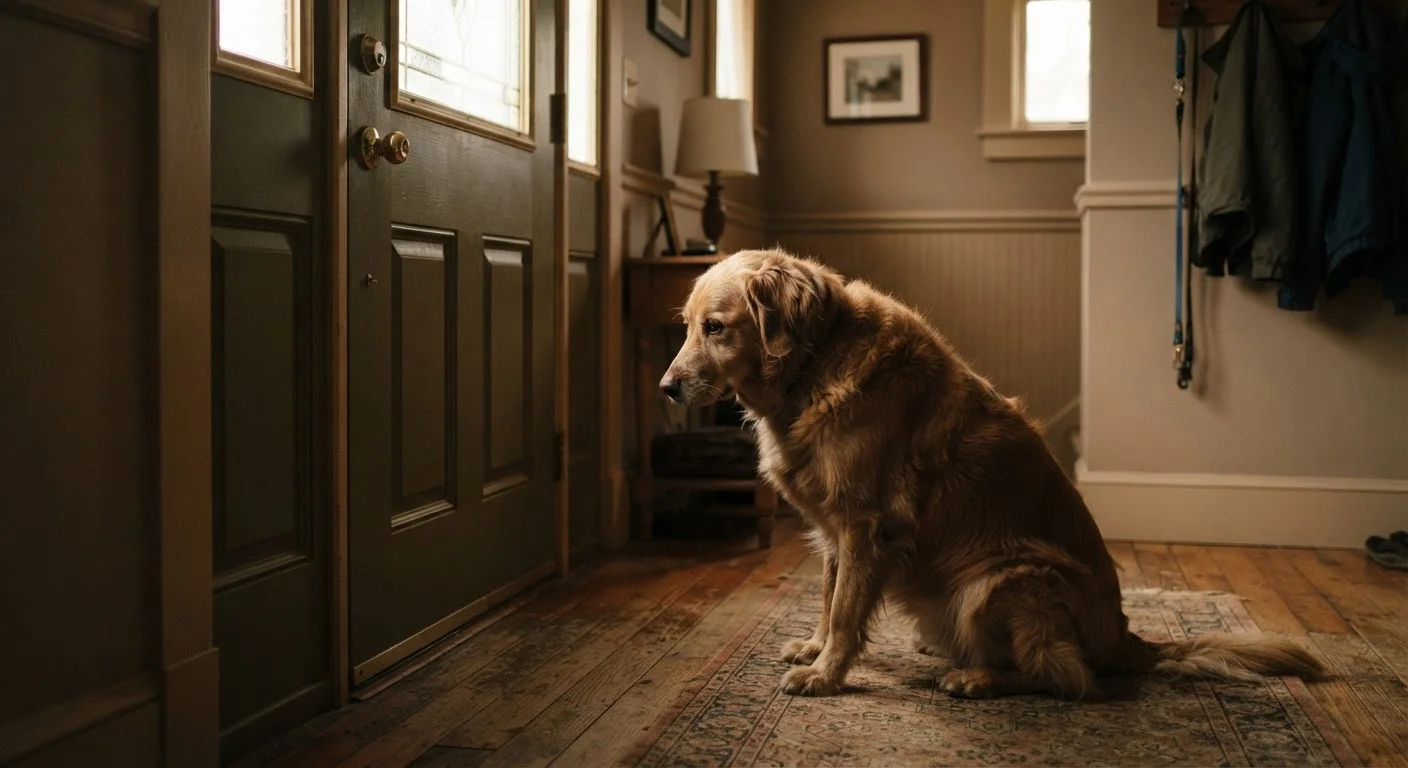
When you walk out the door, a dog with separation anxiety doesn't simply decide to misbehave. Their brain enters a genuine state of panic - the same fight-or-flight response triggered by an actual threat. The amygdala, the brain's alarm center, fires urgently, flooding the body with stress hormones like cortisol and adrenaline. Heart rate rises, muscles tense, and the dog's entire system orients toward one goal: finding you.
This is why punishment is not only ineffective but counterproductive. The dog is not acting from calculation - they are reacting from fear. Scolding them after the fact doesn't connect to the behavior in their mind; it only adds another layer of anxiety to an already overwhelmed nervous system.
Understanding this neurological reality shifts how owners should approach the problem. As one framework from veterinary behavioral science describes it, separation anxiety is a panic disorder with a very specific trigger: your absence. That framing opens the door to more compassionate and effective responses.
“Separation anxiety in dogs is not a training failure - it is an emotional disorder. Treating it requires addressing the dog's internal state, not just modifying the outward behavior.”
— Karen Overall, Veterinary behaviorist and author of clinical behavioral medicine texts for small animals
Why Some Dogs Are More Vulnerable
Not every dog develops separation anxiety, and the reasons involve a combination of genetics, early experience, and life circumstances. Dogs bred for close human partnership - such as herding and sporting breeds - may have a higher baseline need for social contact, making extended solitude harder to tolerate.
Early socialization plays a critical role as well. How a puppy experiences its first weeks of life shapes the neural pathways that govern stress responses for years to come. Puppies with limited positive exposure to being alone can grow into adults who never fully develop tolerance for solitude.
Life transitions are another common trigger. Rehoming, the loss of a family member or companion animal, a return to office work after extended time at home, or even a change in a child's school schedule can destabilize a dog that previously seemed fine. The brain's sense of predictability is disrupted, and anxiety can follow.
~17%
Dogs estimated to have separation anxiety
Research published in veterinary behavioral literature estimates that roughly 17% of dogs exhibit some form of separation-related distress, though many cases go unrecognized by owners.
30 min
Typical onset window for anxious symptoms
Veterinary behaviorists note that most dogs with separation anxiety show peak distress within the first 30 minutes after an owner departs, often beginning within minutes.
Top reason
Behavioral cause of owner surrender
Separation anxiety-related behaviors - destruction, noise, and house soiling - are consistently cited among the leading behavioral reasons dogs are surrendered to shelters.
Recognizing the Signs - and What They're Not
Separation anxiety has a recognizable signature: symptoms occur specifically when the dog is alone or separated from their person, and they typically begin within the first 30 minutes of departure. Common indicators include:
- Destructive behavior focused on exits - doors, windows, and gates
- Excessive barking, howling, or whining
- House soiling despite being fully housetrained
- Drooling, panting, or trembling
- Pacing, circling, or inability to settle
- Attempts to escape that may result in self-injury
It's worth distinguishing these from other behavioral issues. A dog that destroys furniture out of boredom, for instance, is not necessarily anxious - they may simply need more physical activity or mental stimulation. Similarly, territorial behavior and aggression have entirely different triggers and profiles. Video recording your dog during an absence is one of the most useful tools for clarifying what's actually happening.
Chronic, unmanaged anxiety also carries physical health consequences. Stress and its effects on pet health can extend beyond behavior into digestive, immune, and skin problems over time - another reason addressing it matters.
Evidence-Based Approaches to Treatment
The most well-supported treatment for separation anxiety is systematic desensitization - gradually and repeatedly exposing the dog to your departures in a controlled way that stays below the threshold of panic. The goal is to teach the dog's nervous system that your leaving is predictable and temporary, not catastrophic.
This typically begins with extremely short absences - sometimes just seconds - and only progresses when the dog remains calm. Rushing the process tends to set progress back, so consistency and patience are essential. Working with a certified applied animal behaviorist or a veterinary behaviorist provides structured guidance tailored to your dog's specific profile.
Start Smaller Than You Think Is Necessary
When beginning a desensitization program, most owners underestimate how short the initial departures should be. If your dog begins showing stress signals within two minutes, start with 20-second absences. Building a history of calm, successful separations - even very brief ones - is what rewires the anxiety response over time.
In moderate to severe cases, veterinarians may recommend medication to reduce the baseline anxiety enough for behavior modification to take hold. This is not a shortcut - medication works best alongside a structured training program, not instead of one. Always discuss medication decisions with your veterinarian rather than attempting to manage it independently.
Owners should also review their own routines honestly. Some well-meaning owner habits - like elaborate, emotionally charged departure or arrival rituals - can inadvertently amplify a dog's anxiety around transitions.
This article is for general informational purposes only and does not constitute veterinary advice. If your dog is showing signs of significant distress or self-injury, please consult a licensed veterinarian or veterinary behaviorist for individualized guidance.