
Why Grooming Is About More Than Appearance
Many pet owners think of grooming as an aesthetic concern - keeping their animal looking clean and tidy. In practice, a consistent grooming routine is one of the most direct ways to monitor and support a pet's physical health. Brushing removes dead hair and distributes skin oils, nail trimming prevents painful overgrowth, ear cleaning reduces infection risk, and dental care addresses one of the most commonly overlooked health issues in companion animals.
Grooming sessions also give you structured, hands-on time with your pet. Running your hands along their body means you're more likely to notice a new lump, a patch of dry skin, or early signs of a flea infestation. For a more detailed look at what normal looks like across coat, eyes, and ears, see what a healthy pet's coat, eyes, and ears actually look like.
Establish a grooming schedule based on your pet's specific coat type and breed needs.
Generic advice doesn't account for the real variation between a Poodle, a Labrador, and a Persian cat. Matching frequency and tools to your pet's actual coat prevents mats, skin irritation, and missed health signals.
Use each grooming session as a head-to-tail health check.
Regular handling means changes in your pet's body - lumps, skin changes, swelling, or unusual odors - are more likely to be caught early. Early detection gives veterinarians more options.
Introduce grooming tools gradually and pair them with positive reinforcement.
Pets that associate grooming with calm, reward-based experiences are easier to handle long-term and are less likely to develop fear responses that make future grooming difficult or unsafe.
Know when to defer to a professional groomer or veterinarian.
Some grooming tasks - such as expressing anal glands, managing severely matted coats, or grooming an aggressive or anxious pet - carry injury risk if handled without training or proper restraint.
Clean ears using only vet-approved products and correct technique.
Improper ear cleaning - especially with cotton swabs inserted into the canal - can push debris deeper or damage sensitive tissue. Infections left untreated can progress to the middle or inner ear.
Core Grooming Tasks by Area
Coat and Skin
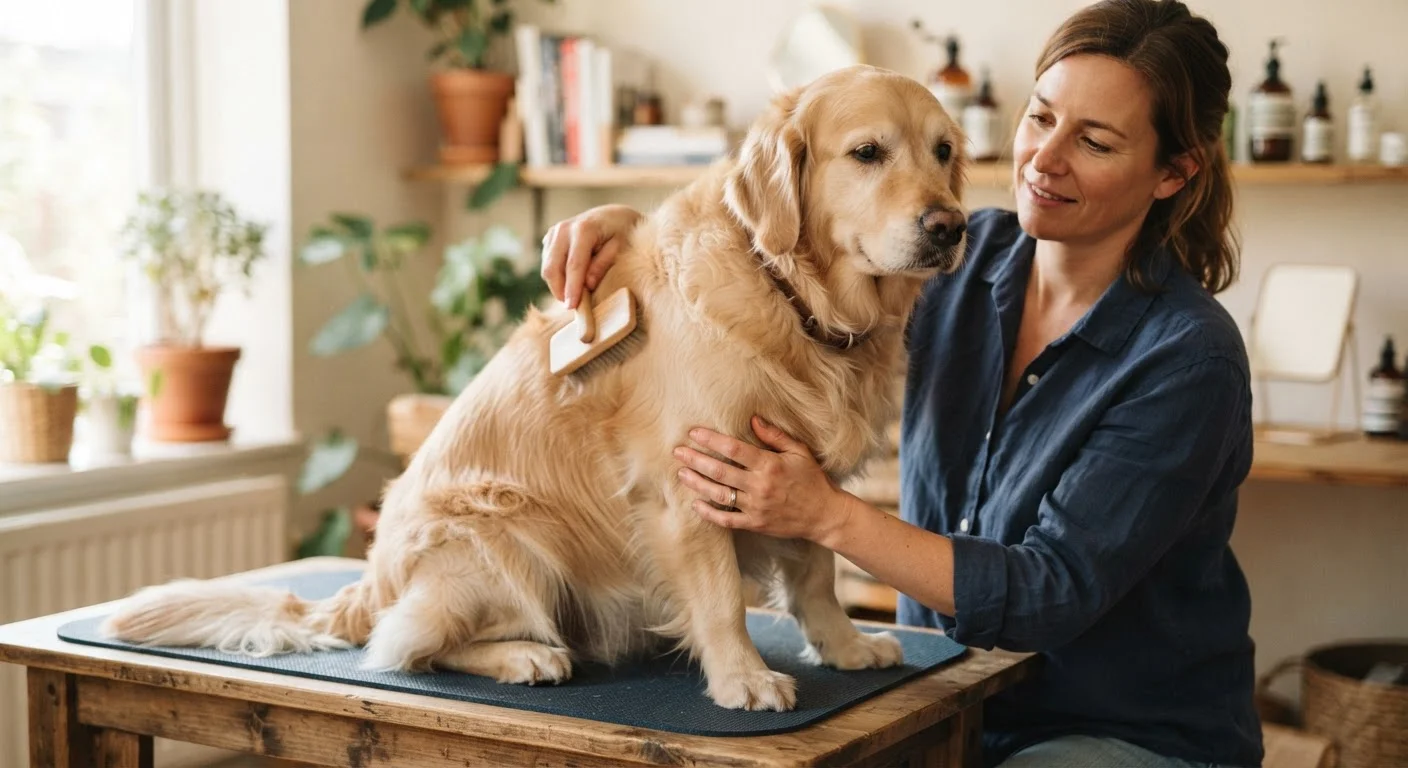
Brushing frequency depends on coat length and texture. Short-haired dogs and cats typically need brushing once a week, while long-haired breeds may need daily attention to prevent painful mats. Always brush before bathing - wet mats tighten and become much harder to remove. Use a comb or mat splitter for tangles rather than pulling through them.
Nails
Overgrown nails can curve into the paw pad, alter a pet's gait, and cause joint strain over time. Most dogs need trimming every three to four weeks; cats may need it monthly. The key is avoiding the quick - the blood vessel running through the nail. On light-colored nails, the quick is visible as a pink line. On dark nails, trim small amounts at a time and stop if you see a dark dot at the center of the cut surface.
Ears
Check ears weekly for odor, redness, or dark discharge. Dogs with floppy ears (such as Basset Hounds or Cocker Spaniels) are more prone to infections due to reduced airflow. Use a vet-approved ear cleaning solution and cotton balls - never cotton swabs inside the ear canal. If you notice persistent odor or head shaking, consult your veterinarian rather than cleaning repeatedly at home.
Teeth
Dental disease is among the most prevalent health issues in cats and dogs. Daily toothbrushing with a pet-specific toothpaste is the gold standard, though even a few sessions per week provides meaningful benefit. Never use human toothpaste, which contains ingredients toxic to animals. For a deeper look at why oral care matters, see why dental health is one of the most overlooked parts of pet care.
Make Grooming a Two-Person Task When Starting Out
If your pet is new to grooming or easily distracted, having one person offer treats and calm reassurance while another handles the brushing or nail trimming can make the process significantly smoother. Over time, most pets adapt and the second set of hands becomes unnecessary. This is especially helpful for nail trims with young or wiggly animals.
Building a Routine That Sticks
Consistency matters more than perfection. A short, calm grooming session each week is more effective - and far less stressful for your pet - than infrequent marathon sessions. Start young if possible: kittens and puppies introduced to handling, brushing, and nail touching early are typically much more cooperative as adults.
Pair each grooming task with something your pet enjoys: a treat, calm praise, or a short play session afterward. This builds a positive association rather than anxiety. If your pet is already reactive or fearful during grooming, go slowly and consult your veterinarian or a certified professional groomer for guidance - forcing the process can worsen the response over time.
Grooming routines pair naturally with broader health monitoring habits. The at-home pet health monitoring guide offers a structured approach for tracking your pet's condition between vet visits. And if you're just getting started as a pet owner, the pet owner's starter checklist covers the essential supplies and routines to have in place from day one.