
Why Enrichment Is a Biological Need, Not a Bonus
Every companion animal - from a border collie to a budgie - evolved in an environment that demanded constant cognitive engagement. Wild and free-ranging animals spend the majority of their waking hours foraging, navigating social dynamics, avoiding threats, and solving problems. Domestication changed where animals live, but it did not rewire their brains to need less stimulation.
When that stimulation disappears, something goes wrong. Behaviorists and veterinarians consistently link chronic understimulation to a range of problems: destructive chewing, excessive barking or vocalization, repetitive pacing, feather plucking in birds, and over-grooming in cats. These aren't personality flaws - they're coping mechanisms for a mind with nothing constructive to do.
Understanding this reframes how we think about pet care. Enrichment belongs alongside food, water, and veterinary visits as a fundamental daily requirement. For more on how behavioral needs intersect with living environment, see indoor vs. outdoor pet considerations.
85%
Dogs showing boredom-related behavior problems
Behavioral surveys consistently find a large majority of reported dog behavior problems - including destructive chewing and excessive barking - are linked to insufficient mental and physical stimulation.
5 types
Recognized enrichment categories in animal behavior science
Animal care organizations including zoos and shelters formally recognize sensory, cognitive, feeding/foraging, social, and physical enrichment as distinct domains requiring individual attention.
2-5x
Time wild animals spend foraging vs. domestic pets
Research on wild and feral animal populations suggests free-ranging animals spend several times more of their day engaged in active foraging and problem-solving than typical domestic pets in standard care setups.
The Five Categories of Enrichment - and What They Mean in Practice
Enrichment isn't just handing a pet a toy. Behavioral science typically organizes it into five overlapping categories, each targeting a different dimension of an animal's mental life:
- Sensory enrichment - Novel smells, sounds, textures, or visual stimulation. For dogs, this might be a walk on a new route; for cats, an open window with outdoor sights and scents.
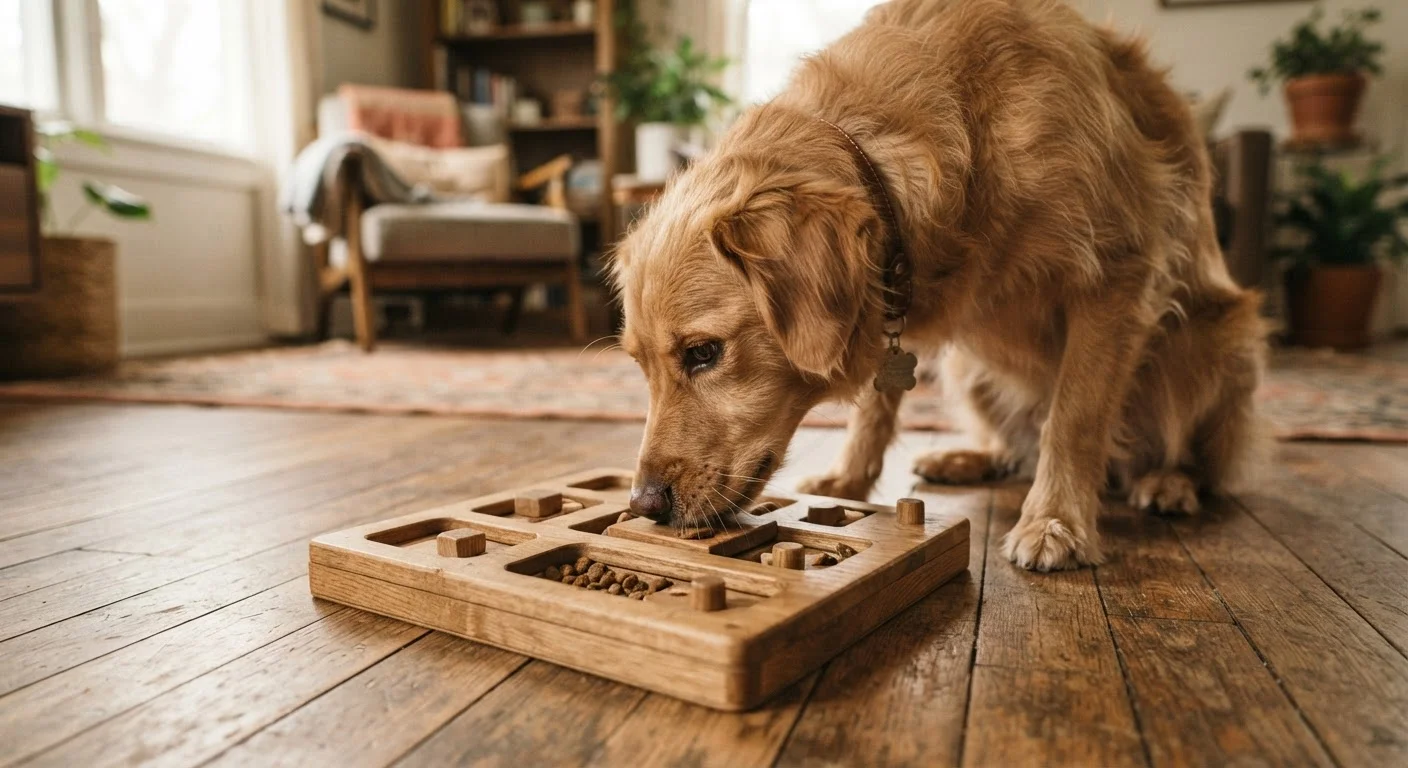
- Cognitive enrichment - Problem-solving tasks that require thinking. Food puzzles, training sessions, and foraging activities fall here.
- Feeding and foraging enrichment - Making meals take effort rather than offering food in a bowl. Scatter feeding, lick mats, and slow feeders mimic the foraging demands of natural life.
- Social enrichment - Positive interactions with people, other animals, or even mirrors and recordings (species-dependent). Social species like dogs and guinea pigs require this particularly.
- Physical enrichment - Environmental features that encourage movement, climbing, burrowing, or exploration. This overlaps with exercise but focuses on agency - the animal chooses how to use the space.
The categories work together. A training session, for example, delivers cognitive, social, and sometimes physical enrichment simultaneously - which is why short, regular training is one of the most efficient enrichment tools available. Play, too, delivers across multiple categories and shouldn't be treated as optional downtime.
How Enrichment Needs Differ Across Common Species
A single enrichment strategy doesn't transfer cleanly across species - what challenges a dog may overwhelm a rabbit or bore a parrot. Understanding species-specific needs prevents well-meaning but mismatched efforts.
Dogs
Dogs are social, highly curious animals with strong scent-processing abilities. Nose work - hiding treats or scent trails for them to find - taps directly into a dog's primary sensory strength and provides significant mental fatigue. Training new skills, even basic ones, also delivers strong cognitive payoff.
Cats
Cats are natural hunters. Enrichment that mimics prey behavior - moving toys, puzzle feeders, vertical climbing space - aligns with their instincts. Environmental enrichment (perches, hiding spots, access to views) is particularly valuable for indoor cats who lack outdoor exposure.
Small mammals (rabbits, guinea pigs, hamsters)
These species need outlets for digging, chewing, and foraging. Cardboard tunnels, hay-stuffed foraging boxes, and safe chew materials meet instinctive needs. Social enrichment is critical for guinea pigs in particular, as they are colony animals and generally do better with companionship.
Birds
Parrots and other intelligent bird species have some of the highest cognitive demands of any companion animal. Foraging toys, puzzle feeders, social interaction, and regular training sessions are not extras for these animals - understimulation commonly leads to feather-destructive behavior and chronic stress. Understanding animal behavior broadly helps owners recognize when a bird's environment isn't meeting its needs.
A labrador retriever left alone for nine hours begins chewing furniture and scratching doors despite having toys available.
An indoor cat begins over-grooming its belly and flanks until bald patches appear.
A parrot begins feather-plucking despite being in good physical health.
A rabbit housed in a simple hutch with food and water begins repeatedly circling the same path.
Common Gaps in Owner Enrichment Habits
Many owners provide enrichment inconsistently or in forms that don't actually challenge their pet. Leaving a toy on the floor permanently rarely constitutes enrichment - novelty matters. Rotating toys, introducing new smells, or changing feeding methods periodically sustains engagement in ways static environments cannot.
Another common gap is equating physical exercise with mental stimulation. A dog that walks the same route daily gets physical activity but limited cognitive engagement. Varying the route, pausing for sniff exploration, or adding brief training moments transforms a routine walk into genuine enrichment.
It's also worth noting that good intentions don't always translate to good outcomes. Certain habits owners believe are positive - including some forms of overindulgence - can inadvertently reduce a pet's motivation to engage with enrichment. Some well-meaning habits can quietly undermine a pet's health, and enrichment quality is one of the areas where that applies.
Start Small and Rotate Regularly
You don't need elaborate setups to provide meaningful enrichment. A muffin tin with kibble hidden under tennis balls, a cardboard box with crinkled paper and treats buried inside, or a new walking route all count. The key is rotation - what's novel today becomes background tomorrow, so keeping a small repertoire and cycling through it maintains genuine engagement for your pet.
This article provides general educational information about pet behavioral needs and is not a substitute for personalized advice from a licensed veterinarian or certified animal behaviorist.