
Play Is Biologically Purposeful, Not Random
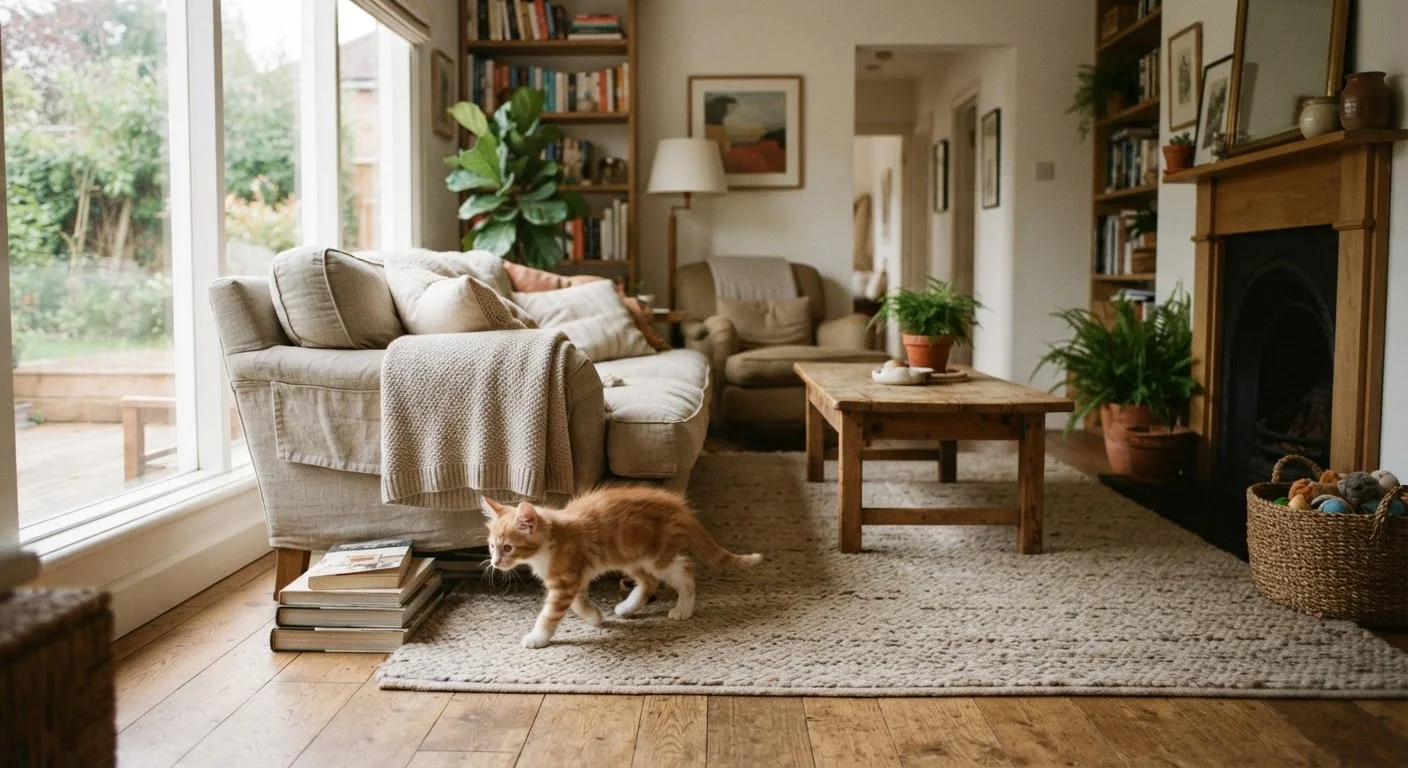
When a kitten pounces on a dangling string or a puppy wrestles with a littermate, it looks like simple fun - and it is enjoyable for the animal. But behavioral scientists have established that play is far from purposeless. It is a core biological drive that supports healthy development across mammals, birds, and even some reptiles.
Research in comparative animal behavior shows that play activates brain regions involved in reward, learning, and emotional regulation. In young animals especially, play helps wire neural pathways that govern motor coordination, impulse control, and social communication. In this sense, a puppy that chases its tail or a kitten that bats a crinkle ball is actually doing essential developmental work.
For pet owners, understanding this biological foundation reframes how we think about play. It isn't an optional extra - it is a fundamental need. The role of mental enrichment in pets is closely tied to adequate play opportunities, and a deficit in either area can lead to measurable behavioral and health consequences.
3 types
Scientifically recognized categories of animal play
Locomotor, object, and social play are the three core classifications used in comparative animal behavior research to understand how and why animals engage in play.
~14 orders
Mammalian orders documented to exhibit play
Play behavior has been documented across nearly all mammalian orders, as well as in some bird species, underscoring its deep evolutionary roots according to behavioral science literature.
Early weeks
When social play begins shaping behavior
Social play begins influencing behavioral development in the earliest weeks of life, overlapping with critical socialization windows that have lasting effects on adult temperament.
The Three Core Types of Play - and What Each Accomplishes
Behavioral scientists generally divide animal play into three categories, each serving distinct functions:
- Locomotor play involves movement for its own sake - running, leaping, spinning, and rolling. It builds cardiovascular fitness, strengthens muscles, and refines balance and spatial awareness. Young dogs engaging in zoomies (sudden bursts of frantic running) are a textbook example.
- Object play involves manipulating items - toys, household objects, or prey-like targets. This type is especially prominent in predatory species like cats, and it hones the fine motor skills and sequencing abilities needed for hunting behavior. It also supports problem-solving and cognitive flexibility.
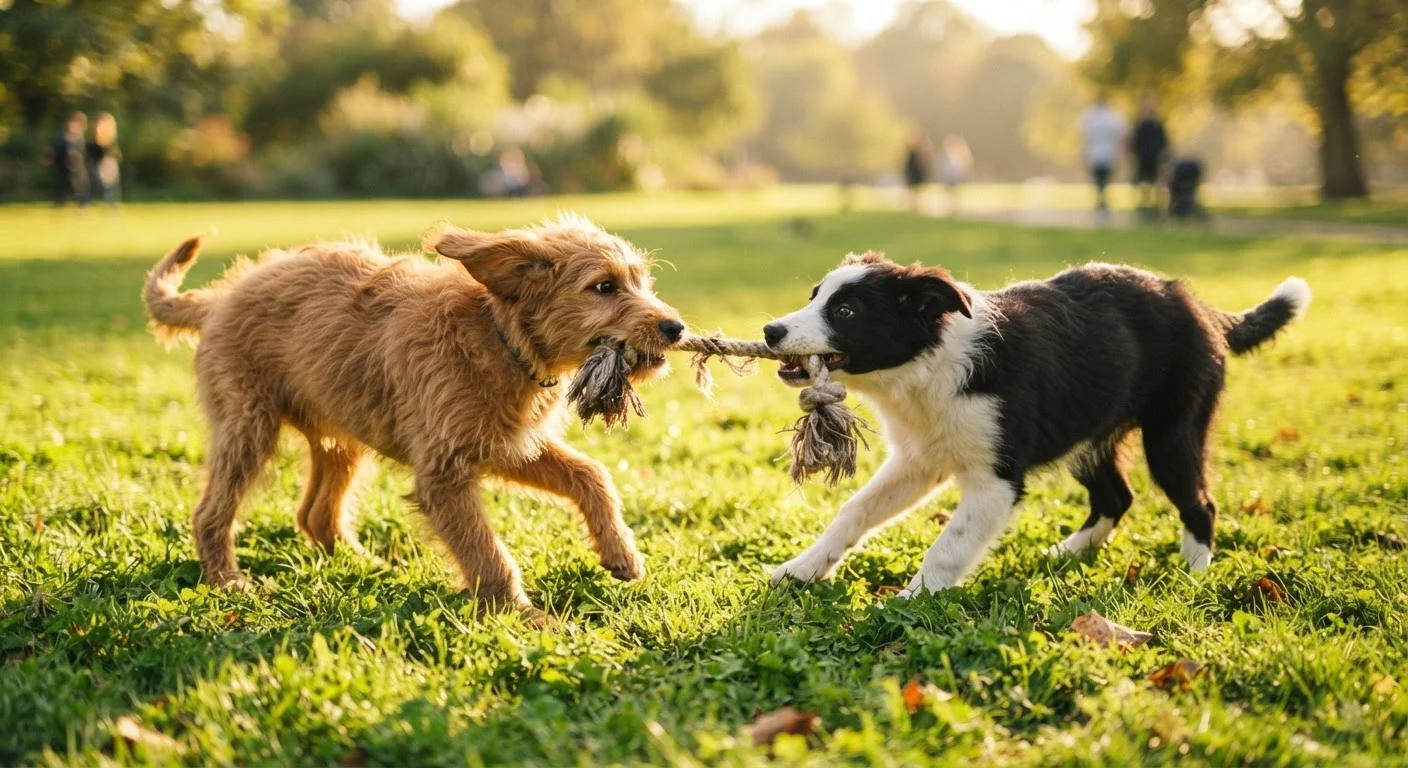
- Social play involves interaction with other animals or humans. It teaches turn-taking, communication signals (like the dog's "play bow"), and conflict de-escalation. Social play is particularly influential during sensitive developmental windows early in life, as explored in detail in our article on how early socialization shapes adult behavior.
Most play sessions involve elements of more than one type. A dog playing fetch, for instance, gets locomotor exercise, object interaction, and social engagement with a human - all at once.
A 4-month-old Labrador puppy repeatedly wrestles and chases with a littermate, taking turns "winning" and "losing" the mock tussle.
A domestic cat stalks, pounces on, and "kills" a feather wand toy moved by its owner.
An older golden retriever engages in a leisurely game of fetch, retrieving the ball a few times before lying down to chew it instead.
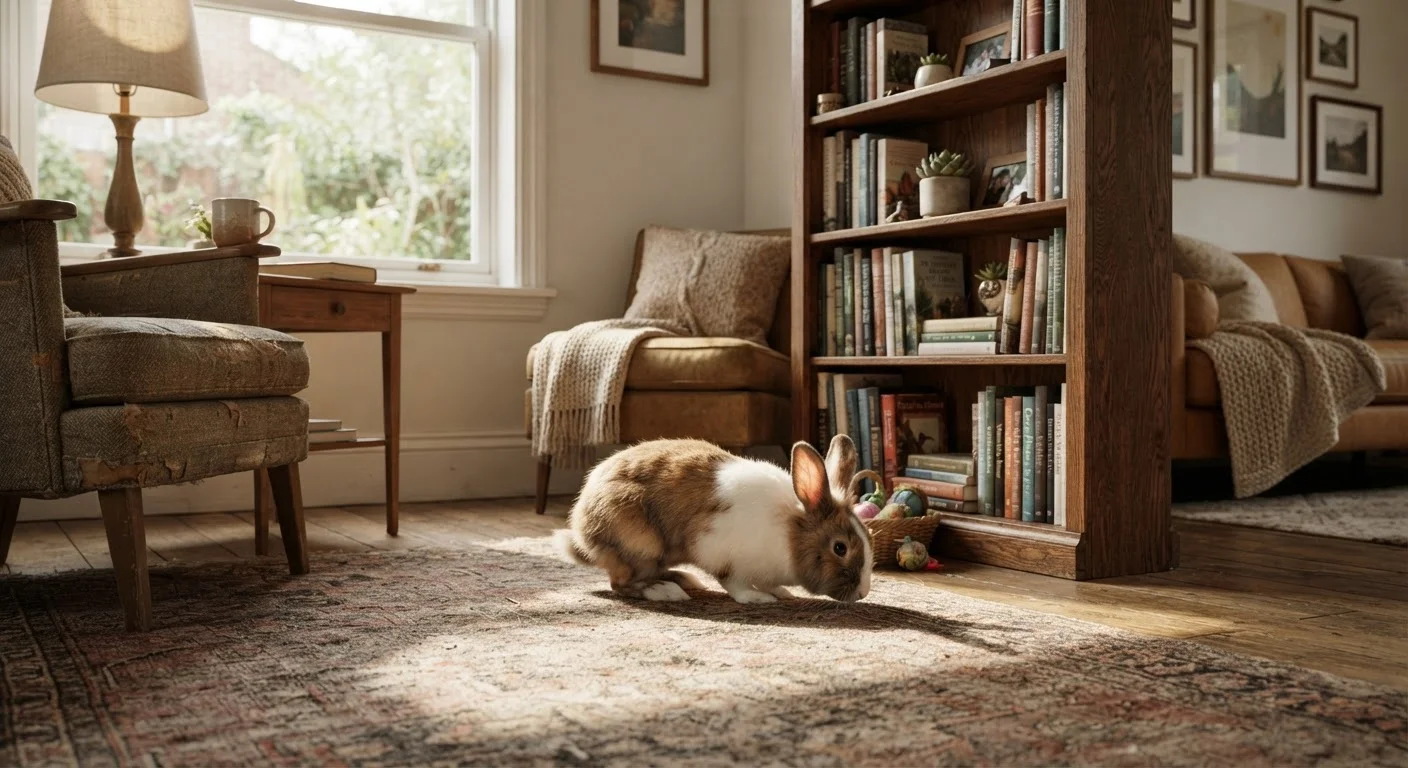
A pet rabbit repeatedly tosses a small cardboard tube into the air and chases it around its enclosure.
What Happens When Pets Don't Get Enough Play
A pet with insufficient play opportunities doesn't simply become bored - it can develop a cascade of behavioral and physical problems. Chronic under-stimulation is one of the most common drivers of destructive behavior in domestic animals. Chewing furniture, excessive vocalization, compulsive grooming, and inter-animal aggression are all frequently linked to a lack of appropriate outlets for play energy.
The connection between play deprivation and stress is also well-documented. Chronic stress in pets can suppress immune function, disrupt digestion, and contribute to skin conditions - meaning that a lack of play isn't just a behavioral inconvenience, it's a potential health concern.
The appropriate type and amount of play varies considerably across species and life stages. A young border collie has vastly different needs than an adult Persian cat or a senior rabbit. Our broader guide to pet wellness across life stages covers how these needs shift over time.
Match Play Style to Your Pet's Age and Energy
Young animals generally need more frequent and vigorous play, while older pets benefit from shorter, gentler sessions that protect aging joints and avoid overstimulation. When introducing a new type of play - especially for senior pets - start slowly and watch for signs of fatigue or discomfort. Your veterinarian can help you design a play routine appropriate for your pet's specific health status.
Reading Your Pet's Play Signals
One practical benefit of understanding play behavior is that it makes you a sharper observer of your pet's wellbeing. Animals communicate a great deal through their play patterns - and changes in those patterns often carry diagnostic significance.
Signs of healthy, engaged play include relaxed body language, self-interruptions to rest, and willing re-engagement after a break. Signs that play has tipped into overstimulation or anxiety include stiff posture, hard biting, resource guarding of toys, or an inability to disengage. In multi-pet households, distinguishing genuine play from conflict requires attention to whether both animals are choosing to re-engage - mutual consent is a reliable marker of healthy play.
Whether your pet lives primarily indoors or has outdoor access also shapes what kinds of play are feasible and appropriate. The trade-offs of indoor versus outdoor environments are worth considering when planning how and where your pet gets their play needs met.
“Play is the work of childhood - and for animals, that work never fully stops. It is one of the primary ways the brain stays flexible, social bonds are maintained, and stress is regulated across the lifespan.”
— Marc Bekoff, Professor Emeritus of Ecology and Evolutionary Biology, University of Colorado Boulder; author on animal behavior and emotions
This article is for general informational purposes only and is not a substitute for professional veterinary advice. If you have concerns about your pet's behavior or health, consult a licensed veterinarian.