

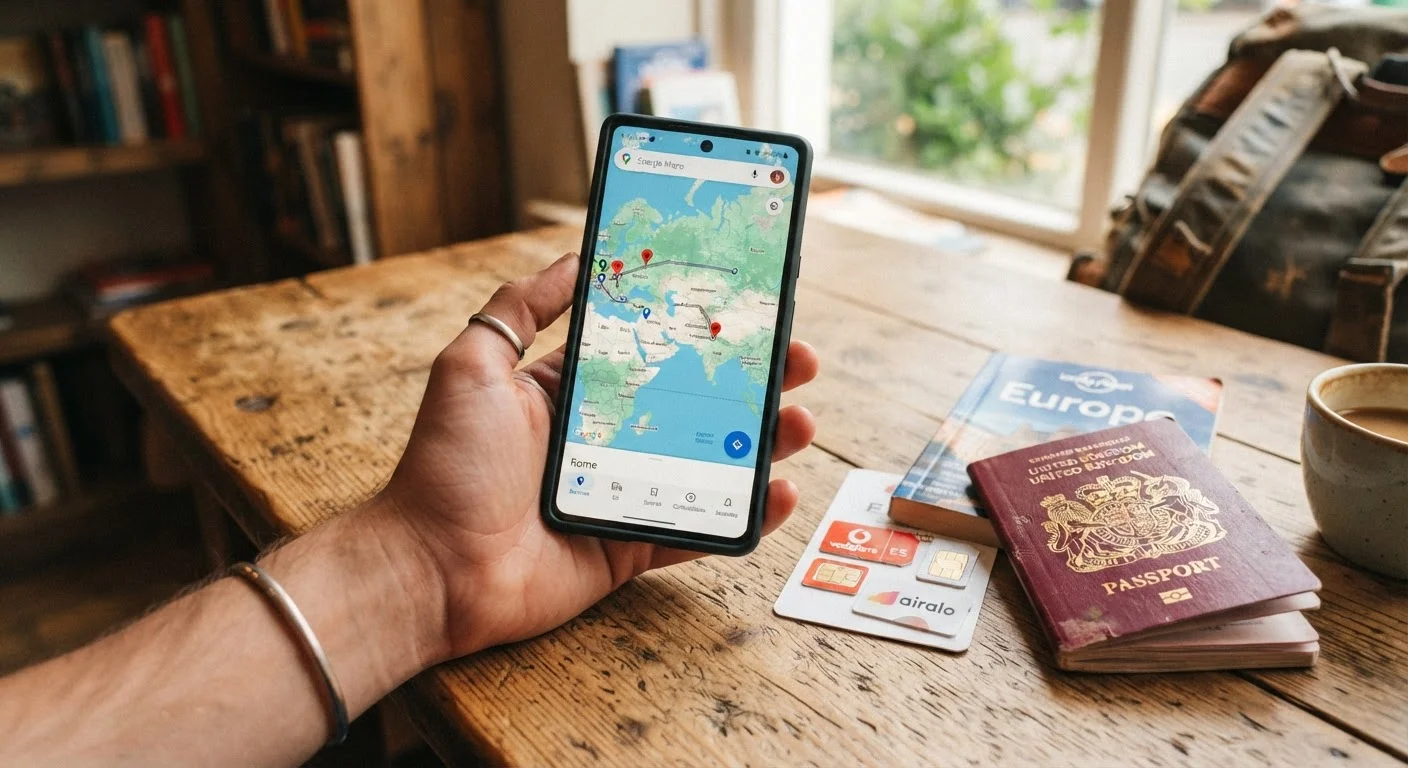
Why Your Phone Strategy Matters Before You Board
Landing in a foreign country without a working phone is a genuinely stressful experience - you can't pull up your hotel address, call a taxi, or reach your travel companions. The good news is that getting connected abroad is far simpler than it used to be, once you understand your three main options: buying a local SIM card, adding an international plan through your US carrier, or using an eSIM. Each has real advantages and real drawbacks. The right choice depends on your destination, trip length, and how much friction you're willing to tolerate.
If you're new to international travel, it helps to read our overview of first-time international travel planning, which covers connectivity alongside passports, visas, and other essentials.
Local SIM Cards: Best Value, Some Setup Required
Buying a prepaid SIM card from a local carrier at your destination is almost always the most cost-effective approach. You pay local rates for data, calls, and texts - often a fraction of what US carriers charge for international add-ons. In many countries, airport kiosks and convenience stores sell prepaid SIMs for the equivalent of just a few dollars, with generous data allowances included.
The catch: your phone must be unlocked. A locked phone is tied to your US carrier and won't accept another carrier's SIM. Contact your carrier before your trip to request an unlock - most carriers will do this for free once your device is paid off and in good standing. You'll also want to confirm your phone supports the frequency bands used at your destination, as not all hardware is universally compatible.
Label Your US SIM Before You Swap It Out
Keep your US SIM in a safe place while traveling - losing it means losing your existing number. Some travelers use a small labeled envelope tucked into their passport wallet. Many phone cases also have a discreet slot perfect for storing a spare SIM securely.
Keep your US SIM in a safe place while traveling - losing it means losing your existing number. Some travelers use a small labeled envelope tucked into their passport wallet.
International Plans from US Carriers: Convenient but Costly
Major US carriers offer international day passes or monthly add-ons that let your existing number and plan work abroad. You don't swap anything, your contacts stay intact, and setup takes minutes from your phone's settings. For a short business trip or a destination with spotty local SIM availability, this convenience has real appeal.
The tradeoff is price. Daily international passes can run $10 or more per day, and data speeds are sometimes throttled. On a two-week vacation, those costs stack up fast. Read your carrier's fine print carefully - some plans include free international texting but charge heavily for data or calls.
| Local SIM Card | International Carrier Plan | eSIM | |
|---|---|---|---|
| Typical Cost | Low (local rates) | Higher (daily or monthly add-on) | Moderate (varies by provider) |
| Setup Effort | Moderate (find & buy in-country) | Low (activate from home) | Low (scan QR code) |
| Phone Requirement | Must be unlocked | Any compatible device | Must support eSIM |
| US Number Access | No (new local number) | Yes (same number) | Depends on plan |
| Multi-Country Use | Buy new SIM per country | Often included in plan | Regional plans available |
| Data Speed | Full local speeds | Sometimes throttled | Varies by provider |
eSIMs: The Flexible Middle Ground
An eSIM (embedded SIM) is a digital version of a physical SIM card built into most modern smartphones. Instead of visiting a store or swapping a tiny chip, you scan a QR code or tap through an app to activate a new carrier plan - often before you even leave home. Many international eSIM providers offer regional plans covering multiple countries, making them especially useful for multi-stop itineraries.
eSIMs work on most flagship phones released in recent years, including recent iPhones and many Android devices. Check your phone's settings to confirm compatibility. One important limitation: some phones support only one active eSIM at a time, so you may need to manage plans carefully when crossing borders.
If you're switching phones ahead of your trip, our guide to setting up a new smartphone walks through backing up contacts and apps so nothing gets lost in the process.
Wi-Fi Calling and Offline Maps: Your Backup Layer
No connectivity strategy is complete without a fallback. Wi-Fi calling - available on most modern smartphones - lets you make and receive calls and texts over any Wi-Fi network using your regular number, at no extra charge. It's a lifesaver in hotels, cafes, and airports. Enable it in your phone settings before you leave so it's ready to go.
Downloading offline maps (through apps like Google Maps or Apple Maps) before your trip means navigation works even when data doesn't. It's also worth saving key numbers - your accommodation, travel insurance provider, and a family contact - in your phone and on paper. Speaking of insurance, our article on travel insurance for international trips explains what coverage to look for, including emergency assistance hotlines that can be a crucial resource when you're far from home.