

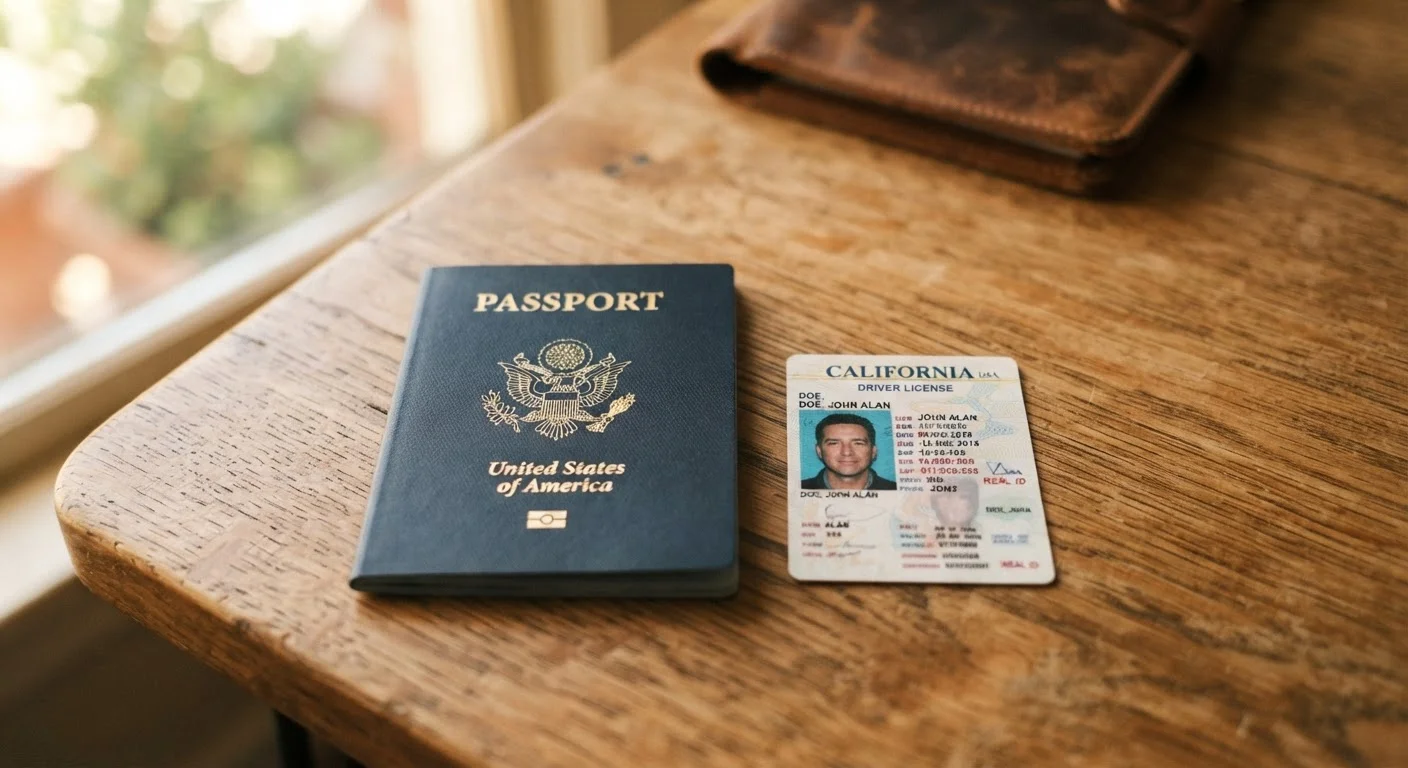
Two Systems, Two Jobs
REAL ID and passport requirements are separate systems that serve different purposes - and confusing the two is one of the most common travel planning mistakes Americans make. Here's the simple breakdown:
- REAL ID is a domestic federal standard applied to state-issued driver's licenses and IDs. It affects whether you can board a flight within the United States.
- A passport is a federal travel document that proves US citizenship and identity for travel outside the United States.
If you're planning an international trip, your passport is the document that matters most. REAL ID compliance, while important for domestic travel, has no bearing on whether a foreign government will admit you at their border.
REAL ID Enforcement Applies to Domestic Flights
TSA enforcement of REAL ID requirements for domestic air travel has been phased in over time. For the most current enforcement dates and accepted ID list, check the TSA's official website directly. Rules can be updated, and the official source is always the most reliable.
What REAL ID Actually Requires
The REAL ID Act requires states to verify applicants' identity, legal status, and Social Security information before issuing a compliant ID. The result is a driver's license or state ID with a star symbol - typically gold or black - in the upper corner.
Without a REAL ID-compliant card, you'll need an acceptable alternative to pass through a TSA checkpoint for domestic flights. A valid US passport book or passport card both qualify. So do military IDs, permanent resident cards, and certain other federal documents listed on the TSA's official website.
For international travelers, the practical upshot is simple: if you already carry your passport to the airport (which you'll need anyway for international flights), you don't need to worry about whether your driver's license is REAL ID compliant on that trip. Your passport covers you at the TSA checkpoint and at your destination's border control.
56+
US jurisdictions issuing REAL ID-compliant cards
According to the Department of Homeland Security, all 50 states, DC, and US territories have met REAL ID compliance standards.
6 months
Passport validity many countries require beyond your trip
Many destinations require a passport valid for at least six months past your planned return date - a common requirement travelers overlook when booking.
What Matters for International Travel
When you cross an international border, foreign governments set their own entry requirements - and those have nothing to do with REAL ID. What they care about is your passport's validity, any required visas, and occasionally proof of onward travel or vaccinations.
A few things worth keeping in mind:
- Passport validity: Many countries require your passport to be valid for at least six months beyond your planned departure date. Check your destination's rules well in advance.
- Visas: Some destinations require Americans to obtain a visa before arrival; others offer visa-on-arrival or visa-free entry. See how visa entry requirements actually work for a clear breakdown.
- Passport cards: A passport card is cheaper and wallet-sized but is only valid for land and sea crossings to Canada, Mexico, the Caribbean, and Bermuda - not international air travel. Compare a passport book and passport card before deciding which to get.
If you're heading abroad for the first time, travel planning guidance for first-time international travelers covers documents, health prep, and logistics in one place.
Check Your Passport Expiration Early
Many travelers discover too late that their passport expires within six months of their trip - triggering entry denial at some destinations. Pull out your passport now and note the expiration date. Passport renewal processing times can vary significantly, so build in extra lead time if your trip is more than a few months out.
The Bottom Line for International Travelers
Think of it this way: your REAL ID-compliant license handles domestic life - renting a car, entering federal buildings, boarding a flight to another US city. Your passport handles the world beyond US borders.
If you're preparing for an international trip, your checklist priority should be confirming your passport is valid, researching visa requirements for your destination, and reviewing any health or entry documentation your destination requires. REAL ID status is worth sorting out for future domestic travel, but it's not what stands between you and your international adventure.
For a complete pre-departure walkthrough, use this international trip preparation checklist to make sure nothing slips through the cracks.
Entry requirements, visa rules, and document standards can change. Always verify current requirements with the US Department of State and your destination country's official embassy or consulate before traveling.