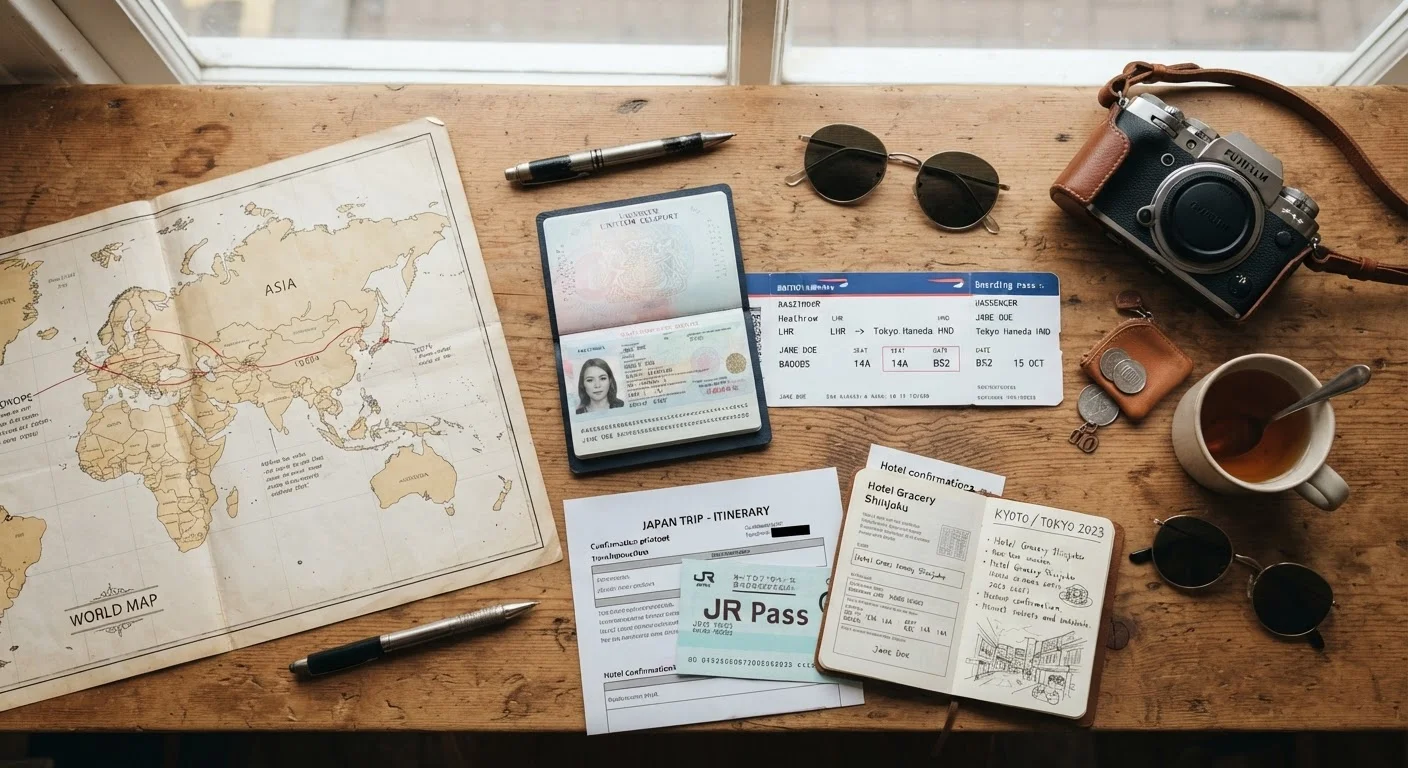
A practical checklist covering documents, finances, health prep, and logistics to work through before leaving the US on an international trip.
Key Takeaways
Passport validity requirements vary by country - six months of remaining validity is a common standard.
Visa and entry requirements must be verified through official government sources before departure.
Notifying your bank before traveling internationally helps avoid blocked cards abroad.
Travel health preparation, including vaccinations, should ideally begin 4-6 weeks before departure.
Keeping digital and physical copies of key documents provides a critical backup if originals are lost.
Home logistics - like mail holds and auto-pay - are easy to forget but important to handle in advance.
Why a Checklist Makes All the Difference
International travel introduces a layer of complexity that domestic trips simply don't have: entry requirements, foreign currencies, health considerations, and the very real possibility that a forgotten document grounds your entire trip. The good news is that none of it is beyond the average traveler - it just takes working through the right steps in the right order.
This checklist is designed for US travelers heading abroad and covers the four areas that matter most: documents and entry requirements, finances, health preparation, and home and logistics. For a broader look at how to plan any trip from start to finish, see our complete trip planning guide. First-timers heading abroad may also find Travel Planning for First-Time International Travelers a useful companion read.
Work through these items ideally at least three to four weeks before your departure date - some steps, particularly health prep, may require even more lead time.
Required
US State Department - travel.state.gov
Verify passport requirements, visa information, country travel advisories, and STEP enrollment.
Required
CDC Travelers' Health (wwwnc.cdc.gov/travel)
Look up destination-specific vaccine recommendations and health notices before your trip.
Required
Travel Medicine Clinic or Primary Care Provider
Get personalized vaccine and health advice for your destination - ideally visited 4-6 weeks before departure.
Required
Secure Cloud Storage (e.g., a password-protected folder)
Store digital copies of your passport, insurance, and itinerary so they're accessible anywhere with internet.
Optional
Offline Maps App
Download maps and transit data for your destination so navigation works without a data connection.
Required
Universal Power Adapter
Ensures your devices can charge safely in countries with different outlet types or voltage standards.
The Checklist
Below you'll find every item organized into logical categories. Mark off each one as you go - a printed or phone-based copy works equally well.
Documents & Entry Requirements
Verify your passport is valid for at least six months beyond your return date, as many countries require this minimum validity.Must
Research visa requirements for your destination through official government sources (such as the destination country's embassy website or travel.state.gov) and apply well in advance if a visa is needed.Must
Check whether your destination requires ESTA, eTA, or another electronic travel authorization, and complete the application before booking flights.Must
Make digital copies of your passport, visa, travel insurance policy, and itinerary and store them in a secure cloud folder.Must
Pack one physical photocopy of your passport and store it separately from the original - ideally in checked luggage or a hotel safe.Should
Register your trip with the US State Department's Smart Traveler Enrollment Program (STEP) so the nearest embassy can contact you in an emergency.Should
Finances & Money
Notify every bank and credit card issuer you plan to use about your travel dates and destinations to prevent fraud blocks.Must
Research whether your destination is largely cash-based or card-friendly, and plan to carry some local currency for arrival.Must
Identify which of your cards charge no foreign transaction fees and plan to use those as your primary payment method abroad.Should
Locate ATMs affiliated with international networks at your destination so you can withdraw local currency at reasonable rates if needed.Should
Set up automatic payments on recurring bills so nothing goes overdue while you're out of the country.Must
Write down emergency contact numbers for your banks in case you need to call from abroad without data access.Nice to have
Health Preparation
Consult a travel medicine clinic or your primary care provider at least 4-6 weeks before departure to discuss destination-specific vaccines and health precautions.Must
Obtain any required or recommended vaccinations and keep a copy of your vaccination record with your travel documents.Must
Confirm you have enough prescription medication to cover your entire trip plus a few extra days as a buffer.Must
Pack a basic travel health kit including over-the-counter pain relievers, antidiarrheal medication, bandages, and any personal medical supplies.Should
Purchase travel health or medical evacuation insurance and review what it covers, including coverage in your specific destination.Should
Research any destination-specific health advisories through the CDC Travelers' Health website and the State Department's country information pages.Should
Connectivity & Logistics
Decide on a phone plan strategy - international day passes through your carrier, a local SIM card, or a travel eSIM - and set it up before departure.Must
Download offline maps of your destination and any apps you'll rely on (translation, currency conversion, transportation) so they work without data.Should
Confirm your accommodation bookings and save confirmation numbers offline or in print.Must
Research ground transportation options from the airport to your accommodation and understand how payment works.Should
Put a hold on your mail and newspaper deliveries, or arrange for someone to collect them.Should
Arrange care for any pets or plants and confirm logistics with whoever is covering.Nice to have
Pack a universal power adapter suited to your destination's outlet type and voltage standard.Must
Identify the address and contact number of the nearest US embassy or consulate at your destination.Nice to have
Visa rules, vaccination requirements, and entry conditions can change on short notice. Never rely solely on travel blogs, booking sites, or social media for entry requirement information. Always confirm current rules through the official embassy or consulate of your destination country and through travel.state.gov before you depart. Requirements that applied to someone else's trip - even recently - may not apply to yours.
A surprising number of international trips are disrupted by passport issues that could have been caught weeks earlier. Many countries deny boarding or entry to travelers whose passports expire within six months of the return date - even if the passport is technically still valid on travel days. Check your expiration date the moment you start planning, and allow several weeks for renewal if needed, as processing times can vary significantly.
Travel Editorial Team is the collective byline for our editorial team and contributor network. Articles published under this byline or an editorial pen name are researched, written, and reviewed according to our editorial standards for clarity, consistency, and independence before publication.
The content on this site is provided for informational purposes only and should not be considered a substitute for professional advice. While we strive to provide accurate and up-to-date information, we make no guarantees regarding its completeness or accuracy. Always consult a qualified professional for advice specific to your circumstances before making any decisions.