

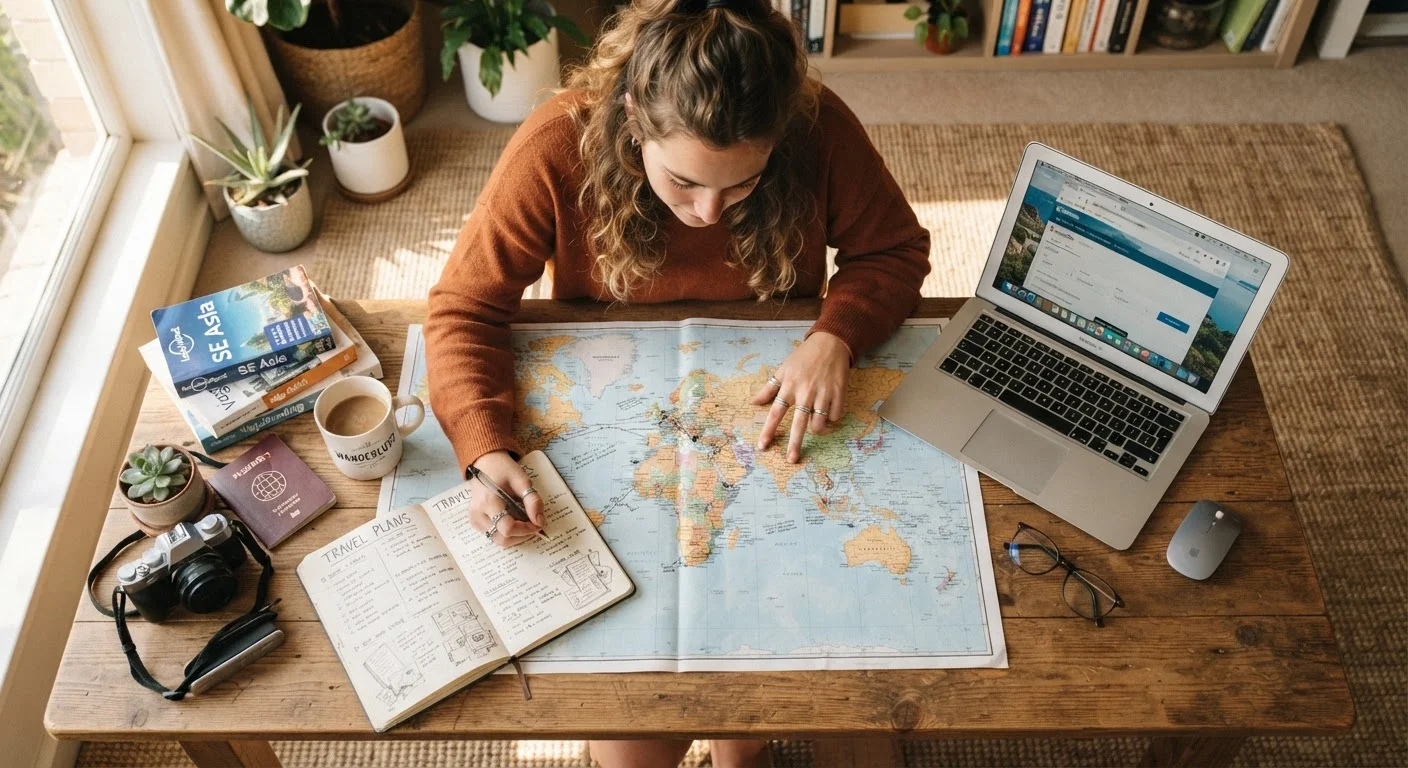
Why Research Before You Book - Not After
There's a particular thrill in stumbling across a destination and impulsively hitting 'search flights.' But committing to a trip before doing even basic research is a gamble that can turn an exciting adventure into a logistical nightmare. Visa denials, monsoon season, local laws you didn't know existed - these are entirely avoidable surprises.
The good news: solid pre-trip research doesn't have to be overwhelming. Think of it less like homework and more like building a mental map of what your experience will actually look like. The areas below are the ones that genuinely matter - the factors that affect whether a trip is safe, legal, comfortable, and worth it. For a full planning sequence, the complete guide to planning any trip is a great companion resource.
Entry requirements and visa rules
This is the single most urgent research task for any international trip. Many countries require US passport holders to obtain a visa in advance - a process that can take weeks. Others offer visa-on-arrival or visa-free entry for short stays, but conditions vary by nationality and can change with little notice.
Always verify current requirements through official government sources: the US State Department's travel site and the destination country's embassy or consulate website. Check your passport's expiration date too - many countries require at least six months of validity beyond your travel dates. For more on international travel essentials, that resource covers common entry and documentation considerations for Americans heading abroad.
Visa rules change - always verify with official government sources, not travel blogs.
Climate, seasons, and timing
Temperature ranges and rainfall averages are easy to find, but they only tell part of the story. Understanding the difference between a destination's dry season, wet season, and shoulder season affects everything from what you pack to how crowded the sights will be and what things cost.
A tropical beach destination during monsoon season may still be accessible and even beautiful - but you should know going in what that means for beach conditions, road closures, or available activities. Look at monthly weather data rather than annual averages, and cross-reference with local festivals or holidays that might significantly affect accommodation availability or prices.
Monthly weather data paints a more honest picture than annual averages.
Safety conditions and travel advisories
The US State Department issues tiered travel advisories for every country in the world, ranging from standard precautions to 'do not travel' warnings. These are worth reading carefully - not to be alarmist, but to understand the specific risks (crime, civil unrest, natural disaster risk, health outbreaks) that apply to the regions you plan to visit.
Keep in mind that country-level advisories can mask regional differences. A country might have a Level 3 advisory for one province while another region is perfectly stable and well-visited. Read the advisory's detail section, not just the headline level. Also research the destination's general approach to public safety, common scams targeting tourists, and neighborhoods or areas to avoid.
Country-level advisories often mask significant regional differences - read the details.
Local customs, laws, and cultural norms
What's considered polite, legal, or entirely ordinary varies enormously around the world. Some countries have strict dress codes at religious sites, or prohibit photography in certain public areas. Others have laws around alcohol, public displays of affection, or even specific hand gestures that tourists routinely violate out of ignorance.
A bit of cultural research goes a long way - not just for staying out of trouble, but for being a respectful visitor. Learn a few words in the local language. Understand tipping customs (in some cultures, tipping is expected; in others it can be seen as rude). Know the local approach to haggling, punctuality, and personal space. Travelers who make this effort tend to have richer, more genuine interactions with the places they visit.
Understanding local customs isn't just respectful - it can keep you out of legal trouble.
Health considerations and vaccinations
Some destinations require proof of specific vaccinations for entry. Others strongly recommend them. Beyond formal requirements, you'll want to know whether food and tap water are generally safe for visitors, whether there are seasonal disease risks (like malaria or dengue in certain regions), and whether your usual medications are available and legal at your destination.
Consult a travel medicine clinic or your primary care physician well before departure - ideally six to eight weeks out, since some vaccine courses require multiple doses over time. Check whether your regular health insurance provides international coverage; many plans don't, which is where travel health insurance becomes relevant. Always consult a qualified healthcare professional for any personal medical decisions related to travel. For a structured pre-departure health checklist, the international trip preparation checklist is a useful reference.
This article provides general travel information only and is not a substitute for professional medical or legal advice. Always verify entry requirements, health recommendations, and safety conditions through official government and healthcare sources before traveling.
Some vaccines require multiple doses weeks apart - start health prep early.
Practical logistics: currency, connectivity, and transport
The on-the-ground realities of getting around, staying connected, and paying for things deserve more attention than most travelers give them. Does the destination rely heavily on cash, or are cards widely accepted? Is there a dominant local payment app that's useful to set up? What's the realistic cost of getting from the airport to central accommodation?
For connectivity, research whether your phone carrier offers affordable international plans, or whether picking up a local SIM card on arrival makes more sense. Understand the public transportation options - buses, trains, ride-share apps, metro systems - and how reliable they are in the specific areas you'll visit. A destination that looks compact on a map can involve multi-hour journeys between sights if the infrastructure is limited.
Practical logistics - cash, SIMs, and transit - are where trips quietly succeed or struggle.
Turn Your Research Into a Plan
Once you've worked through these areas, you'll have a much clearer picture of whether the destination fits your travel style, timeline, and comfort level - and you'll be far better prepared for what lies ahead. Research isn't about eliminating spontaneity; it's about making sure you can actually enjoy the spontaneous moments without unexpected crises derailing them.
Keep Your Research in One Place
As you research, build a simple document or notes folder for each destination: entry requirements, key dates, local emergency numbers, health info, and logistics notes. Keeping everything consolidated means you won't be scrambling through browser history when you actually need a detail. Sharing it with a travel companion or trusted person at home is a smart safety habit too.
When you're ready to move from research into action, the trip planning timeline walks you through when to lock in flights, hotels, visas, and activities. And before departure day arrives, run through a thorough pre-trip checklist to make sure nothing slips through the cracks.