

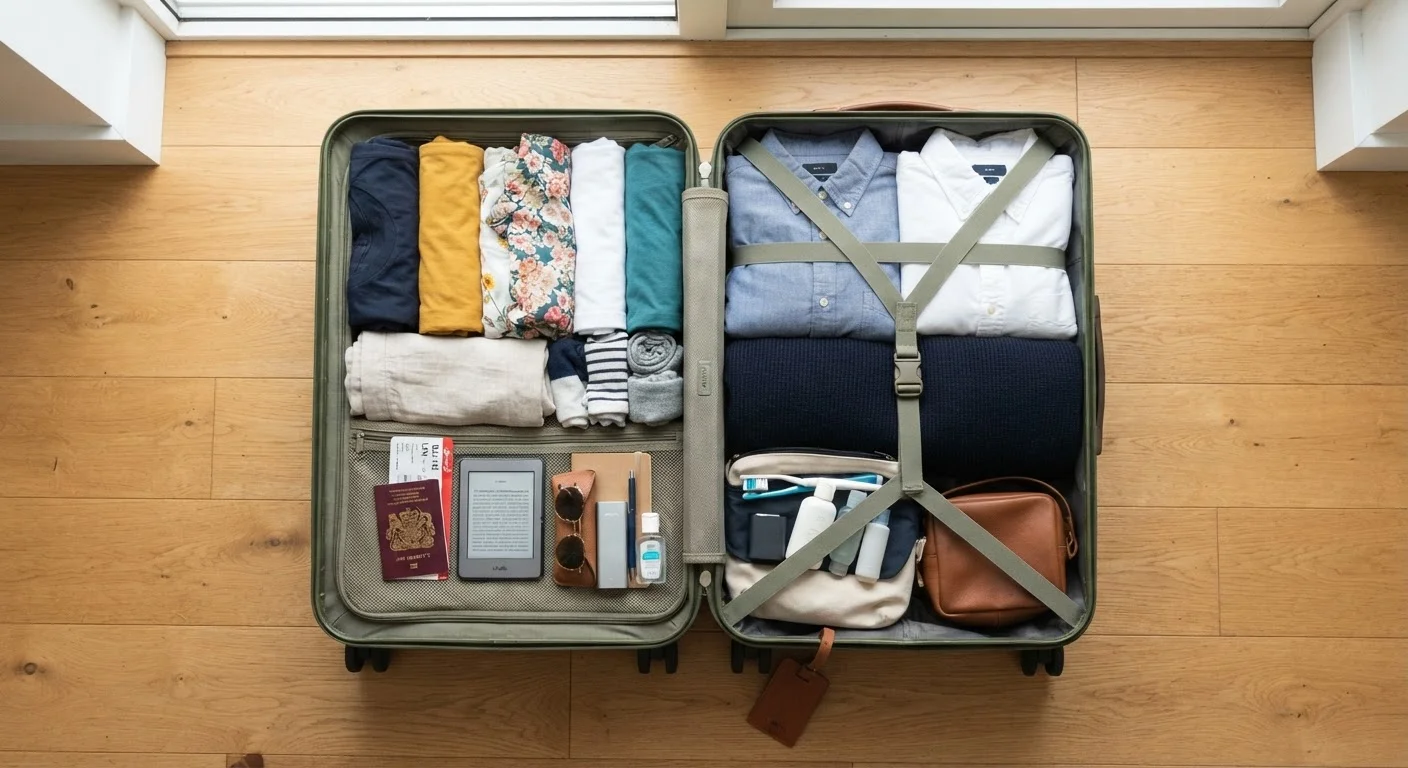
Start With Your Itinerary, Not Your Closet
The single biggest packing mistake travelers make is opening their closet and grabbing things they might need. Instead, open your itinerary first. What will you actually be doing each day - hiking, attending a dinner, walking city streets, lounging at a beach? Every item you pack should map to a real activity on that list.
Before pulling anything out, write down the categories your trip genuinely requires: daytime clothes, one or two nicer outfits, sleepwear, workout gear if you'll truly use it, and weather-appropriate layers. Then set a firm number for each. For a one-week trip, three to four bottoms and five to six tops - chosen to coordinate - covers most travelers without any gaps. This kind of planning is closely connected to broader pre-departure preparation; see our pre-trip checklist for a fuller look at what to handle before you leave home.
Test Your Outfit Combinations Before You Pack
Lay all your planned clothing out on a bed and physically mix and match pieces before anything goes in the bag. If a top only works with one specific bottom, reconsider bringing it. This quick visual exercise often exposes redundancies that aren't obvious when packing item by item.
The Practices That Actually Work
Experienced travelers consistently rely on the same core strategies. Apply even three or four of these and you'll immediately notice the difference at the airport.
Choose a color palette before you choose specific clothes
When every item you pack coordinates with every other, you create far more outfit combinations from fewer pieces. A mismatched wardrobe forces you to pack more to cover all the combinations you need.
Apply the one-bag test before you zip up
If your packed bag won't fit in an overhead bin or can't be carried comfortably for several blocks, it's too heavy - regardless of whether you're checking it. Overpacking adds friction at every step of a trip.
Wear your bulkiest items on travel days
Boots, thick jackets, and heavy sweaters take up disproportionate space in a bag. Wearing them during transit keeps them out of your luggage without leaving them at home.
Limit yourself to one pair of shoes beyond what you're wearing
Shoes are heavy, rigid, and notoriously space-inefficient. Most trips can be managed with a versatile walking shoe worn in transit and one additional pair for specific needs.
Do a post-trip audit after every journey
What you actually used versus what came home untouched tells you more than any packing guide. Tracking this over two or three trips reveals the personal patterns that matter most for your travel style.
Win the Toiletry Battle
Toiletries are where packing lists quietly balloon. The fix is ruthless honesty: will you genuinely use that fifth skincare product on a five-day trip? For most people, a streamlined kit - cleanser, moisturizer with SPF, lip balm, deodorant, and whatever medication or specialty item is truly necessary - covers the basics.
Solid-bar versions of shampoo and conditioner eliminate liquid-volume concerns and are surprisingly effective. Many hotels provide body wash and shampoo, so checking ahead can free up even more space. Decant the products you do need into small reusable containers rather than packing full-size bottles. And if you're debating carry-on versus checked luggage to accommodate a larger toiletry haul, our guide on matching luggage choice to your trip lays out the real trade-offs worth considering.
TSA Rules on Liquids Still Apply to Carry-Ons
If you're flying with only a carry-on, remember that the TSA's 3-1-1 rule limits liquids, gels, and aerosols to containers of 3.4 ounces or less, all fitting in one quart-sized clear bag. Rules for international flights may vary by country. Always verify current regulations with your airline and relevant aviation authority before your trip.
Quick Wins You Can Act On Today
You don't need to overhaul your entire packing philosophy in one go. A handful of immediate changes can dramatically lighten your load on the very next trip.
Once you've trimmed your bag down, you may find you're in carry-on territory for trips you previously assumed required a checked bag. If you're heading abroad, it's worth reading about carry-on vs. checked luggage for international travel to understand how the trade-offs shift when you're crossing borders. And remember: a lighter bag pairs beautifully with a well-paced itinerary - if you're still building yours, building an itinerary that doesn't burn you out is worth a read before you go.