
Two Kinds of Southern Magic
Few American cities carry as much atmosphere per square foot as New Orleans and Savannah. Both are old - New Orleans founded in 1718, Savannah in 1733 - and both wear their pasts visibly, sometimes uncomfortably. They've been compared endlessly, yet spending real time in each makes the differences feel obvious and the similarities feel almost beside the point.
As the honest truth about traveling the American South makes clear, preconceptions about these cities tend to flatten what's actually worth understanding. New Orleans is louder, faster, and more chaotic in the best possible sense. Savannah is slower, softer, and more architecturally coherent. Neither is simply a museum piece, and neither is as simple as its postcard image suggests.
| Criterion | New Orleans, Louisiana | Savannah, Georgia |
|---|---|---|
| Founded | 1718 | 1733 |
| Defining atmosphere | Electric, loud, unpredictable | Haunting, graceful, slow-paced |
| Food tradition | Creole and Cajun cuisine | Low Country Southern cooking |
| Music scene | Jazz, blues, brass bands - everywhere | Smaller but growing live music presence |
| Walkability | French Quarter walkable; city sprawls | Highly walkable Historic District |
| Ghost and folklore culture | Rich voodoo and ghost lore | Renowned as one of America's most haunted cities |
| Best travel season | Fall through early spring | Spring and fall |
| Crowd intensity | High, especially during festivals | Moderate; manageable year-round |
Culture, History, and the Weight of the Past
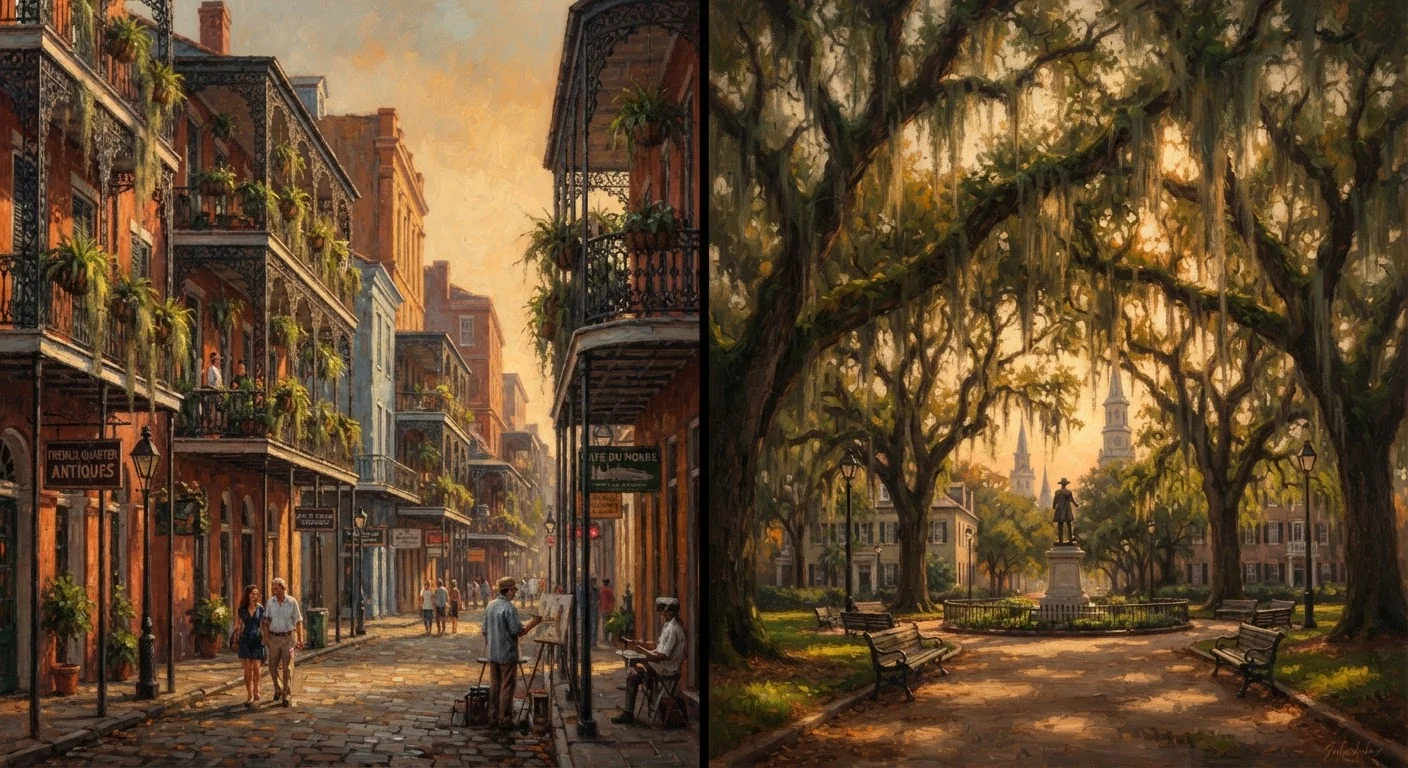
New Orleans is one of the most culturally layered cities in North America. Its Creole identity - shaped by French, Spanish, West African, Haitian, and Indigenous influences - produced a genuinely singular culture: Mardi Gras, jazz, second-line parades, and a culinary tradition that resists easy categorization. The legacy of slavery is woven into this history in ways the city is increasingly, if unevenly, grappling with openly.
Savannah's history is anchored in its role as a colonial port city and its survival of Sherman's March during the Civil War - the general famously spared it, gifting the city to President Lincoln as a Christmas present in 1864. The city's 22 historic squares, designed by founder James Oglethorpe, remain the defining feature of Savannah's urban fabric. Here too, the history of slavery and the antebellum economy are present in the architecture and deserve honest engagement rather than romanticization.
Engaging History Honestly
Both New Orleans and Savannah benefited enormously from enslaved labor, and that history is physically present in their architecture, foodways, and cultural traditions. A growing number of museums, historic sites, and tour operators in both cities work to present this history with appropriate depth and honesty. Seeking those experiences out - rather than avoiding the discomfort - tends to produce a richer and more meaningful visit.
Food, Atmosphere, and What Each City Actually Feels Like
New Orleans food is a legitimate pilgrimage. Gumbo, jambalaya, étouffée, beignets, po'boys, and muffulettas represent a culinary tradition refined over centuries. The French Market, the neighborhoods of Tremé and Bywater, and the Frenchmen Street music corridor offer experiences that feel nothing like a tourist trap if you wander even slightly off Bourbon Street.
Savannah's culinary identity centers on Low Country cooking - shrimp and grits, she-crab soup, fried chicken, and peach-forward desserts. The River Street dining district draws crowds, but the city's quieter neighborhoods like the Victorian District and Ardsley Park have grown into genuine dining destinations. The pace of a Savannah meal is notably different: longer, more leisurely, almost conspiratorially relaxed.
Atmospherically, New Orleans hums and throbs; Savannah broods and glows. Both cities have earned reputations as some of the most walkable and visually rewarding destinations in the American South, but they produce very different emotional registers in visitors.
Practical Considerations Before You Go
New Orleans is larger, louder, and more logistically complex. The French Quarter is compact and walkable, but the broader metro requires planning. Summers are brutally humid and prone to intense thunderstorms; the most popular travel windows run from fall through early spring, with Mardi Gras season drawing enormous crowds. Travelers should verify current conditions and any entry considerations through official city and state tourism sources before visiting.
Savannah is more immediately navigable. The Historic District is small enough to explore on foot over a couple of days, and the city rewards slow wandering more than any itinerary can capture. Summers are similarly hot and humid; spring and fall offer the most comfortable conditions. As with any destination, travelers should check current local advisories and transportation options before arrival.
Both cities carry a tension between tourism and authentic community life - and both are worth visiting with enough curiosity to look past the most-photographed version of themselves.
22
Historic squares in Savannah's urban plan
Savannah's original grid, designed by James Oglethorpe in 1733, included a system of public squares that remain largely intact today, making it one of America's best-preserved colonial city plans.
1718
Year New Orleans was founded
Founded by French colonists under Jean-Baptiste Le Moyne de Bienville, New Orleans is one of the oldest continuously inhabited European settlements in the American South.
Top 5
US cities for walkability - Savannah Historic District
Savannah's compact, grid-based Historic District is frequently cited among America's most walkable urban neighborhoods by urban planning and travel researchers.