
Why Most Shoppers Leave Money on the Table
Walking into a dealership without the right questions is like negotiating a contract without reading it first. Most car buyers focus on monthly payments or the sticker price - two numbers that dealers are highly skilled at managing in their favor. The shoppers who fare best tend to ask about the mechanics behind those numbers: where dealer profit is built in, which fees are negotiable, and what incentives are already in play before you sit down.
This isn't about being adversarial. It's about understanding how the transaction is structured so you can have an informed conversation. The questions below are ones that experienced buyers ask - and that most first-time or infrequent shoppers never think to raise. For a broader view of the process, see the full car-buying journey from research to keys in hand.
What is the invoice price on this vehicle?
The invoice price is what the dealer paid the manufacturer for the vehicle - distinct from the MSRP (Manufacturer's Suggested Retail Price) printed on the window sticker. The gap between those two figures represents one layer of potential negotiating room. Invoice data is publicly available through resources like Edmunds and Kelley Blue Book, so asking this question signals that you've done your homework. Dealers are not obligated to sell at invoice, but knowing the figure gives you a factual reference point instead of anchoring solely to sticker price.
Invoice price is what the dealer paid - not the number on the window sticker.
Does the dealer receive any holdback or manufacturer incentives on this model?
Holdback is a percentage of MSRP - typically one to three percent - that manufacturers pay back to dealers after a vehicle is sold. It exists to help dealers cover floor plan costs and is separate from any negotiation you have. Asking about holdback, as well as current manufacturer-to-dealer incentives (sometimes called dealer cash), gives you a clearer picture of the dealer's true margin. You're unlikely to capture all of that margin, but knowing it exists prevents you from accepting a hard line on price as if no flexibility remains. See common car-buying myths for more on how dealership economics actually work.
Holdback is a manufacturer rebate paid to dealers after the sale - it's real margin most shoppers never ask about.
Can you show me a breakdown of every fee included in this deal?
Fees vary significantly by dealer and state. Some - like government taxes, title, and registration - are non-negotiable. Others, such as documentation fees (doc fees), dealer preparation fees, or advertising fees, have more flexibility depending on the market. A doc fee can range from under $100 to over $800 depending on the state and the dealership. Asking for a complete fee itemization before agreeing to any price prevents surprises and lets you question line items that seem excessive or unclear.
Doc fees alone can range from under $100 to over $800 - always ask for a full fee breakdown.
Are there any dealer-installed options or accessories on this vehicle?
Dealers frequently add accessories - window tinting, all-weather floor mats, paint sealant, protective films - and mark them up substantially before listing a vehicle. These additions appear on a dealer addendum sticker alongside the factory window sticker. Unlike factory options, dealer add-ons are often negotiable or removable. Ask which accessories came from the factory and which were installed by the dealer, then decide which (if any) you actually want. Don't assume bundled add-ons are required or that their listed price reflects fair market value.
Dealer-installed accessories are frequently marked up well above their actual cost - and are often negotiable.
How long has this vehicle been on the lot?
A vehicle that has been sitting on the lot for 60, 90, or more days costs the dealer money in floor plan interest - the financing dealers use to carry their inventory. Knowing a vehicle's age on lot gives you leverage: a dealer is often more motivated to negotiate on older inventory than on a unit that arrived last week. You can sometimes find this information through online vehicle history tools using the VIN, or simply by asking directly. Combine this with knowledge of current manufacturer incentives and you have a reasonably complete picture of where flexibility exists.
Older lot inventory costs dealers money daily - it's often where the most negotiating flexibility lives.
What interest rate are you quoting, and is that your buy rate?
When a dealer arranges financing, they obtain a rate from a lender - known as the buy rate - and often mark it up before presenting it to you. The difference between the buy rate and your quoted rate is additional profit for the dealership. Asking specifically whether the rate you're seeing is the buy rate (or the lowest available for your credit profile) applies pressure to be transparent. Better yet, arrive with a pre-approval from your own bank or credit union as a benchmark. Our breakdown of financing through a dealership vs. your own lender covers this comparison in detail.
The interest rate dealers quote you is often marked up above the rate lenders actually approved - ask about the buy rate.
Putting It All Together Before You Sign
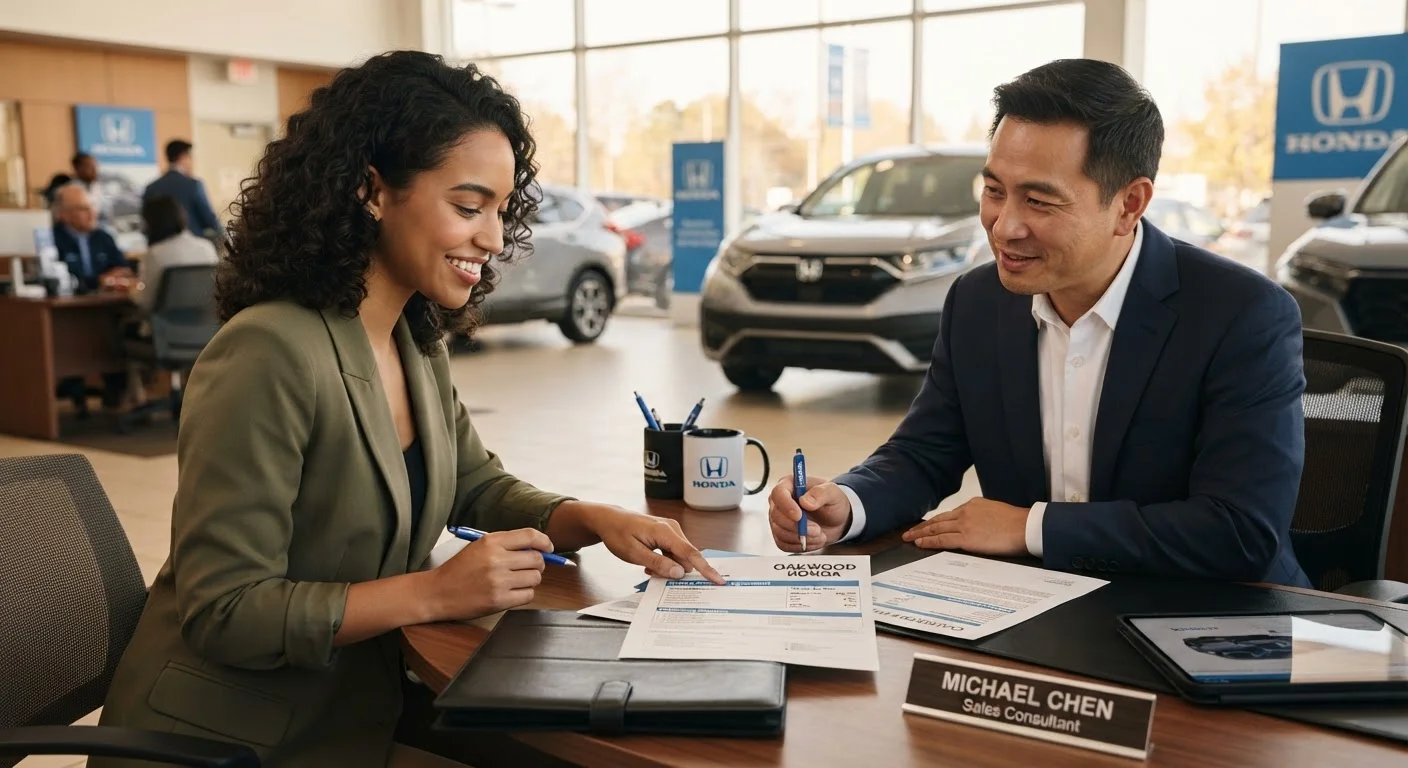
These questions aren't a script to recite in order - they're tools to use as opportunities arise during the negotiation. Some are best asked early (invoice price, current incentives), while others become relevant once you move to the finance office (documentation fees, add-ons). If you're bringing a trade-in, keep that conversation separate from your new-car negotiation to avoid the numbers getting blurred together. Our guide on trade-in traps explains exactly where value leaks happen in that process.
Before leaving the finance office, always request the out-the-door price in writing - it's the only figure that captures every cost you're actually agreeing to pay. And if the finance manager starts presenting add-ons, you'll be better prepared with a read of add-ons the finance office will offer before you sign.
Write Everything Down Before You Leave
Before entering the finance office, ask the salesperson to put the agreed selling price, trade-in value (if applicable), and any included incentives in writing. Verbal agreements can shift between the sales floor and the finance desk. Having figures documented protects you from 'number creep' - the gradual inflation of costs that can appear once you're in the closing room.