
The Three Core Components and Their Roles
Your braking system is a hydraulic chain - every component depends on the others to function correctly. Understanding what each part does makes it far easier to recognize when something has gone wrong.
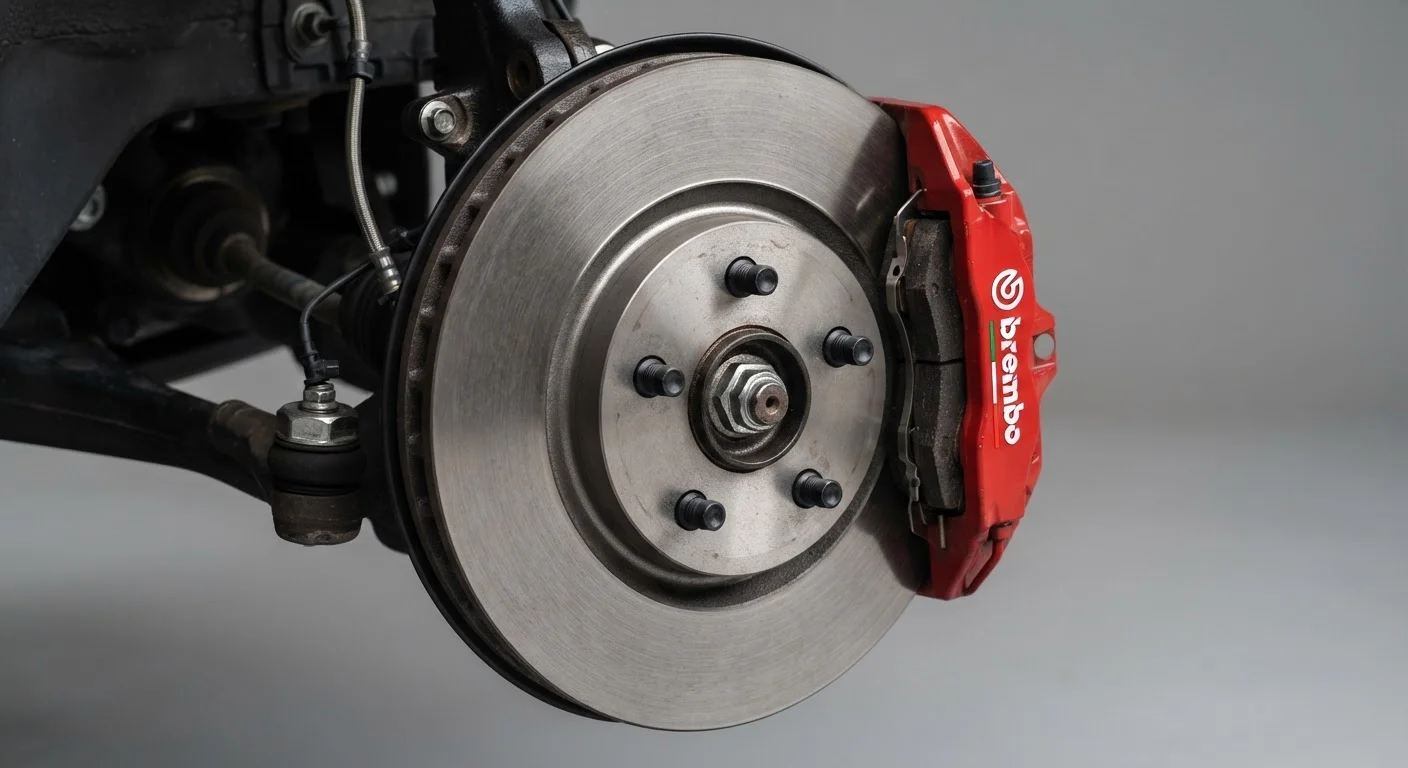
Brake pads are friction material mounted inside a caliper. When you press the pedal, the caliper squeezes the pads against the rotor. The pads are designed to be the sacrificial wear component - they're meant to wear down gradually so the more expensive rotor and caliper are protected.
Rotors (also called brake discs) are the flat metal discs bolted to the wheel hub that spin with your wheels. When the pads clamp onto the rotor's surface, kinetic energy converts to heat, slowing rotation. Rotors must dissipate this heat rapidly, which is why most are vented - cast with internal channels that allow airflow through the disc.
Brake fluid is the medium that connects your foot to the friction components. Housed in a reservoir under the hood, it travels through rigid metal lines and flexible rubber hoses to the calipers at each wheel. Because fluid is effectively incompressible, the pressure you apply at the pedal is faithfully transmitted to the clamping mechanism.
Rear Brakes Work Differently on Some Vehicles
Most modern passenger cars use disc brakes on all four wheels, but some vehicles - particularly older models and certain economy cars - use drum brakes on the rear axle. Drum brakes work on a different friction principle (brake shoes pressing outward against a drum) and have their own wear characteristics. If your vehicle has rear drums, ask your mechanic to include them in any brake inspection.
How They Work Together in a Single Stop
Trace the sequence of a normal stop and the system's interdependence becomes clear. You press the pedal, which actuates a master cylinder - a hydraulic pump that pressurizes the brake fluid in the lines. That pressure reaches each wheel's caliper, forcing pistons outward. The pistons push the brake pads against both faces of the spinning rotor.
The friction surfaces of the pads grab the rotor, generating the heat and resistance that decelerates the wheel. The harder you press, the higher the hydraulic pressure, the greater the clamping force, and the more aggressive the deceleration. Modern vehicles with anti-lock braking systems (ABS) add an electronic control layer that pulses this pressure rapidly to prevent wheel lockup on slippery surfaces - but the underlying hydraulic mechanism is the same.
What this sequence illustrates is that a weakness anywhere breaks the chain. Low fluid means insufficient pressure. Glazed or thin pads mean inadequate friction. A warped or worn rotor means uneven contact. None of these problems announce themselves dramatically at first - they tend to creep in gradually, which is precisely why recognizing early warning signs matters. See our guide to vehicle warning signs for a broader look at what your car's behavior is communicating.
Recognizing Wear Before It Becomes Dangerous
Each component has its own failure signature.
Brake pads wear from the friction surface inward. Most pads include a small metal tab called a wear indicator. When pad material thins to roughly 2-3mm, the indicator contacts the rotor and produces a high-pitched squeal - an intentional audible alert. Ignoring that squeal long enough leads to grinding, which means the metal backing plate of the pad is now contacting the rotor directly. At that stage, you're damaging the rotor and compromising stopping distance simultaneously.
Rotors develop grooves from pad material abrasive contact, and they can warp from heat stress. A pulsating or vibrating brake pedal - particularly noticeable during a moderate or hard stop - is a classic sign of rotor runout (uneven thickness). Deep grooves or a rotor that has worn below the manufacturer's minimum thickness spec mean replacement is necessary.
Brake fluid degradation is invisible without testing. The clearest behavioral clues are a spongy or sinking pedal feel, which can indicate moisture contamination or air in the lines. Low fluid level in the reservoir can indicate a leak or simply that pads have worn thin (pads wearing down causes caliper pistons to extend further, drawing more fluid from the reservoir). You can learn how to check fluid level in our article on car fluids every driver should know how to check.
Do a Quick Brake Check After Seasonal Changes
Winter road salt and summer heat both accelerate brake wear and corrosion. Making a habit of having brakes inspected when you switch between winter and all-season tires is a practical way to keep service intervals from slipping by unnoticed. Many shops include a brake inspection as part of a tire changeover at no additional charge.
Fitting Brakes Into Your Maintenance Routine
Brakes don't have a single universal service interval the way engine oil does - wear rate depends too heavily on individual driving patterns. A commuter who idles through stop-and-go traffic in a city will wear pads several times faster than someone covering the same mileage on open highways.
That said, a practical rule of thumb is to have brake components visually inspected every time tires are rotated - typically every 5,000 to 7,500 miles for most drivers. With wheels off, a mechanic can directly measure pad thickness and rotor condition in minutes. Some drivers also notice pad thickness through the wheel spokes; most passenger vehicles allow a rough visual check with the wheel on, though a proper measurement requires removal.
For brake fluid, follow your owner's manual interval or have a shop test it for moisture content - test strips are inexpensive and provide a quick indication of whether a flush is warranted. Most manufacturers suggest a fluid change every two to three years regardless of mileage.
Keeping brakes healthy fits naturally into the broader maintenance picture. Our maintenance schedule explainer covers where brake service sits alongside other key milestones. And if your brake warning light illuminates on the dashboard, don't dismiss it - understanding what dashboard lights are telling you can help you decide how urgently to act.