
Why Body Style Is the First Decision to Make
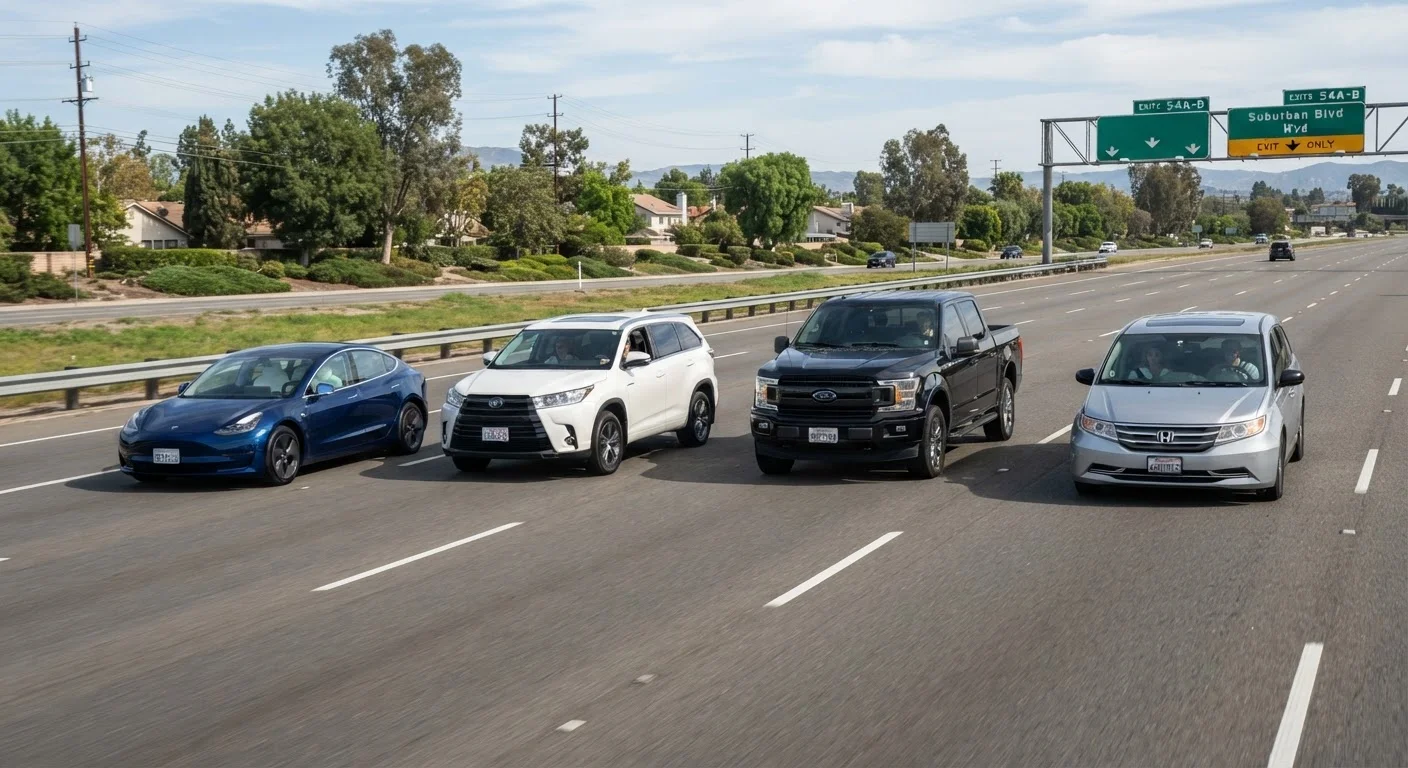
Before you weigh financing options or compare trim levels, body style shapes the baseline of what a vehicle can and can't do for you. It determines how many passengers fit comfortably, how much cargo you can carry, how much fuel you'll burn, and what you'll pay in insurance and maintenance over time. Getting this choice right means being honest about your typical week - not the camping trip you take once a year.
Once you've landed on the right category, decisions about powertrain, trim, and budget become much cleaner. For a deeper look at what comes after, see the full car-buying journey from research to signing.
| Sedan | SUV | Truck | Minivan | |
|---|---|---|---|---|
| Fuel Economy | Highest | Moderate to low | Lowest | Moderate |
| Passenger Capacity | Up to 5 | Up to 8 (3-row) | Up to 6 (crew cab) | Up to 8 |
| Cargo Flexibility | Fixed trunk only | Foldable rear seats | Open bed, high capacity | Foldable, configurable |
| Towing Capability | Minimal | Moderate | High | Low to moderate |
| Urban Maneuverability | Easiest | Moderate | Most difficult | Moderate |
| Typical Purchase Cost | Lowest | Moderate to high | High | Moderate |
| All-Wheel Drive Available | Sometimes | Commonly | 4WD standard | Rare |
Sedans: Efficiency and Simplicity at a Lower Cost
Sedans remain the most fuel-efficient body style in most powertrain categories. Their lower weight, smaller frontal area, and aerodynamic profile translate directly into fewer trips to the pump and lower operating costs over time. They're also generally easier to park and maneuver in dense urban environments.
The practical limitations are real: cargo space is fixed by a closed trunk, rear passenger headroom can be tight in smaller models, and ground clearance is minimal. If your household regularly hauls large items, navigates rough terrain, or seats five adults on long trips, a sedan will feel cramped quickly.
Map Your Typical Week, Not Your Fantasy Trip
Before settling on a body style, track your actual trips over two weeks - commute distance, number of passengers, cargo carried, and road conditions encountered. Most buyers discover their daily reality differs significantly from the use cases they imagined. Choosing based on typical use, rather than occasional needs, usually results in lower fuel and ownership costs over the life of the vehicle.
SUVs: Versatility With Real Trade-Offs
The SUV's dominance in American sales reflects genuine utility: flexible cargo configurations, available all-wheel drive, higher seating positions, and the ability to tow moderate loads. Three-row models extend passenger capacity to seven or eight. For families juggling gear, car seats, and weekend activities, the trade-offs often make sense.
Those trade-offs are significant, though. Larger SUVs consume considerably more fuel than sedans or minivans. Insurance and tire costs tend to run higher. And many buyers choose SUVs with AWD they rarely use, paying a fuel-economy penalty on every tank. The powertrain question compounds body-style choice - matching your powertrain to your driving life explains how those layers interact.
Trucks: Purpose-Built, With Real Ownership Costs
A full-size pickup truck is the right tool when towing a trailer, hauling construction materials, or regularly moving loads that would strain any other body style. Towing capacities on modern full-size trucks frequently exceed 10,000 pounds, and open beds offer flexibility no enclosed cargo area can match.
If that utility isn't a recurring need, the costs are hard to justify. Fuel economy on large trucks lags every other category significantly. They're wide, long, and challenging to park in standard spaces. Purchase prices and insurance premiums run higher. Before committing, honestly assess how many times per month you'll actually use the bed or tow hitch - renting a truck or trailer for occasional heavy hauling is often the more economical path.
~10,000 lbs
Typical full-size truck tow rating
Many current full-size pickup trucks are rated to tow between 8,000 and 13,000 pounds depending on configuration, according to manufacturer specifications.
~5 MPG
Fuel economy gap: truck vs. sedan
EPA combined fuel economy data consistently shows a gap of roughly 5-10 MPG between full-size trucks and comparable midsize sedans, varying by powertrain.
Minivans: The Underrated Practical Choice
Minivans have an image problem that their specs don't deserve. On nearly every metric that matters for family transportation - interior volume, ease of access for children and car seats, available seating configurations, and cargo flexibility - minivans outperform comparably priced three-row SUVs. Sliding rear doors eliminate the door-ding risk in parking lots and make loading children significantly easier.
Fuel economy in minivans typically beats large SUVs by a meaningful margin, and purchase prices are frequently lower for equivalent passenger capacity. If the primary use case is moving a family and their gear efficiently, the minivan is worth a straightforward evaluation rather than a reflexive dismissal based on perception.
Once you've matched body style to your lifestyle, the next question is whether to buy or lease - compare the financial trade-offs of owning vs. leasing before you decide.