
What Actually Separates These Two Oils
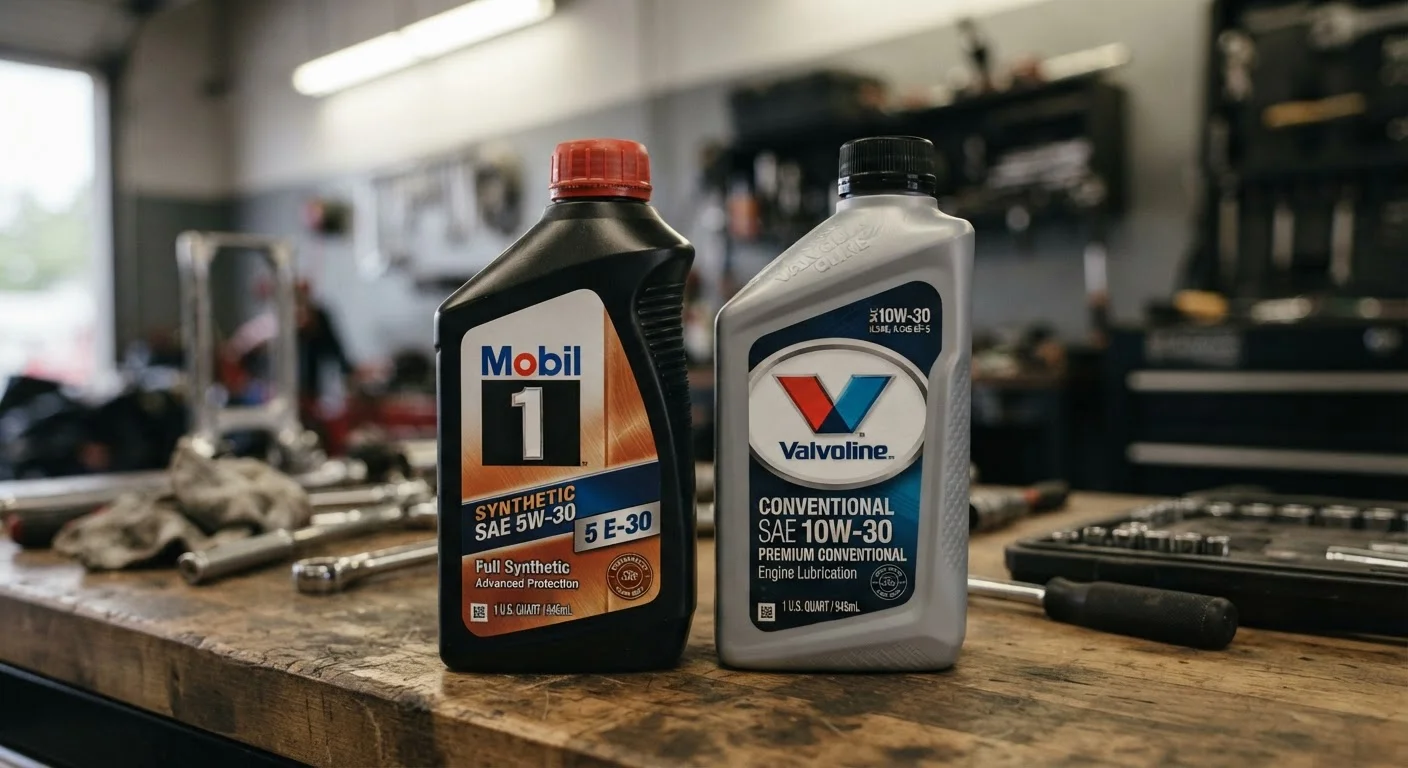
At their core, both synthetic and conventional motor oils serve the same purpose: lubricating your engine's moving parts, reducing friction, and carrying heat and contaminants away from critical components. The meaningful difference lies in how each product is made and how well that process translates to real-world engine protection.
Conventional motor oil starts as crude petroleum pumped from the ground and then refined to remove impurities. While refining improves it considerably, the resulting product still contains naturally occurring molecular variations that can affect how the oil behaves under stress.
Synthetic motor oil, by contrast, is either built from scratch using chemically modified petroleum components or synthesized from alternative base stocks. The process allows engineers to design molecules with specific properties - more uniform in size, more resistant to thermal breakdown, and more effective at protecting engine parts across a wider temperature range.
This is not a minor distinction. The engineering that goes into synthetic oil results in measurable differences in oxidation resistance, viscosity stability, and deposit formation - all factors that directly affect engine longevity. For more on how this plays into common misconceptions, see our article on maintenance myths that could be costing you.
| Criterion | Synthetic Oil | Conventional Oil |
|---|---|---|
| Base stock origin | Chemically engineered molecules | Refined crude petroleum |
| Typical change interval | 7,500-15,000+ miles (varies by vehicle) | 5,000-7,500 miles (varies by vehicle) |
| Cost per quart | Higher upfront cost | Lower upfront cost |
| Cold-weather performance | Excellent low-temp flow | Thickens more in extreme cold |
| High-heat stability | Resists oxidation and sludge well | More prone to breakdown under heat |
| Turbocharged engine suitability | Often required or strongly preferred | Generally not recommended |
| Best for older, simple engines | Works fine; may exceed what's needed | Often adequate with regular changes |
Performance, Cost, and Change Intervals
One of the most frequently cited differences between the two oil types is the recommended change interval. Conventional oil has traditionally been associated with the 3,000-mile rule, though most modern vehicles and oil formulations support intervals of 5,000 to 7,500 miles on conventional oil when manufacturer guidelines are followed. Synthetic oil, because of its greater chemical stability, often supports intervals of 7,500 to 15,000 miles or more depending on the vehicle - always defer to your owner's manual rather than general estimates.
2×-4×
Typical price premium of synthetic per quart
Retail pricing comparisons across major auto parts retailers consistently show synthetic oil costing roughly two to four times more per quart than conventional equivalents.
~90%
New cars specifying synthetic or synthetic blend
Industry estimates suggest the large majority of new passenger vehicles sold in the U.S. now leave the factory with manufacturer specifications that call for synthetic or synthetic-blend oil.
The upfront cost difference is real: synthetic oil typically runs two to four times the price of conventional oil per quart. However, if a single synthetic oil change replaces two or three conventional changes, the total annual cost may be comparable or even lower - especially when you factor in labor if you use a shop. Our guide on DIY oil changes vs. shop visits can help you think through the full cost picture.
In extreme cold, conventional oil thickens and flows slowly at startup - the moment when most engine wear actually occurs. Synthetic oil maintains its viscosity at low temperatures far better, providing immediate lubrication. In sustained heat, synthetic oil is also more resistant to oxidation and sludge formation, protecting engine surfaces when temperatures spike. These advantages are especially relevant for turbocharged engines, which generate intense, sustained heat around the bearings.
Can You Switch Between Oil Types?
A common concern is whether switching from conventional to synthetic - or back - will harm an engine. For most modern vehicles, switching is safe, and there is no need to flush the engine first. The exception worth noting is older engines with significant seal wear, where the detergent properties in synthetic oil could potentially surface pre-existing leaks. If your vehicle has high mileage or known seals issues, consult a qualified mechanic before switching. See also our breakdown of common car maintenance myths for more on this topic.
Always cross-reference the grade (such as 5W-30 or 0W-20) and API certification shown on the oil bottle against what your vehicle manufacturer specifies. Using the correct grade matters as much as choosing the right oil type. You can find the manufacturer's specification in your owner's manual or on the oil filler cap.