
What's Actually Involved in an Oil Change
An oil change is one of the most routine maintenance tasks on any vehicle: drain the old oil, swap the oil filter, refill with fresh oil to the correct specification, and check for leaks. Most vehicles require this every 5,000 to 10,000 miles, depending on the oil type and manufacturer guidelines - check your owner's manual rather than relying on the old 3,000-mile rule, which is outdated for most modern engines. For more on common interval misconceptions, see our breakdown of persistent maintenance myths.
The decision to do it yourself or pay a shop isn't just about money. It involves your available time, physical ability to work under a vehicle safely, access to proper disposal for used oil, and whether you're comfortable identifying the right oil grade and filter for your specific engine.
Pros and Cons of the DIY Route
Handling your own oil change gives you direct control over the products going into your engine and can cut the cost of each service once you've bought the necessary tools. That said, it introduces responsibilities that the shop would otherwise handle for you.
Lower cost per service once tools are in hand
After the initial investment in a drain pan, filter wrench, and jack stands, you pay only for oil and a filter - typically less than a shop visit, especially if you use synthetic oil.
Full control over oil type and filter brand
You choose exactly what goes into your engine, ensuring the oil grade matches your manufacturer's specification without relying on shop inventory.
Builds mechanical familiarity with your vehicle
Working under your car regularly helps you spot leaks, worn components, or anything unusual that might otherwise go unnoticed between service visits.
Flexible scheduling on your own timeline
No appointment needed and no wait time - you do it when it's convenient, without fitting into a shop's availability.
Upfront tool and supply investment required
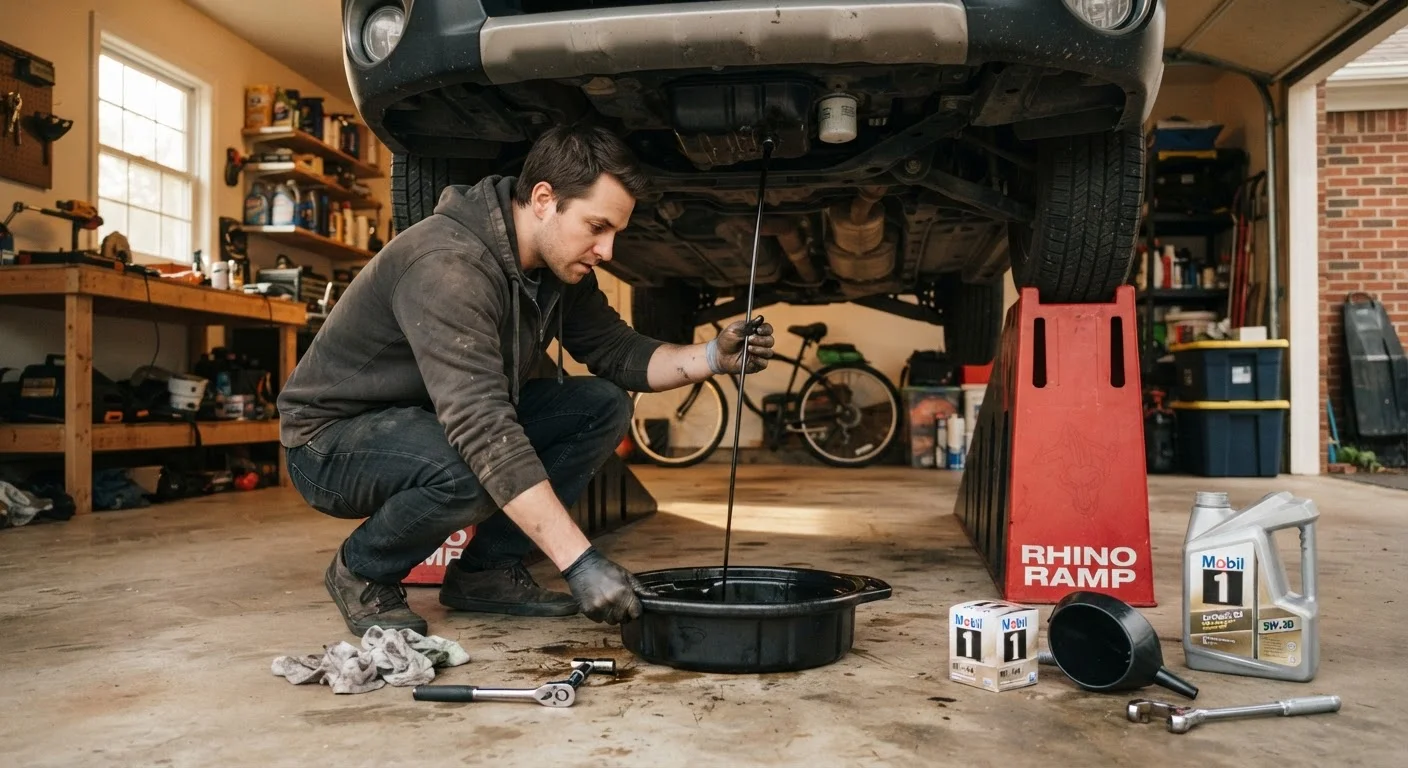
Jack stands, a hydraulic floor jack, drain pan, filter wrench, and funnel add up before you've changed a single quart. This cost takes multiple oil changes to offset.
Used oil disposal is your responsibility
Improper disposal of motor oil is illegal in most US states. You must transport used oil to an approved recycling location, adding a step that shops handle automatically.
Risk of errors without experience
Overtightening or undertightening the drain plug, using the wrong filter, or failing to seat the filter gasket properly can cause oil leaks or, in serious cases, engine damage.
No built-in multi-point inspection
Professional technicians typically check tire pressure, fluid levels, and visible wear items while your car is already lifted - a secondary benefit you forgo when working alone.
Physically demanding and space-dependent
Working safely under a vehicle requires a level surface, proper lifting equipment, and the physical ability to maneuver in tight spaces - not realistic for every driver.
One frequently overlooked factor is used oil disposal. Federal and most state laws prohibit dumping motor oil down drains or in the trash. You'll need to transport used oil to an auto parts store or recycling center - a step that adds time and requires a sealed container. If this feels like a hassle, the shop's built-in disposal process is a genuine advantage. Common oversights in car ownership often include skipping oil changes entirely - whichever method keeps you on schedule is the right one.
What Professional Service Actually Provides
A quick-lube shop or dealership service center does more than swap oil. Technicians typically perform a multi-point visual inspection - checking fluid levels, tire pressure, filters, and belts while the car is already on the lift. This secondary value is worth factoring into the price difference.
Warranty Considerations Worth Checking
A common misconception is that you must use a dealership for oil changes to preserve a manufacturer's warranty. Under the Magnuson-Moss Warranty Act, manufacturers generally cannot void a warranty solely because you used an independent shop or performed the service yourself - provided the correct oil specification was used and records were kept. However, warranty terms vary, so review your specific documentation and consult the manufacturer if you're uncertain.
Dealership service is particularly worth considering if your vehicle is under a manufacturer's warranty. Some warranties require documented maintenance performed by a qualified technician, though independent shops that use the correct oil specification and keep records generally satisfy these requirements. Verify the specific terms in your warranty documentation before assuming either way.
For drivers who want to understand exactly what oil is going into their engine, see our guide to synthetic vs. conventional oil - the same knowledge applies whether you're buying oil yourself or confirming what a shop uses.
Making the Right Call for Your Situation
Neither option is universally better. A driver with a floor jack, jack stands, a drain pan, and a torque wrench who changes oil twice a year will recoup those tool costs and save on labor over time. Someone without storage space, physical mobility to work at ground level, or time to source and recycle materials may find the shop's all-in price genuinely reasonable - especially when factoring in the inspection.
5,000-10,000 mi
Typical oil change interval for modern engines
Most vehicle manufacturers recommend this range for conventional and synthetic oil, respectively - well beyond the outdated 3,000-mile guideline still promoted in some marketing.
~$25-$75
Estimated DIY oil change cost (oil + filter)
Cost varies by oil type and vehicle; synthetic oil runs higher but lasts longer, affecting the per-mile cost comparison with shop service.
Whatever you decide, the most important variable is consistency. Deferred oil changes - regardless of who does them - cause measurable engine wear. Skipping routine maintenance is where the real costs accumulate, not in the modest price difference between DIY and professional service. Choose the method you'll actually stick to, and do it on schedule.