
How Each System Works
Both drip irrigation and soaker hoses are forms of low-volume, ground-level watering - meaning they deliver moisture slowly and directly to the soil rather than spraying it overhead. That shared approach makes both far more water-efficient than sprinklers, which can lose a significant portion of water to evaporation and wind drift before it ever reaches plant roots.
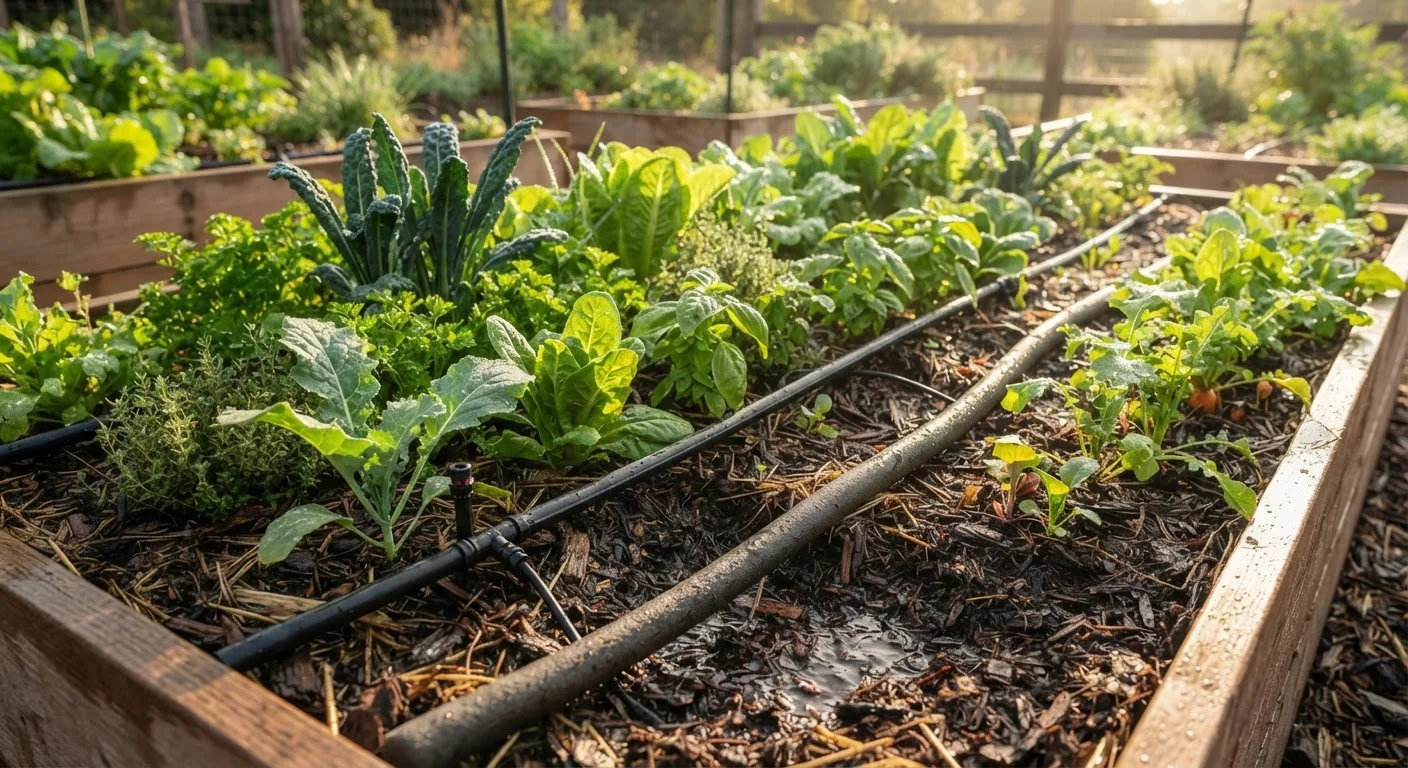
Drip irrigation uses a network of polyethylene tubing - a main supply line plus smaller lateral lines - fitted with individual emitters. Each emitter controls exactly how much water drips out and where. You can position emitters right at the base of each plant, giving you granular control over water placement and flow rate.
Soaker hoses, by contrast, are porous rubber or recycled-material hoses that seep water along their entire length. You lay them on the soil surface (or just below a layer of mulch) and water weeps out slowly and evenly across the whole run. There are no emitters to position - the moisture simply radiates outward into the surrounding soil.
Understanding this difference is the key to matching the right system to your garden. For more context on how your garden layout affects irrigation choices, see our guide on raised beds vs. in-ground planting.
| Criterion | Drip Irrigation | Soaker Hoses |
|---|---|---|
| Upfront cost | Moderate to high | Low |
| Installation complexity | Moderate - requires planning | Simple - quick setup |
| Water precision | High - per-emitter control | Low - even seep along length |
| Best garden layout | Mixed, irregular, or large beds | Straight rows, compact beds |
| Slope performance | Good with pressure-compensating emitters | Uneven on slopes |
| Durability | Long-lasting with proper care | 2-5 years typically |
| Expandability | Easy - add lines and emitters | Limited - add separate hoses |
| Clog risk | Moderate - emitters can clog | Lower - porous material |
Cost, Installation, and Maintenance
Soaker hoses have a clear advantage on upfront cost. A basic soaker hose setup for a small garden bed requires little more than the hose itself and a faucet connection - many gardeners are up and running in under 15 minutes. Drip systems involve more components: main lines, emitters, connectors, pressure regulators, and often a filter to prevent clogs. Installation takes longer and benefits from planning your layout in advance.
Over time, the picture shifts. Soaker hoses - especially rubber ones - can crack or deteriorate after a few seasons, particularly if left outdoors through freeze-thaw cycles. Drip tubing is generally more durable, and individual emitters can be replaced as needed rather than swapping out the whole system. Drip systems are also easier to expand: adding a new plant bed means running a new lateral line rather than buying an entirely new hose.
30-50%
Water saved vs. overhead sprinklers
The U.S. Environmental Protection Agency notes that drip and soaker systems can cut outdoor water use significantly compared to conventional sprinklers.
~$50-$150
Typical drip system starter cost
Basic drip kits for small to medium home gardens generally fall in this range; larger or more complex layouts cost more.
~$10-$30
Typical soaker hose cost per 50 ft
Soaker hoses represent one of the most affordable irrigation options available to home gardeners.
Both systems benefit from a timer, which automates watering and prevents overwatering - one of the most common causes of root rot in home gardens. Timers are an inexpensive addition that pay for themselves in water savings and plant health.
Which Garden Types Suit Each System
Soaker hoses shine in rectangular or straight-row gardens: vegetable rows, hedge lines, or closely spaced annual flower beds. They're particularly well suited to dense plantings where even, continuous moisture is the goal. If you're planning a garden with annuals or perennials in tight formation, a soaker hose does the job simply and reliably. See our comparison of perennials vs. annuals to think through spacing and water needs before you buy.
Drip irrigation handles complexity better. Irregularly spaced shrubs, container plants, raised beds of varying sizes, or a landscape mixing vegetables and ornamentals - these all benefit from the ability to route tubing precisely and dial in emitter placement. Drip systems also perform more reliably on slopes, where soaker hoses may water unevenly due to pressure differences between the high and low ends of the run.
For lawn areas, neither system is the right tool - sprinkler or rotary coverage is more appropriate. To explore water-smart lawn strategies, our overview of lawn care approaches covers those trade-offs in detail.
Water Pressure Matters for Both Systems
Most soaker hoses and drip emitters are designed to operate at lower water pressure than a standard faucet delivers - typically 8 to 15 psi, compared to the 40-60 psi common in home water supplies. Running either system at too-high pressure can burst soaker hoses or cause drip emitters to release water too quickly, defeating the purpose. Adding a simple inline pressure regulator (an inexpensive fitting) protects your system and keeps it performing as intended.