
What Separates Perennials from Annuals
The distinction is rooted in each plant's life cycle. Perennials complete their growth cycle over multiple years - they die back to the ground in winter (in most climates) and re-emerge from established root systems each spring. Annuals complete their entire life cycle - germination, flowering, seed set, and death - within a single growing season. You replant them each year.
A few plants blur this line. Tender perennials, such as some salvias and dahlias, are perennial in frost-free climates but behave like annuals in colder regions. Knowing your USDA Hardiness Zone helps you predict which plants will survive your winters and which won't. The regional nature of plant selection applies here too - a plant labeled "perennial" at a garden center may not overwinter reliably in your specific location.
The Case for Perennials in a Low-Maintenance Plan
Perennials earn their place in a low-maintenance garden primarily through longevity. Once established - typically after one to two full growing seasons - many perennials need only modest annual care: cutting back spent stems in fall or spring, dividing clumps every few years, and occasional fertilizing. That's a significant reduction in effort compared to replanting beds from scratch each season.
They also tend to develop deeper, more extensive root systems over time, which improves drought tolerance and can reduce watering frequency. Species like coneflowers (Echinacea), black-eyed Susans (Rudbeckia), and ornamental grasses are well-regarded for resilience across a wide range of American climates.
The tradeoff: perennials often have a defined bloom window - sometimes just a few weeks - rather than flowering continuously. Careful plant selection, staggering bloom times across early, mid, and late season, can keep the garden visually interesting from spring through fall without requiring constant intervention.
Start with a Perennial Foundation
If you're building a new bed, consider filling roughly two-thirds of the space with reliable perennials suited to your climate and sunlight conditions. Leave the remaining third for annuals, which you can rotate seasonally. This ratio reduces your annual replanting work while keeping the bed colorful and fresh-looking each year.
For gardeners considering both their planting approach and water management, see our guide to drip irrigation vs. soaker hoses - established perennial beds pair especially well with low-flow watering systems.
Where Annuals Earn Their Keep
Annuals solve a problem perennials can't fully address: continuous, high-impact color from planting time through the first hard frost. Marigolds, zinnias, impatiens, and petunias, for example, bloom prolifically for months rather than weeks. That uninterrupted display is why annuals remain popular despite the annual replanting requirement.
They're also the more forgiving choice for new gardeners or those still figuring out what works in a particular spot. If a bed of annuals underperforms - wrong sun exposure, unexpected drainage issues - you've lost one season, not years of perennial establishment. This makes annuals a practical tool for first-year gardeners experimenting with new growing areas.
Annuals also shine in containers, where the replanting cycle is already expected. If you grow in pots on a patio or balcony, the container gardening constraints that limit perennials make annuals a natural fit.
Comparing the Two Side by Side
Understanding the practical differences across key criteria helps clarify when each plant type makes the most sense for your situation.
| Perennials | Annuals | |
|---|---|---|
| Lifespan | Returns for multiple years | Completes cycle in one season |
| Bloom duration | Weeks (varies by species) | Months - often all season |
| Replanting frequency | Rarely - divide every few years | Every year |
| Upfront cost | Higher per plant | Lower per plant |
| Drought tolerance (once established) | Generally higher | Varies; often needs consistent water |
| Design flexibility | Less - plants return in fixed spots | High - change layout each year |
| Maintenance level (long-term) | Lower after establishment | Consistent annual effort |
Building a Garden That Uses Both Wisely
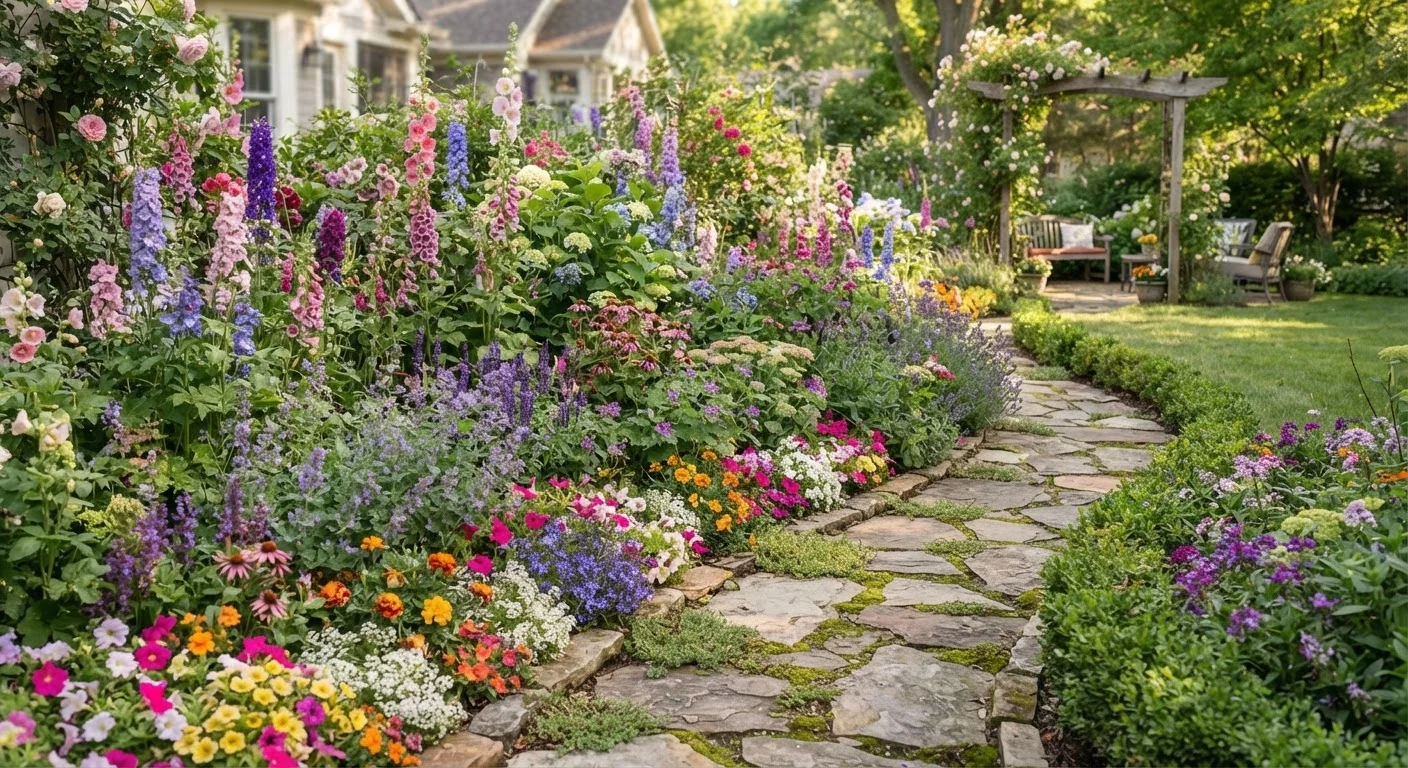
The most practical low-maintenance gardens don't choose sides - they layer both types strategically. A common approach is to use perennials as the structural backbone of a bed, occupying the majority of the planting space, then fill remaining gaps with a rotating selection of annuals for season-long color.
When planning this layered approach, consider bloom timing. Place perennials with staggered bloom windows so that something is always transitioning into flower. Use annuals in the foreground or in clusters to fill the visual lulls between perennial bloom periods.
This strategy also works well within larger backyard transformation projects, where beds need to look good immediately while permanent plantings mature. Annuals deliver curb appeal in year one; perennials take over the maintenance-reduction role in years two and beyond.
Whether you're working with in-ground beds or raised bed setups, this combined approach adapts well to most residential garden contexts.