
Why 'Native' Is Not a Simple Label
Walk into almost any garden center and you'll see the word 'native' used liberally - on plant tags, in catalog descriptions, even in store signage. The problem is that the term is almost meaningless without a geographic qualifier attached to it. A plant is native to somewhere specific, not to an entire country the size of the continental United States.
Ecologists generally define a native plant as one that established itself in a region through natural processes - seed dispersal by wind, water, or animals - rather than through intentional or accidental human introduction. The benchmark most commonly used in North America is the pre-European-settlement landscape, roughly before the 1500s, though land-management agencies sometimes apply slightly different reference periods.
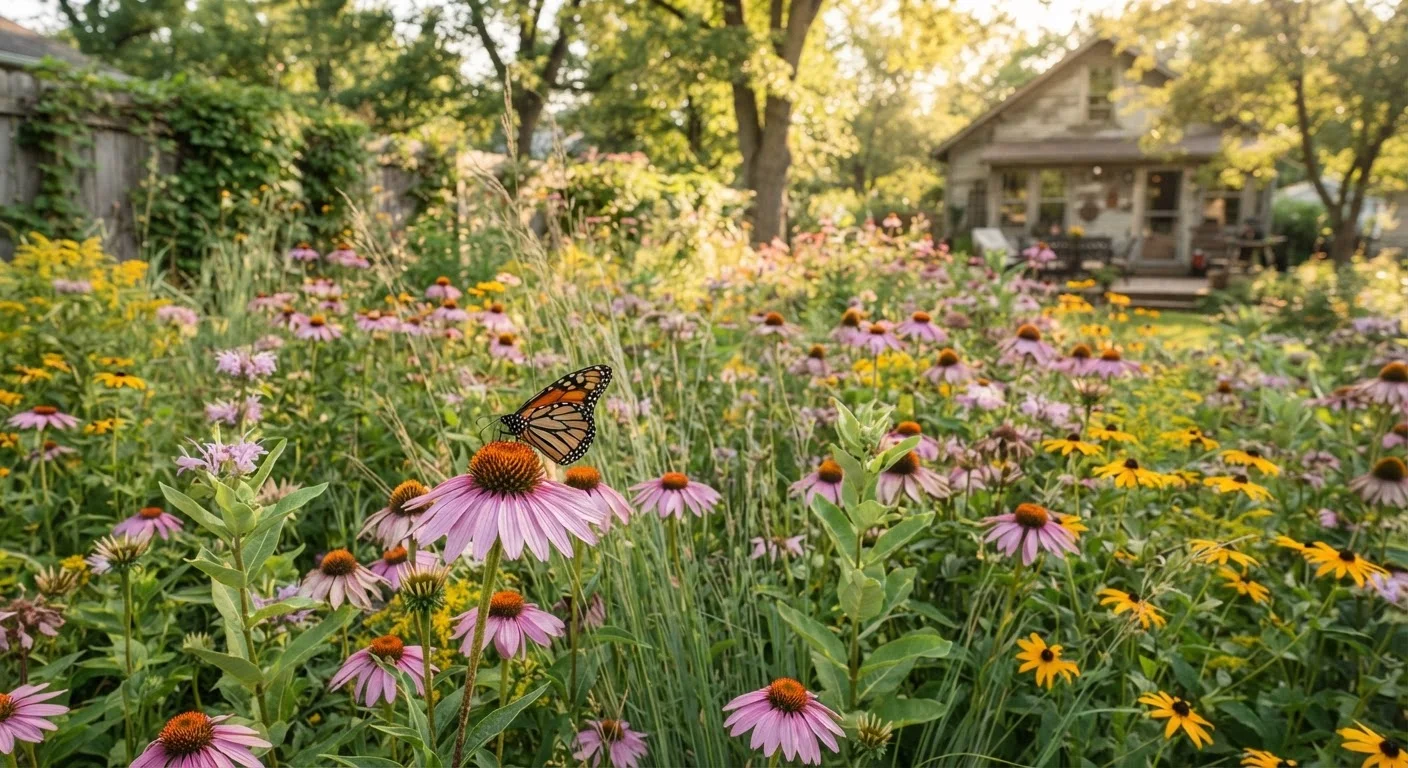
What this means practically: Echinacea purpurea (purple coneflower) is native to the central and eastern United States but not to California's Central Valley. Salvia apiana (white sage) is native to coastal Southern California but not to the Midwest. Treating either plant as simply 'American native' glosses over the ecological specificity that makes nativity matter in the first place.
State Borders Don't Define Plant Nativity
A species being listed as 'native to Texas' or 'native to California' can still be misleading, because each state spans multiple ecoregions with distinct plant communities. A plant native to East Texas's Pineywoods ecoregion may be entirely foreign to the Chihuahuan Desert of far West Texas. Always try to identify the specific ecoregion your property occupies for the most meaningful planting guidance.
Ecoregions: The Framework That Actually Matters
Rather than state borders, ecologists use ecoregions - geographic areas defined by shared climate, soils, hydrology, and plant communities - as the most meaningful unit for discussing plant nativity. The U.S. Environmental Protection Agency recognizes four levels of ecoregions across North America, ranging from broad continental zones down to finely detailed local landscapes.
For a home gardener, this matters because a plant native to your ecoregion is already adapted to your rainfall patterns, freeze-thaw cycles, and soil chemistry. It evolved under the same conditions you're working with. That's the underlying reason native plants often outperform non-native ornamentals once established: they're not fighting their environment.
Your state's cooperative extension service or a local native plant society can help you identify which ecoregion your yard falls within and which plant communities are truly indigenous to your landscape. This is a far more reliable guide than a plant tag that says only 'native to North America.'
500+
Caterpillar species supported by native oaks
Research by entomologist Doug Tallamy found that native oak trees support over 500 caterpillar species, compared to far fewer on most non-native ornamentals.
~70%
Of U.S. bird species that feed caterpillars to nestlings
Studies of North American songbird nesting behavior indicate the vast majority of species rely heavily on caterpillars - which depend on native host plants - to feed their young.
96%
Of terrestrial bird species that require insects to raise young
According to Tallamy's research synthesis, nearly all land-based bird species in North America depend on insects, particularly caterpillars, during the nesting season.
The Wildlife Connection: Why Origin Is Everything
The deeper reason native plant advocates push for regional specificity is ecological function. Native plants and local wildlife did not simply coexist - they co-evolved. Many caterpillar species, including those of iconic butterflies and moths, can only complete their life cycle on specific host plant genera. Entomologist Doug Tallamy's research has documented that native oaks alone support over 500 species of caterpillars, while many exotic ornamentals support fewer than five.
Birds depend on that caterpillar biomass to raise their young. A yard planted primarily with non-native ornamentals - even beautiful, well-maintained ones - can function as an ecological desert for the insects and birds that evolved alongside local plant communities.
“Exotic plants allow the escape of energy from the system. Native plants keep it cycling within the local food web, where it supports the birds, mammals, and other wildlife that depend on it.”
— Doug Tallamy, Professor of Entomology and Wildlife Ecology, University of Delaware
This doesn't mean every non-native plant is harmful. Some non-native plants provide nectar for generalist pollinators. But for supporting the full food web - from soil microbes to songbirds - regional native plants carry ecological relationships that exotics cannot replicate. If supporting local wildlife is one of your gardening goals, plant origin is one of the most important variables to consider, alongside the choice between perennials and annuals when planning your planting scheme.
The 'Nativar' Complication
A growing category of plants blurs the native/non-native line further: nativars, or native cultivars. These are plants bred or selected from native species for traits like unusual flower color, compact growth habit, or extended bloom time. Technically, they derive from native species - but selective breeding can alter the very characteristics that make a plant ecologically valuable.
Double-flowered cultivars, for example, can physically prevent bees and other pollinators from reaching the pollen and nectar within the bloom. Plants bred for deep purple or black foliage may reflect different light wavelengths than their wild counterparts, potentially reducing their attractiveness to insects that rely on visual cues. Research in this area is still developing, and not all cultivar modifications have the same ecological impact - some nativars perform nearly as well as straight species. But the principle is worth understanding before making planting decisions.
When wildlife support is the priority, straight species - plants grown from seed without breeding modifications - are generally the more reliable choice. When you're choosing your garden structure, considerations like whether to use raised beds or in-ground planting also affect how well native plants can establish their characteristic deep root systems.
Look for Straight Species When Wildlife Matters
When purchasing plants from a native plant nursery, ask specifically for straight species - plants grown from regionally sourced seed without cultivar modifications. Many reputable native plant nurseries label these clearly and can advise which local seed sources they use. This is one of the most effective ways to ensure the ecological relationships you're aiming to support are actually present in the plants you're introducing.